
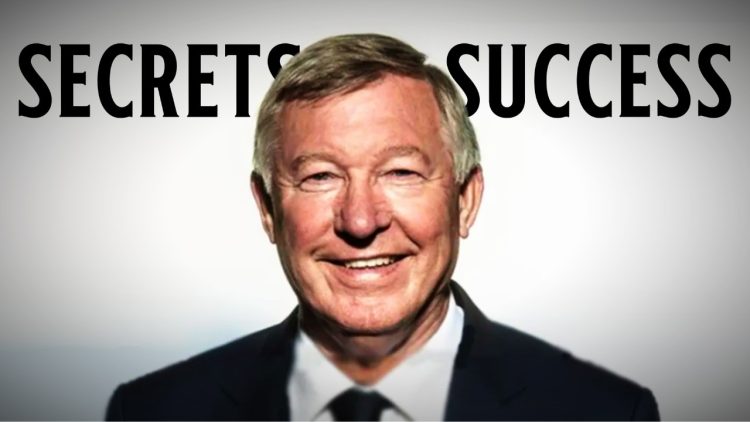
Sir Alex Ferguson’s 10 Secrets To Success | Full Documentary
What makes a legend? Over 26 years at Manchester United, Sir Alex Ferguson won 38 trophies, built multiple dynasties, and created the greatest managerial legacy football has ever seen. This film sets out to answer a simple question: how did he do it? It breaks down ten core secrets that made Ferguson unstoppable, looking at them through psychology, neuroscience, economics and history, and argues that the lessons apply to any field, any leader and any pursuit of excellence.
Ferguson was born on 31 December 1941 in Govan, Glasgow, and his managerial career began in Scotland, first with East Stirlingshire and St Mirren, then with Aberdeen, where he did something no one had done for a generation: he broke the dominance of Celtic and Rangers. Between 1978 and 1986 he led Aberdeen to three Scottish league titles, four Scottish Cups, and, most famously, the European Cup Winners’ Cup in 1983, beating Real Madrid in the final, followed by the European Super Cup.
The early years at Old Trafford were hard. United finished 11th, 2nd, 11th and 13th in his first four seasons, and Ferguson was widely reported to be close to the sack before the FA Cup win of 1990 — a replay victory over Crystal Palace — bought him time. From there the trophies came in a flood: 13 Premier League titles, five FA Cups, four League Cups and two Champions League titles, in 1999 and 2008. The 1999 triumph completed the first treble by an English club — league, FA Cup and European Cup in one season — sealed in Barcelona when Teddy Sheringham and Ole Gunnar Solskjaer scored in stoppage time against Bayern Munich.
The film’s argument is that none of this was luck. Its ten secrets, laid out across ten chapters, cover the foundations he built before any of the trophies arrived: control of the dressing room, an obsession with youth development that produced the Class of ’92 — Ryan Giggs, Paul Scholes, David Beckham, Gary and Phil Neville and Nicky Butt — a willingness to rebuild teams rather than cling to ageing champions, and a ruthlessness about standards that applied to superstars and apprentices alike. The film treats Ferguson’s famous temper, the “hairdryer treatment”, not as a quirk but as a tool, used sparingly and deliberately, and it argues that his real genius was longevity: he kept learning, kept changing his staff and his tactics, and kept finding a new team inside the old one.
What the Film Explores
The film explores leadership as a discipline rather than a personality trait.
It also explores the cost of that longevity. Ferguson rebuilt United three or four times over: the team that won the first Premier League title in 1993 was not the team that won the treble in 1999, and neither was the team that won the Champions League in 2008.
Finally, the film explores what happens when the leader leaves. Ferguson retired in 2013 having won the league in his final season, and the film’s closing chapters ask what of his system survived him. United’s long struggle to replace him is the film’s unspoken coda: the trophies were the output of a machine he built, and when the builder left, the machine stalled.
Key Themes
- The Aberdeen apprenticeship: three Scottish league titles and a European Cup Winners’ Cup in 1983, beating Real Madrid, proved Ferguson could break a duopoly before he ever reached Manchester.
- Control of the dressing room: no player, however famous, was bigger than the club, and discipline applied to everyone from the captain to the apprentices.
- Youth development: the Class of ’92 — Giggs, Scholes, Beckham, the Nevilles and Butt — came through United’s academy and became the core of the treble-winning team.
- Rebuilding, again and again: Ferguson built three or four distinct title-winning teams in 26 years, letting go of champions to make room for the next generation.
- The 1999 treble: league, FA Cup and Champions League in one season, sealed by two stoppage-time goals against Bayern Munich in Barcelona.
- Standards and the hairdryer: the famous temper was a tool, used deliberately, to enforce a culture in which second place was failure.
Production and Background
The film comes from Ferguson Lore, a fan channel devoted to the former United manager, and it is a fan-made production rather than an official club documentary. It is built from match footage, photographs and narration, organised around ten chapters with on-screen timestamps, and its description presents it as the most comprehensive deep dive into Ferguson’s leadership philosophy ever made. Viewers should treat its framing as a fan’s tribute: the ten “secrets” are the channel’s own analysis, not Ferguson’s own words, and the psychology and neuroscience it invokes are illustrative rather than scientific.
That record remains unmatched. Ferguson is the longest-serving manager in Manchester United’s history, having overtaken Sir Matt Busby’s record in December 2010, and he won more trophies than any other manager in the history of football. He was knighted in the 1999 Birthday Honours, entered the English Football Hall of Fame in 2002, and retired in May 2013 with the Premier League title in his final season.
Recommended Companion Viewing
Explore authoritative investigative documentaries on related historical events and investigative subjects.

Frequently Asked Questions
How many trophies did Alex Ferguson win at Manchester United? Thirty-eight in 26 years, including 13 Premier League titles, five FA Cups, four League Cups and two Champions League titles, in 1999 and 2008.
What was the Class of ’92? The group of young players who came through Manchester United’s academy together in the early 1990s: Ryan Giggs, Paul Scholes, David Beckham, Gary Neville, Phil Neville and Nicky Butt.
What did Ferguson achieve at Aberdeen? In eight years he won three Scottish league titles, four Scottish Cups, the Scottish League Cup, the European Cup Winners’ Cup in 1983 — beating Real Madrid in the final — and the European Super Cup.
When did Ferguson retire? He announced his retirement in May 2013, at the end of the 2012-13 season, having won the Premier League in his final campaign.
More to watch
- The Mafia Football Murders
- The Surfers Who Changed the Sport Forever | Bustin’ Down the Door | FULL DOCUMENTARY
- Nature and risk for likes – How social media is changing extreme sports
- Against All Odds – Lewis Hamilton Documentary
- India’s Little-Known Minority – The Siddi and the Olympic Dream
Ferguson’s story is the clean side of a game with a darker one, and The Mafia Football Murders shows how deeply organised crime has reached into the football he conquered.







