
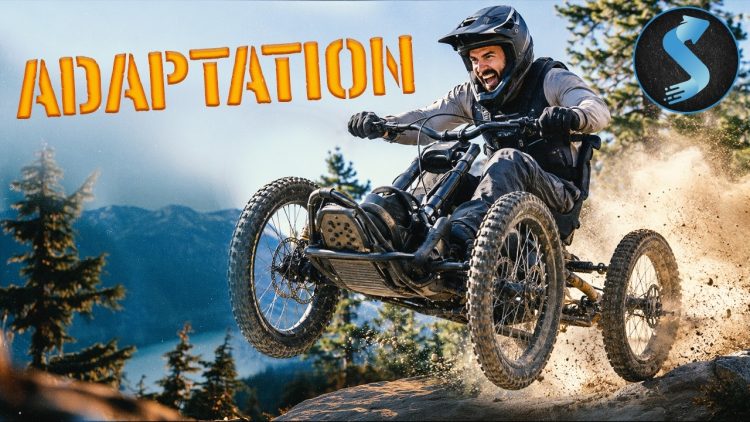
First Adaptive Downhill Race | Sports Documentary | Full Movie | Adaptation
British Columbia is a mecca for downhill mountain bikers, but for a long time its steepest trails were closed to a whole group of riders: the wheelchair athletes who wanted to race them. Adaptation, a feature documentary directed by Jake Thomas, follows a handful of those athletes as they converge on British Columbia for the BC Summer Race Series, the world’s first downhill mountain bike race series to include an adaptive category.
The riders at the centre of the film are wheelchair users who refuse to accept that the mountains are not for them. Christian Bagg, the film’s central figure, was a six-foot-four student in Calgary who spent his free time mountain biking and snowboarding until a big-air snowboard crash in 1996 broke his back and left him paralysed from the waist down. He spent the next twenty years trying to build a bike he could ride on the same trails as his friends, and in 2014 he came up with the design that became the Bowhead Reach, a three-wheeled adaptive mountain bike with an articulating front end that can lean and steer separately, letting it handle off-camber terrain no other adaptive bike could. He founded Bowhead Corp in 2018 to build it.
The other riders have their own stories. Rob Buren crashed while mountain biking and wound up paraplegic. Tara Llanes landed on her head during a race in Vail and wound up using a wheelchair. Rich Vanderwal was rendered paraplegic following a motorcycle crash at 21, and describes having to relearn everything in life, most of it with only one hand. Fernando Resende was in a multicar crash that left him with a broken neck and quadriplegia.
The climax is the race itself. The BC Summer Race Series course is a risky one even for able-bodied riders, with forested trails, technical drops, gnarly roots and hairpin turns, filmed with stunning drone and GoPro footage that puts the viewer on the bike. For the adaptive riders, the stakes are higher than a finishing time. They are racing to prove that an adaptive category belongs in downhill racing at all, and that the sport’s future includes them.
That fight for a place in the sport is what extreme sport is about at its best, as Nature and risk for likes – How social media is changing extreme sports also explores, from a very different angle.
What the Film Explores
The film explores the engineering of freedom. The Bowhead Reach is not a wheelchair with wheels bolted on. It is a machine designed from first principles to do what a mountain bike does: lean into corners, absorb drops, and hold a line on loose, steep ground. The film shows Bagg’s long road to it — the failed prototypes, the years of tinkering, the decision to build it himself when nobody else would — and it shows what the machine makes possible: a paraplegic rider descending a trail that would have been impossible a decade earlier.
It also explores the psychology of risk. Every rider in the film has already been seriously injured, and every one of them has chosen to return to the sport that injured them. The film does not treat that as recklessness. It treats it as a decision about what a life is for: the riders talk openly about fear, about the calculations they make before a run, and about what the sport gives them that nothing else does. For some, adaptive mountain biking saved their lives, giving them a reason to keep going after their injuries.
A third strand is the fight for inclusion. The BC Summer Race Series did not have to add an adaptive category, and the film shows how much work went into making it happen: the organisers, the course designers, the other riders, the long argument that adaptive bikes belong on a downhill course. Inclusion, the film shows, is not a slogan.
Key Themes
- The first adaptive category: the BC Summer Race Series was the world’s first downhill mountain bike race series to include an adaptive category, and the film follows the riders who made it happen.
- Engineering freedom: Christian Bagg spent twenty years building the Bowhead Reach, an adaptive bike that can ride trails no other adaptive bike could handle.
- Risk and return: every rider in the film has already been seriously injured, and each has chosen to return to the sport that injured them.
- Speed and fear: the film’s drone and GoPro footage puts the viewer on the bike, on steep, technical trails with drops, roots and hairpins.
- Inclusion as practice: adding an adaptive category meant practical decisions about courses, timing and safety, not just good intentions.
- Friendship and community: the riders travel, train and compete together, and the film’s most affecting moments are the small ones between runs.
Production and Background
Adaptation is a 2023 feature documentary directed by Jake Thomas, a British Columbia filmmaker, and it was made for the big screen: it screened at the Whistler Film Festival in December 2023, where it was singled out as one of the festival’s standouts.
The film’s subject is still unfolding. Adaptive mountain biking has grown rapidly since the first BC Summer Race Series, and Bagg’s Bowhead Corp, founded in 2018, now builds three models of adaptive bike and employs a dozen full-time staff. Bagg himself has gone on to race in events including the Leadville Trail 100, a 100-mile mountain bike race in Colorado, where he was the first rider with his disability ever to sign up.
Recommended Companion Viewing
Explore authoritative investigative documentaries on related historical events and investigative subjects.

Frequently Asked Questions
What is Adaptation about? It follows a group of wheelchair athletes as they converge on British Columbia for the BC Summer Race Series, the world’s first downhill mountain bike race series to include an adaptive category.
Who is Christian Bagg? Bagg is a paraplegic athlete and inventor who broke his back in a snowboarding crash in 1996. He spent twenty years designing the Bowhead Reach, a three-wheeled adaptive mountain bike, and founded Bowhead Corp in 2018 to build it.
What is the Bowhead Reach? It is an adaptive mountain bike with an articulating front end that separates leaning from steering, allowing it to handle off-camber terrain and ride trails that no other adaptive bike could manage.
Who else does the film follow? Riders including Rob Buren, Tara Llanes, Rich Vanderwal and Fernando Resende, all wheelchair users who were injured in crashes and who returned to racing.
More to watch
- The Surfers Who Changed the Sport Forever | Bustin’ Down the Door | FULL DOCUMENTARY
- Nature and risk for likes – How social media is changing extreme sports
- India’s Little-Known Minority – The Siddi and the Olympic Dream
- Mission in the Alps: The Mountain Rescuers







