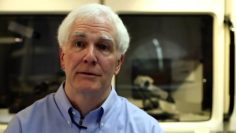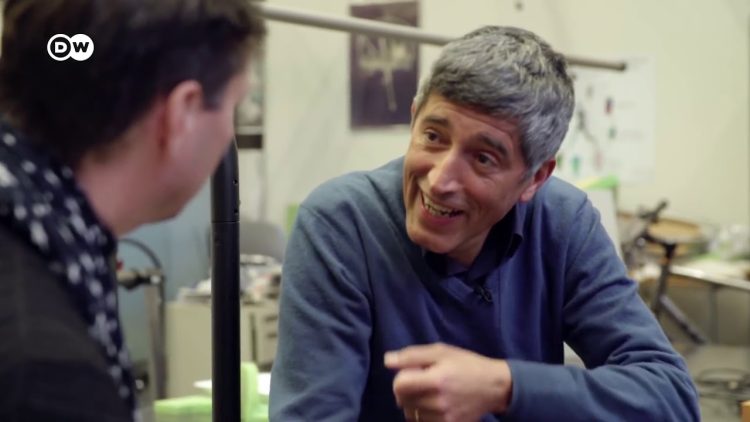
How artificial intelligence is changing our society | DW Documentary
Artificial intelligence is changing our lives. It touches on all aspects of society: private life, business and security, including the spread of fake news and the challenges posed by the advent of autonomous weapons. This documentary looks at the rapid change digitalisation is causing as it unfolds.
The film begins where the technology is being built. At KUKA in Augsburg, Germany, researchers are developing robots that learn independently, like children, through tasks such as recognising and sorting building blocks. The new generation of robots can teach themselves to grasp objects without human programming, a step beyond the industrial robots that repeat a single motion for decades.
The most human part of the film is in prosthetics. Hugh Herr, who lost both his legs in a mountaineering accident, has spent his career building intelligent prostheses that integrate motors, sensors and computers, giving their wearers a more natural kind of movement. The film also follows a survivor of the Boston Marathon bombing who dances on a bionic leg, a reminder that the merger of body and machine is already happening, and that for the people living with it, it is not a philosophical question but a practical one.
Then the film turns to the darker side. Intelligent algorithms play a major role in spreading fake news, shaping what users see on social media to maximise engagement, and the consequences can be measured in lives: in Japan, misinformation about the cervical cancer vaccine drove vaccination rates down from 70 percent to less than 1 percent. The film also follows the strange new relationships people are forming with machines, including Akihiko Kondo, a Japanese man who married the hologram pop star Hatsune Miku in a ceremony in Tokyo in November 2018. And it looks east, to China, which has become a formidable force in AI: the country leads in AI patents, its companies sit on vast reserves of data, and the film reports its prediction that by 2030, 37 percent of the world’s scientists will be Chinese.
What the Film Explores
The film explores the question of what intelligence means when machines can learn. The KUKA robots are the test case: a machine that teaches itself to grasp an object is doing something that looks like understanding, and the film follows the researchers who are trying to work out where that understanding stops.
It also explores the ethics of a technology that is already deciding what we see. The fake news story is the film’s sharpest argument: algorithms that reward engagement also reward outrage, and the result is a public sphere in which falsehoods travel faster than facts.
Finally, the film explores the future, and it does so at the largest possible scale. The German computer scientist Jürgen Schmidhuber predicts that AI will spread from the Earth into the cosmos, and the film follows that thought to its conclusion: a century in which humanity will have to decide how to live with minds it did not evolve alongside. The film’s closing question is the one it opened with, sharpened by everything in between: digital technology and artificial intelligence are transforming our society, more changes are coming, and we can only hope that all of them are positive.
Key Themes
- Robots that learn: at KUKA in Augsburg, robots teach themselves to grasp objects without human programming.
- Body and machine: intelligent prostheses with motors, sensors and computers are giving amputees and dancers a new kind of movement.
- Fake news: algorithms that maximise engagement also spread misinformation, with measurable consequences for public health.
- New relationships: people are forming emotional bonds with virtual partners, including a man who married a hologram pop star.
- The rise of China: China leads in AI patents and data, and the film predicts it will dominate the science of the future.
- Ethics and risk: Metzinger argues for ethics guidelines, Tegmark warns of surveillance states, and autonomous weapons raise questions no one has answered.
Production and Background
The film is a DW Documentary production, made by Tilman Wolff and Ranga Yogeshwar and first released by DW in April 2020. The version presented here is a re-upload of the DW film by the channel Wave Radio 365, which credits DW as its source.
The film was made just before the generative AI boom, and that is part of its interest: it captures the moment when AI stopped being a laboratory curiosity and started being a social fact, and the questions it asks about fake news, surveillance and autonomous weapons have only become more urgent since.
Recommended Companion Viewing
Explore authoritative investigative documentaries on related historical events and investigative subjects.

Why Building AI Data Centres Isn’t Working Anymore
The RAM Crisis Keeps Getting Worse
A.I. Revolution | Full Documentary | NOVA | PBS
OpenAI is Suddenly in Trouble
Frequently Asked Questions
What is this documentary about? It is a DW film by Tilman Wolff and Ranga Yogeshwar about how artificial intelligence is changing society: self-learning robots, intelligent prosthetics, fake news, virtual relationships, the rise of China in AI, and the ethical questions around autonomous weapons.
How can AI spread fake news? Social media algorithms are designed to maximise engagement, and outrage and falsehoods engage users more than careful reporting. The film shows the real-world cost in Japan, where misinformation drove cervical cancer vaccination rates from 70 percent to under 1 percent.
Who is Akihiko Kondo? He is a Japanese man who fell in love with Hatsune Miku, a holographic pop star, and married her in a ceremony in Tokyo in November 2018. The film presents him as an extreme example of the relationships people are forming with machines.
Why does the film focus on China? Because China has become one of the strongest players in AI, leading in patents and data, with companies like Didi using vast amounts of traffic data and DJI, founded in 2006, dominating the drone market. The film predicts that by 2030, 37 percent of the world’s scientists will be Chinese.
More to watch
- AlphaFold – The Most Useful Thing AI Has Ever Done
- Will Humans Love AI Robots?
- AI Supremacy: The Artificial Intelligence Battle Between China, USA and Europe
- How Artificial Intelligence is Making Creatives Superfluous
- Why Building AI Data Centres Isn’t Working Anymore
The film’s story of AI in medicine continues in AlphaFold – The Most Useful Thing AI Has Ever Done, about the AI system that solved one of biology’s hardest problems.