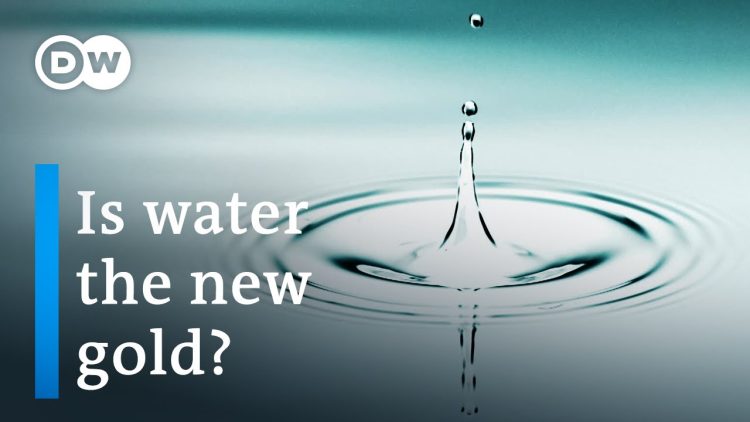
The fight for water | DW Documentary
Climate change is causing temperatures to rise. Extreme weather events and droughts are increasing. Springs and wells are drying up. And everyone needs more water. The battles for control over precious water reserves have begun.
In some countries, water has always been available in abundance, and is wasted carelessly every day. But the climate crisis is changing that. Because the climate is warming, everyone needs more water than ever: for drinking, agriculture and industry. Water is the new gold, and the film shows what happens when a resource that was once taken for granted becomes scarce. In Mendocino, California, there is no longer enough water to flush the toilets.
Germany tells a different version of the same story. In hot weather, regional drinking water supplies collapse, and groundwater levels have dropped to record lows in many places. A country that thought of itself as water-rich is discovering that its reserves are not infinite, and that the summers are getting hotter faster than its infrastructure can adapt.
The question the film asks is the one that runs through the whole series: will we still have enough drinking water in the future? What happens when our water disappears? The answers it finds are not reassuring. The distribution battles for precious water reserves have already begun, and they are not only happening in deserts. They are happening in California and in Germany, in places that never expected to fight over water at all.
What the Film Explores
The film explores how climate change turns a plentiful resource into a scarce one. It is not only that temperatures are rising: it is that rising temperatures increase demand at exactly the moment supply is falling. Hotter summers mean more water for drinking, for cooling and for irrigation, while the same heat dries up the springs and wells that supply it.
It also explores the politics of distribution. When water runs short, someone has to decide who gets it: the farmer or the town, the industry or the household, the upstream user or the downstream one. The film shows those decisions being made in real time, and it does not pretend they are easy.
Finally, the film explores what scarcity does to a community. Mendocino’s toilets and Germany’s collapsing supplies are not abstract statistics: they are the point at which a whole way of life stops working. The film’s argument is that water scarcity is not a future problem for faraway places. It is a present problem for wealthy countries, and the places it hits first are the ones that assumed it could never happen to them.
Key Themes
- Water is the new gold: as the climate warms, demand for water rises for drinking, agriculture and industry at the same time.
- Droughts are increasing: extreme weather events and droughts are becoming more frequent, and springs and wells are drying up.
- Mendocino: in the Californian town, there is no longer enough water to flush the toilets, a symbol of sudden scarcity.
- Germany’s record lows: regional drinking water supplies collapse in hot weather, and groundwater has fallen to record lows.
- Distribution battles: when water runs short, farmers, households and industry compete for the same reserves.
- A three-part story: this is part one of a series, followed by what happens when water dries up, and who owns water.
Production and Background
The film is a DW Documentary production, the first part of a three-part series on water. DW’s documentaries often take a single resource and follow it around the world, and this series is a clear example of that approach: part one establishes the scarcity, part two follows the consequences when water dries up, and part three asks who owns it.
The film’s subject has only grown more urgent since it was made.
Recommended Companion Viewing
Explore authoritative investigative documentaries on related historical events and investigative subjects.

Rivers at risk - Water crisis on four continents
Lithium – New Gold Rush in the Andes
The organized crime hiding in your fridge
How greed is turning Spain into a desert
Frequently Asked Questions
Why is water becoming scarce? Because the climate is warming, which increases demand for water while reducing supply: hotter summers need more water for drinking, agriculture and industry, and at the same time droughts increase and springs and wells dry up.
What is happening in Mendocino, California? The town has run so short of water that there is no longer enough to flush the toilets. It has become a symbol of how quickly a place that took water for granted can run out.
Is Germany affected by water scarcity? Yes. In hot weather, regional drinking water supplies collapse, and groundwater levels have dropped to record lows in many places, in a country that long thought of itself as water-rich.
Is this film part of a series? Yes. It is part one of a three-part DW series on water, followed by “What happens when our water dries up?” and “Who owns water?”, which continue the story the film begins.
More to watch
- Rivers at risk – Water crisis on four continents
- Our drinking water – Is the world drying up?
- Rivers Under Pressure: From Drought and Competing Agendas
- Why cities are uncovering their buried rivers
- Climate change – living on the water
The global picture is wider still: Rivers at risk – Water crisis on four continents follows the same crisis across four continents at once.