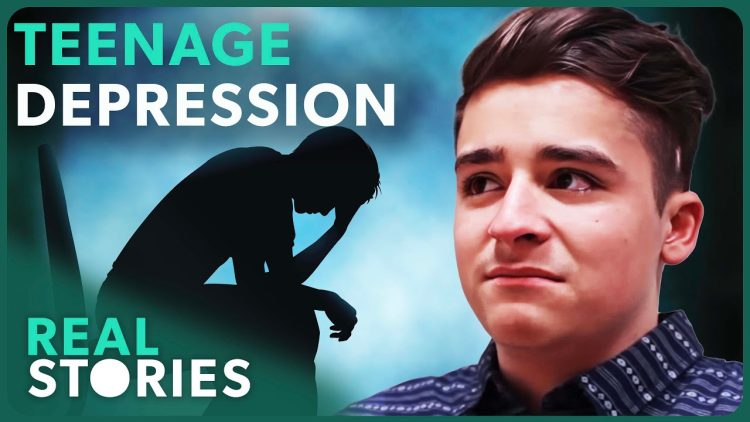
Inside The Teen Mental Health Crisis
Adolescence is supposed to be the best time of your life, but for many young people, it is a battle with themselves. This documentary tells the true stories of teenagers struggling with their identity, from issues of mental health and finding acceptance to the pressures of social media and the search for love.
The film’s strength is that it lets young people speak for themselves. Rather than experts explaining teenagers, the teenagers explain themselves: what it feels like to wake up anxious, to scroll through social media and feel worse, to want to be accepted and to fear being rejected, to look for love and to find only pressure. The stories are specific — a teenager who cannot sleep, one who cannot eat, one who cannot tell their parents what is wrong — but the feeling they describe is shared: the sense of being surrounded by people and entirely alone. The film does not sensationalise that feeling.
Social media runs through the film like a thread. The teenagers describe a world in which they are always visible and always judged: every photo, every post, every message is a performance, and the audience never goes away. The pressure is not only to look a certain way but to be a certain way — happy, popular, successful — and the gap between that performance and how they actually feel is where much of the distress lives. The film does not argue that social media caused the crisis.
But the film is not only about suffering. We hear from young people who have faced their biggest fears and are now using their experiences to help others. That is the film’s second half, and it matters: the same teenagers who describe feeling alone in a crowd also describe finding their voice, and finding that their voice helps someone else. This is a story of hope, resilience and the power of finding your voice. The film’s message is not that the crisis is over, or that it is easy to overcome. It is that the teenagers who are living through it are not only victims of it. They are also the people best placed to help each other through it, and some of them already are.
What the Film Explores
The film explores identity as the central struggle of adolescence. The teenagers it follows are not only dealing with mental illness. They are dealing with the question of who they are: what they like, who they love, where they belong, and whether the person they are is acceptable to the people around them. The film shows how that question becomes harder when it is asked in public, on social media, where every answer is visible and every mistake is recorded. Identity, the film suggests, is hard enough to work out in private.
It also explores the gap between how teenagers look and how they feel. The film’s teenagers describe the experience of performing happiness — smiling in photos, laughing with friends, posting as if everything is fine — while feeling anxious, depressed or frightened underneath. That gap is the film’s most important insight: the teenagers who are struggling most are often the ones who look as if they are coping best, because they have learned to hide it.
Finally, the film explores what helps. The young people who have come through the worst of it describe the same things: someone who listened without judging, a friend who understood, a moment when they realised they were not the only one feeling this way. The film does not offer a programme or a prescription. It offers the example of teenagers who found their voice and used it to help others, and it suggests that listening — really listening — is where help begins.
Key Themes
- Alone in a crowd: the film’s central image is a teenager surrounded by people and feeling entirely alone, and it returns to that image again and again.
- Identity under pressure: the struggle to work out who you are is made harder when it happens in public, on social media, under constant judgement.
- Social media: constant comparison, public rejection and the inability to switch off shape the crisis, even if they did not cause it alone.
- The performance of happiness: many of the teenagers who are struggling most look as if they are coping best, because they have learned to hide it.
- Depression, anxiety and suicidal thoughts: the film names these directly and lets the teenagers describe what they feel like, without euphemism.
- Finding your voice: the young people who have faced their biggest fears and now help others are the film’s proof that recovery is possible.
- Hope and resilience: the film ends not with a solution but with a message — that the teenagers living through the crisis are also the ones helping each other through it.
Production and Background
The film is a Real Stories production, from the channel’s strand of feature-length documentaries about real lives. Real Stories films are built around the people they follow rather than around expert commentary, and this one follows that approach closely: the teenagers are the film’s narrators, and the adults appear only at the edges. That choice is the film’s defining feature, and it is why the film feels different from a news report about the same subject. A report tells you that teenagers are struggling.
The film does not claim to explain the causes of the teen mental health crisis, and it does not offer a single solution. Its contribution is narrower and more valuable: it gives a voice to the young people who are living through it, and it asks the adults watching to listen. For parents, teachers and anyone who works with teenagers, that is a useful thing to hear.
Recommended Companion Viewing
Explore authoritative investigative documentaries on related historical events and investigative subjects.

How to Unlearn Hate - Stories of Courage, Hope, and Reconciliation
Life on the Autism Spectrum (2/2)
Our Body as a High-Performance Machine - How Resilient Are We?
Living with grief - How to cope with loss
Frequently Asked Questions
What is Inside The Teen Mental Health Crisis about? It is a Real Stories documentary that tells the true stories of teenagers struggling with their identity, mental health, acceptance, social media pressure and the search for love, including depression, anxiety and suicidal thoughts.
Who tells the story? The teenagers themselves. The film lets young people describe their own experiences in their own words, rather than relying on experts to explain them.
What role does social media play? The teenagers describe social media as a source of constant comparison and judgement, where every post is a performance and the audience never goes away, making it hard to switch off and easy to feel worse.
Is the film only about suffering? No. It also hears from young people who have faced their biggest fears and are now using their experiences to help others, and its message is one of hope, resilience and the power of finding your voice.
More to watch
- Mental health and resilience – the secrets of inner strength
- The limits of learning – kids in crisis
- Why Can’t Kids Read Anymore?
- Mongolia’s Deadly Winter: Two Teenagers Fight to Save an Ancient Tradition
For a wider look at how people build the strength to cope, see Mental health and resilience – the secrets of inner strength.