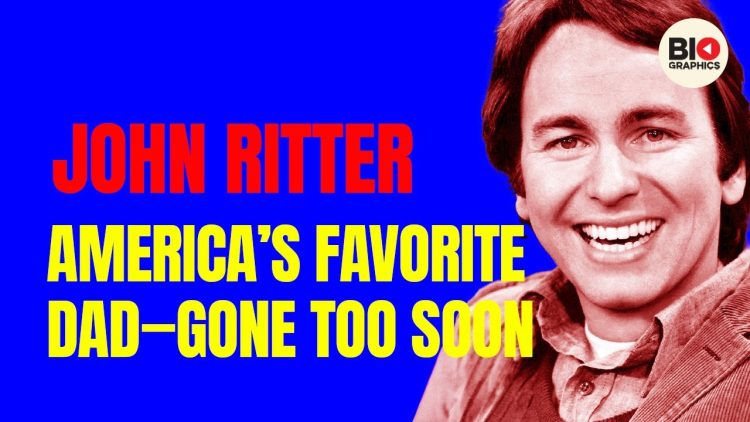
John Ritter: From Three’s Company to Obscurity?
John Ritter was one of the most recognisable faces on American television. As the star of Three’s Company, he became a household name — the physical comedian at the centre of one of the biggest sitcoms of its era. And then, the film asks, what happened? The question in its title is blunt: how does an actor go from the top of television to obscurity, and what does that journey look like from the inside?
The film traces Ritter’s career from that peak through the long list of roles that followed. The names in the film’s own account tell the story in miniature: Problem Child and its sequel, Skin Deep, Panic, Bride of Chucky, Clifford the Big Red Dog, The Last Fling, The Colony, They All Laughed, The Comeback Kid, A Cinderella Story, Tripfall and Heartbeat. None of them put him back where Three’s Company had put him. The documentary walks through that filmography not as a list but as a question — what was missing, and why did the second act never arrive?
Part of the answer, the film suggests, lies in the nature of sitcom stardom itself. Three’s Company made Ritter famous for a very particular thing: a style of broad, physical, endlessly energetic comedy that audiences loved and that casting directors then expected from him forever. The film’s argument is that the very thing that made him a star also narrowed what people could imagine him doing — and that escaping a role that successful is one of the hardest things in show business.
The film also looks at where Ritter came from. His father was Tex Ritter, a country music star, and the documentary’s own further reading points back to that inheritance — a childhood spent around entertainment, and a father whose fame was of a different kind and a different era. Ritter grew up inside the business, and the film treats that as part of the story: he knew what stardom looked like from the inside before he ever had it himself.
The tone of the film is not a takedown. Biographics, the channel behind it, builds its portraits around the arc of a life, and here the arc is a rise, a long plateau, and a question that is never quite answered. The film ends, as its keywords hint, with a life gone too soon — a career that was still in progress, still looking for its second peak, when it ended. The question in the title is left hanging, and that is the point: obscurity, the film suggests, is not always a verdict on talent. Sometimes it is just what happens when the moment passes.
What the Film Explores
The film explores the peak first: Three’s Company, the sitcom that made John Ritter a household name. The documentary treats the show as the defining fact of his career — the role that made him famous, the character audiences still associate with him, and the standard against which everything after it was measured. The question the film keeps returning to is what it means to be that famous, that young, for one specific thing.
A second thread follows the filmography that came after, and the film is at its most interesting here. It walks through the roles — Problem Child, Skin Deep, Panic, Bride of Chucky, Clifford the Big Red Dog, and the rest — and asks what each of them was supposed to do for his career. Some were comedies that played to his strengths, some were departures, and the film presents them as a series of attempts to find a second act, each one a little further from the centre of attention than the last.
A third thread follows the inheritance: Tex Ritter, the country music star, and the world John Ritter grew up in. The film’s further reading reaches back to his father’s career and to Man About the House, the British sitcom that Three’s Company was based on — a reminder that even the show that made him was itself an adaptation, a format that had already worked once before. The documentary uses that background to show that Ritter’s story was never just about one man; it was about a family business, a format, and an industry.
Running through the film is the question of memory — why some stars stay famous and others fade, even when the work keeps coming. The documentary notes that Henry Winkler, a fellow sitcom star of the same era, still remembers Ritter as a comedian, and that the people who worked with him have not forgotten him. The film’s suggestion is that obscurity is a matter of public attention, not of worth: the work was there, and the talent was there.
Key Themes & Topics Examined
- Three’s Company — the sitcom that made John Ritter a household name
- The question in the title: from stardom to obscurity
- Problem Child, Skin Deep, Panic and the film roles that followed
- Bride of Chucky, Clifford the Big Red Dog and the later career
- The Comeback Kid, A Cinderella Story, Tripfall and Heartbeat
- Tex Ritter — the country music star father
- Man About the House, the British original behind Three’s Company
- A life gone too soon, and a career still looking for its second peak
Production & Background
The film is a Biographics production, from the channel’s series of biographical portraits narrated in its familiar essay style. Biographics publishes new videos at least twice a week, and its portraits are built around the arc of a life — the rise, the turning points, and the questions that remain.
The documentary’s own further reading reaches across Ritter’s life and career: his father Tex Ritter’s place in the Country Music Hall of Fame, the British sitcom Man About the House, and contemporary notices of his work, including reviews of Sling Blade, in which he appeared. The film is structured as a single question — how does a star fall from view? — and it answers it by walking through the career, role by role.
Recommended Companion Viewing
Explore authoritative investigative documentaries on related historical events and investigative subjects.

John Belushi: From Second City and Saturday Night Live to Tragedy
Jaafar Jackson: Becoming Michael
Frequently Asked Questions
What made John Ritter famous?
Three’s Company, the sitcom in which he starred. The film presents the show as the defining fact of his career — the role that made him a household name.
What films did he make after Three’s Company?
The film walks through a long list, including Problem Child, Skin Deep, Panic, Bride of Chucky, Clifford the Big Red Dog, The Last Fling, The Colony, They All Laughed, The Comeback Kid, A Cinderella Story, Tripfall and Heartbeat.
Who was his father?
Tex Ritter, a country music star. The film’s further reading points back to his father’s career and to the entertainment world John Ritter grew up in.
What is Man About the House?
The British sitcom that Three’s Company was based on — a reminder, the film suggests, that even the show that made Ritter famous was itself an adaptation of a format that had already worked once before.
Why did his career fade?
That is the film’s central question. Its suggestion is that sitcom stardom narrowed what people could imagine him doing — and that escaping a role that successful is one of the hardest things in show business.