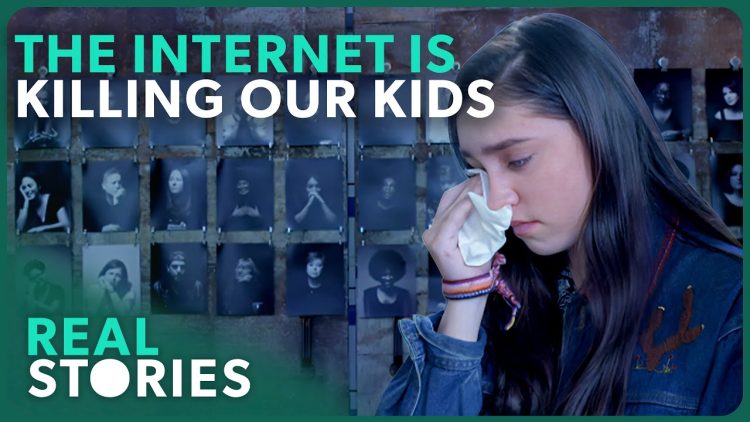
The Modern Teen Suicide Epidemic
In this heartbreaking and urgent documentary, a grieving father sets out on a journey to understand his 14-year-old son’s death by suicide. He dives into the world of modern teenagers, exposing the silent struggles with social media, unfettered internet access and emotional isolation that led to a shocking 70 percent increase in adolescent suicide. Through powerful interviews with young survivors, mental health experts and other parents, he uncovers the painful truths and warning signs that are often missed.
The father is Jason Reid, and the film is Tell My Story. In 2018, his son Ryan died by suicide, a week after his 14th birthday. Reid was a successful businessman with what looked like a perfect family life, and the loss turned everything he knew upside down. Going through Ryan’s room one afternoon, he found two sticky notes in the top corner of a drawer. One had usernames and passwords on it.
The film follows Reid as he looks for the signals he may have missed with his son, and in the process uncovers painful truths about the lives of teenagers today. He meets young suicide survivors, including Mariangela Abeo, the creator of Faces of Fortitude, who attempted suicide herself and lost her brother to it. He meets prevention experts and psychiatrists, including Dr Mark Goulston, and other parents trying to understand the same loss. The picture that emerges is of a generation growing up with unfettered access to the internet and social media, and with a rising tide of depression that adults around them often do not see.
What makes the film different from a news report is its focus on what parents can actually do. Reid’s interviews return again and again to the same practical lessons: to be better listeners, to be better at expressing emotion, and to be more present in children’s lives. The film shows what it means to be the sibling of a suicide victim, and how that identity is carried. It does not offer easy answers, and it does not pretend that a single conversation can fix everything. But it argues, with the force of a father’s grief behind it, that the silence around teen mental health is itself part of the problem, and that breaking it is the first step towards preventing the next loss.
What the Film Explores
The film explores the world teenagers actually live in, as opposed to the one their parents imagine. Reid’s journey takes him into the impact of social media and unfettered internet access: the constant comparison, the bullying that follows a child home from school, the isolation of a life lived partly online.
It also explores the warning signs that are so often missed. Ryan’s story is the film’s centre, and Reid is unsparing about his own failure to see what was happening: a happy childhood, a loving family, and a son in crisis that nobody recognised. The experts he interviews explain why the signs are hard to read — teenagers hide their distress, depression in young people does not always look like sadness, and parents assume that a child who seems fine is fine.
Finally, the film explores grief itself, and what it can become. Reid’s loss could have ended as a private tragedy. Instead, through ChooseLife.org and this film, it became a public mission: to ensure that other parents have the conversation he wishes he had had, and to end teen suicide by 2030. The film premiered at the Santa Barbara International Film Festival in January 2020 and was broadcast on WETA PBS in June 2021 as part of the Well Beings Youth Mental Health Project, reaching parents across the United States with a message that is simple and urgent: talk to your children, listen to them, and do not assume that silence means they are all right.
Key Themes
- A father’s quest: Jason Reid seeks answers after his 14-year-old son Ryan dies by suicide in 2018, and finds a note in Ryan’s drawer: “Tell my story.”
- The 70 percent rise: adolescent suicide has increased by 70 percent, a statistic the film returns to again and again.
- Social media and isolation: unfettered internet access and emotional isolation are reshaping teenage life in ways adults often miss.
- Survivors’ voices: young people who survived their own suicide attempts, including Mariangela Abeo, explain what helped and what did not.
- The missed signs: experts explain why depression in teenagers is so hard for parents to recognise, and what to look for.
- A mission: through ChooseLife.org, Reid aims to end teen suicide by 2030 by teaching parents to talk to their children about mental health.
Production and Background
The film is Tell My Story, produced by Cinema Libre Studio’s Philippe Diaz and Beth Portello, and presented here under the title The Modern Teen Suicide Epidemic by the Real Stories channel.
The film’s power comes from its honesty. Reid does not present himself as an expert who has the answers; he presents himself as a father who missed the signs and is determined that other parents should not.
Recommended Companion Viewing
Explore authoritative investigative documentaries on related historical events and investigative subjects.

Inside The Teen Mental Health Crisis
Life on the Autism Spectrum (1/2)
Living with grief - How to cope with loss
How to Unlearn Hate - Stories of Courage, Hope, and Reconciliation
Frequently Asked Questions
What is Tell My Story about? It is a documentary by Jason Reid, a father whose 14-year-old son Ryan died by suicide in 2018. Reid sets out to understand why, interviewing young survivors, mental health experts and other parents, and to teach other parents the warning signs he wishes he had known.
Why is the film called Tell My Story? After Ryan’s death, Reid found a sticky note in the top corner of his son’s drawer that said, simply, “Tell my story.” Reid took it as Ryan’s wish that his story be told to help prevent other teen suicides, and it became the title of the film and the mission behind it.
What does the film say about social media? It argues that unfettered internet access and social media are central to the crisis: they expose teenagers to constant comparison and bullying, and they deepen the emotional isolation that can hide depression from the adults around them.
Where can I find help? If this film raises difficult feelings, support is available. In Ireland and the UK, the Samaritans can be reached at any time on 116 123, and in the United States the Suicide and Crisis Lifeline is 988. The film’s own project, ChooseLife.org, also offers resources for parents and young people.
More to watch
- Mental health and resilience – the secrets of inner strength
- Living with grief – How to cope with loss
- Life on the Autism Spectrum (2/2)
- How to Unlearn Hate – Stories of Courage, Hope, and Reconciliation
The film’s message — that staying connected and present matters — runs through Mental health and resilience – the secrets of inner strength too, which looks at how people build the strength to cope.