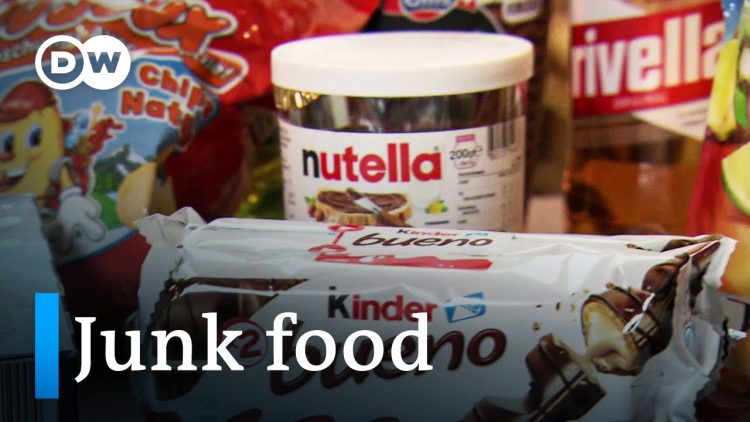
Junk food, sugar and additives – The dark side of the food industry | DW Documentary
Forty percent of the global population is overweight or obese. Highly processed industrial foodstuffs are largely to blame. But food companies continue to focus on products that are addictive.
The film’s central claim is about sugar. Sugar is one of the strongest “drugs” and can get consumers really hooked, and the food giants know this only too well. That is why they use sugar, fats and flavour enhancers to encourage people to buy their products and boost their profits. The result is food engineered to be hard to stop eating: products that hit the brain’s reward system the way addictive substances do, in portions that keep getting bigger and prices that keep getting lower.
The consequences are measured in disease. More and more people around the world are overweight or obese, and illnesses such as diabetes and cardiovascular disease are becoming more prevalent. The World Health Organization reported that by 2022, one in eight people worldwide was living with obesity, and the burden falls hardest on the poorest, who are the most exposed to cheap, heavily processed food and the least able to afford alternatives.
But the film is not only about what is wrong. It asks what can be done to change the food industry’s strategies, and it follows the people trying: the campaigners pushing for clearer labelling and taxes on sugary drinks, the regulators trying to limit marketing to children, and the scientists working out what a healthier food system would look like. The question it leaves the viewer with is a simple one: if we know what the food industry is doing, and we know what it costs, why do we keep letting it happen?
What the Film Explores
The film explores the business model of addiction. The food industry’s most profitable products are the ones that are hardest to stop eating, and the film shows how sugar, fat and flavour enhancers are combined to create that effect.
It also explores the inequality of the food system. The people most harmed by junk food are not the people who choose it freely: they are the people for whom it is the cheapest option, the most available option, and the most heavily marketed option.
Finally, the film explores the politics of change. Labelling, sugar taxes and advertising bans are all on the table, and the film follows the campaigns that have won them and the lobbying that has blocked them. Its argument is that the food industry will not change on its own, because its profits depend on the products that cause the harm, and that change will have to come from regulation, from consumer pressure, and from a public that understands what it is being sold.
Key Themes
- Forty percent: two in five people worldwide are overweight or obese, and highly processed food is largely to blame.
- Sugar as a hook: sugar is one of the strongest “drugs” in the food supply, and companies use it to keep consumers coming back.
- Engineered to addict: sugar, fats and flavour enhancers are combined to make products hard to stop eating.
- The disease burden: diabetes and cardiovascular disease are becoming more prevalent as obesity rises around the world.
- An unequal burden: the poorest carry the greatest cost, because junk food is the cheapest and most available option.
- What can change: labelling, sugar taxes, advertising limits and consumer pressure are the tools the film follows.
Production and Background
The film is a DW Documentary production, in the broadcaster’s characteristic style of following a single question through the people affected by it.
The film’s subject has only grown since it was made. Obesity rates continue to rise worldwide, sugar taxes have spread from country to country, and the debate over ultra-processed food has moved from the margins of nutrition science to the centre of public health policy.
Recommended Companion Viewing
Explore authoritative investigative documentaries on related historical events and investigative subjects.

Eternal Life? The secrets of the centenarians
A global longevity movement - Eternal life with biohacking?
Why Fruits Have Lost Their Vitamins | ENDEVR Documentary
Frequently Asked Questions
How many people are overweight or obese? Forty percent of the global population, according to the film. The World Health Organization reported that by 2022, one in eight people worldwide was living with obesity.
Why does the film call sugar a drug? Because sugar hooks consumers in a way that resembles addiction: it triggers the brain’s reward system, it is hard to stop eating, and food companies deliberately use it, with fats and flavour enhancers, to encourage repeat purchases and boost profits.
What diseases are linked to junk food? The film focuses on diabetes and cardiovascular disease, both of which are becoming more prevalent as obesity rises. Both are strongly linked to diets high in sugar, fat and highly processed foods.
What can be done about the food industry’s strategies? The film follows campaigners and regulators working on clearer labelling, taxes on sugary drinks, limits on marketing to children, and consumer pressure on companies to reformulate their products.
More to watch
- Mediterranean cuisine – The recipe for a long and healthy life?
- Eternal Life? The secrets of the centenarians
- Fake Steak – Future-Proof Food And Lab-Grown Meat
- China’s plan to never run out of food
- Inside a high-tech lab designing food for a hotter world
There is another way to think about food: Fake Steak – Future-Proof Food And Lab-Grown Meat asks whether lab-grown meat could be part of a healthier food system.