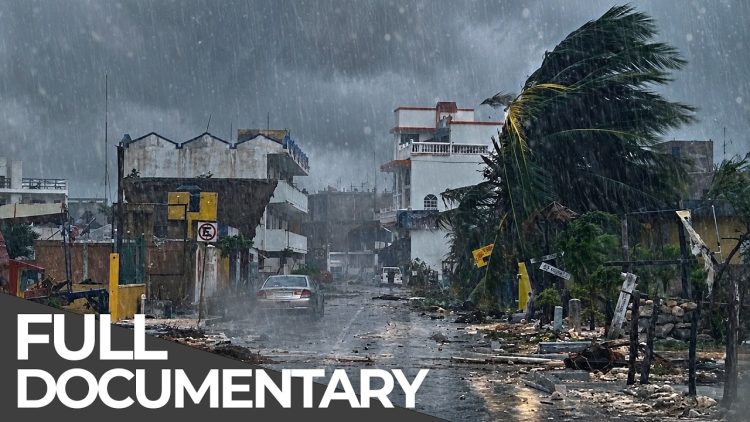
When Hurricanes Destroy Everything | Inside the World’s Worst Storms
Hurricanes are among the most powerful and destructive forces on Earth. With winds exceeding 300 kilometres per hour, these enormous storms can tear apart buildings, flood entire cities and leave thousands of people fighting for survival. This film looks at the deadliest storms in modern history, and asks what makes them so dangerous, and why their destructive power goes far beyond extreme winds.
The film begins with Hurricane Irma, the storm that devastated the Caribbean in September 2017. Irma was a long-lived Cape Verde hurricane that reached category 5 on the Saffir-Simpson scale, with top winds of 185 miles per hour, and it made seven landfalls, four of them as a category 5, across the northern Caribbean islands. It struck the Florida Keys as a category 4 hurricane and southwestern Florida at category 3, destroying or badly damaging most homes in the Middle and Lower Keys and damaging or destroying more than 1,300 boats. The damage in the United States alone was estimated at around 50 billion dollars, making Irma one of the costliest hurricanes on record in the Atlantic basin.
From Irma the film turns to Hurricane Katrina, and to the catastrophic flooding it caused in New Orleans in August 2005. Katrina made landfall in southeast Louisiana on 29 August 2005 as a category 3 hurricane, and struck the Mississippi coast the same morning with a storm surge of more than 25 feet. In New Orleans, levees and floodwalls failed in 53 places, and about 80 percent of the city flooded. The storm killed 1,392 people and caused damage estimated at 125 billion dollars, making it tied as the costliest tropical cyclone on record. The largest loss of life was due to flooding caused by engineering flaws in the federally built hurricane protection system, and the film shows what that failure meant for the people who stayed behind, between 100,000 and 150,000 of them, despite mandatory evacuation orders.
Through eyewitness accounts, dramatic footage and scientific explanations, the film shows how hurricanes form, and why they are so hard to stop. A hurricane begins as a cluster of thunderstorms over warm ocean water, and it grows by drawing heat and moisture from the sea, spinning faster as the Earth’s rotation turns it into a vast rotating system. The eye at the centre is calm, but the eyewall around it holds the fiercest winds, and the storm surge, the wall of water pushed ahead of the storm, is often more deadly than the wind itself. The film shows how a hurricane’s danger goes far beyond extreme winds: it is the water, in the surge and in the rain, that kills most people and does most of the damage.
What the Film Explores
The film explores Hurricane Irma first, and it treats the storm as a demonstration of what a hurricane at full strength can do. Irma’s seven landfalls included four as a category 5, a record of sustained intensity, and the film shows the damage across the northern Caribbean, where islands like Barbuda were left almost entirely destroyed, and in the Florida Keys, where most homes were badly damaged or destroyed and many structures became uninhabitable. The film’s eyewitness accounts come from people who rode out the storm, and from the rescue workers who arrived afterwards, and they give the statistics a human face: the boats thrown onto land, the roofs torn away, the roads washed out, and the weeks without power or water.
A second thread follows Hurricane Katrina, and the film gives the flooding of New Orleans its fullest treatment. The storm surge that struck the Mississippi coast was 25 to 28 feet above normal tide level, and the levee failures that followed were not a single breach but a system-wide collapse, with 53 breaches to flood protection structures in and around the greater New Orleans area. The film shows how the flooding trapped the people who had stayed, and how the rescue effort struggled for days to reach them. Katrina’s name was retired by the World Meteorological Organization in April 2006, a mark of how devastating the storm was, and the film treats it as the storm that changed how America thinks about hurricanes.
A third thread follows the science, and the film explains the storm in terms anyone can follow. A hurricane needs warm ocean water, moist air and the spin of the Earth to form, and it grows by converting the heat of the ocean into wind. The Saffir-Simpson scale, from category 1 to category 5, measures wind speed, but the film is careful to explain that the category does not tell the whole story: a slow-moving category 3 can do more damage with rain than a fast-moving category 5, and a storm’s surge depends on the shape of the coast as much as on the wind. The film shows how forecasters track a storm’s path, and why the forecast cone, the area where the storm might go, is wider than the storm itself.
Key Themes & Topics Examined
- Hurricane Irma, the category 5 storm that devastated the Caribbean in 2017
- Seven landfalls, four of them as a category 5, and 50 billion dollars of damage in the US
- Hurricane Katrina, and the catastrophic flooding of New Orleans in 2005
- Fifty-three levee breaches, and 80 percent of the city under water
- How hurricanes form: warm ocean water, moist air and the spin of the Earth
- The eyewall, the storm surge, and why water kills more people than wind
Production & Background
The film is a Free Documentary production, part of the channel’s series on the natural world and on disasters. Free Documentary is the channel of the Free Documentary network, which aims to provide high-quality documentaries on YouTube for free, working with filmmakers from around the world and using the latest camera technology.
Recommended Companion Viewing
Explore authoritative investigative documentaries on related historical events and investigative subjects.

Why Is There Antimatter?
Is Green Hydrogen the Answer to the Climate Crisis?
Saturn V: How NASA Built the Most Powerful Rocket Ever
Frequently Asked Questions
What is the film about?
The world’s most destructive hurricanes, from Irma’s devastation of the Caribbean to Katrina’s flooding of New Orleans, and what makes them so dangerous.
How strong was Hurricane Irma?
Irma reached category 5 with top winds of 185 miles per hour, made seven landfalls, four of them as a category 5, and caused around 50 billion dollars of damage in the United States.
What happened in New Orleans during Katrina?
Levees and floodwalls failed in 53 places, about 80 percent of the city flooded, 1,392 people were killed, and damage was estimated at 125 billion dollars.
What kills most people in a hurricane?
Water, not wind: the storm surge pushed ahead of the storm, and the flooding from torrential rain, cause most deaths and most damage.