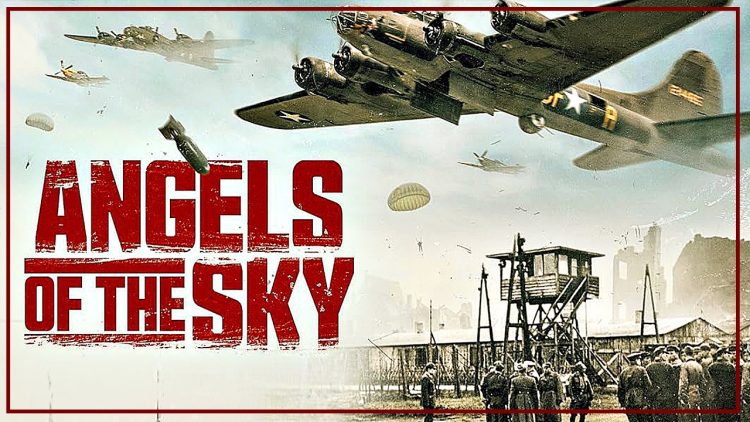
Angels of the Sky: American Airmen in Nazi Captivity
Thousands of American airmen risked their lives flying bombing missions over Nazi-occupied Europe during the Second World War, and for those shot down behind enemy lines, the fight for survival was only just beginning. Captured by German forces, these men faced harsh conditions, uncertainty, and the constant struggle to hold on to hope in prisoner-of-war camps. Angels of the Sky tells their story, through firsthand accounts, of the terror of capture, the hardships of camp life, and the daring escape attempts that offered a chance at freedom.
The film begins in the air. The men at its centre were mostly crews of the United States Army Air Forces, including the Eighth Air Force, which flew daylight bombing raids from bases in England against targets in Germany and occupied Europe. Daylight bombing was a deliberate choice, meant to hit targets precisely, but it exposed the bombers to German fighters and anti-aircraft fire for hours at a time. A bomber crew flew in tight formation, dependent on each other and on their fighter escorts, and when a plane was hit, the crew had seconds to decide whether to bail out over enemy territory or go down with the aircraft.
For those who survived the jump, capture usually followed quickly. German soldiers, police or civilians would find them, and after interrogation they were sent to prisoner-of-war camps, most famously the Stalag Luft camps run by the Luftwaffe for captured Allied airmen. The film follows the men into those camps, where life settled into a strange routine: roll calls in all weathers, thin rations, cold barracks, boredom, and the ever-present uncertainty about how long the war would last and whether they would live to see its end.
What kept men going, the film shows, was each other. The prisoners organised themselves with remarkable ingenuity, running schools, theatres, sports leagues and newspapers, and building a community inside the wire. Red Cross parcels brought food, cigarettes and small comforts that could be traded or saved. And for some, the focus of camp life became escape. Tunnels were dug with improvised tools, the earth hidden in trouser legs and scattered on the parade ground, and forged papers and civilian clothes were prepared in secret. The most famous of these efforts, the Great Escape from Stalag Luft III in March 1944, in which seventy-six men got out through a tunnel, ended in tragedy for most of them, and the film does not shy away from that.
By the end of the war, tens of thousands of American airmen had passed through German prison camps, and the film’s closing chapters follow them home: the liberation of the camps as Allied armies advanced in 1945, the long marches westwards that some prisoners were forced to endure in the last winter of the war, and the return to a country that had changed while they were away. Their experiences, the film argues, reveal another side of the air war over Europe, a story of courage, endurance, ingenuity, and the determination to survive against extraordinary odds.
What the Film Explores
The film explores the air war from the inside, through the eyes of the men who flew it. It explains why the Eighth Air Force flew by day, what a bombing mission felt like, and what happened in the minutes after a bomber was hit. The firsthand accounts it draws on are vivid about the fear of the jump, the loneliness of coming down by parachute over enemy country, and the moment of capture, when the war became personal in a new way.
It also explores the strange world of the prison camp. The camps were run under the Geneva Convention, which meant the prisoners were supposed to be fed, housed and allowed to receive parcels, and by the standards of the war the airmen’s camps were less murderous than many others. But the film shows that the reality was still hard: hunger, cold, overcrowding as the war went on, and the psychological strain of indefinite confinement. It shows how men coped, through routine, humour, study, sport, and the solidarity of the crew and the camp.
A third thread is escape, and what it meant. For many prisoners, escape attempts were not only about getting home; they were a way of continuing the fight, of tying down German guards and resources, and of refusing to accept captivity. The film treats the escapers with admiration but also with honesty, showing the risks they took and the price that was sometimes paid, and it sets their stories against the larger history of the air war, in which the bombing campaign they had flown in cost the lives of tens of thousands of their comrades.
Key Themes
- Daylight bombing raids by the Eighth Air Force over occupied Europe
- Being shot down and the terror of capture behind enemy lines
- Life in the Stalag Luft prisoner-of-war camps
- How prisoners organised schools, theatre, sport and community inside the wire
- Red Cross parcels and the small economies of camp life
- Tunnel escapes, forged papers and the Great Escape of March 1944
- The forced marches and the liberation of the camps in 1945
- Courage, endurance and ingenuity in the face of captivity
Production and Background
Angels of the Sky is presented by Free Documentary – History, a channel that publishes full-length history documentaries on YouTube. The film runs for one hour and thirty minutes and is built from archival footage, photographs, maps and the firsthand accounts of the airmen themselves, many of them recorded decades after the war.
The story it tells is well documented. The Eighth Air Force lost more men killed than the entire United States Marine Corps in the Second World War, a measure of how dangerous the daylight bombing campaign was. Tens of thousands of American airmen became prisoners of war in Germany, and their memoirs and interviews have become an important source for historians of the air war. The film draws on that tradition, and on the records of the camps themselves, to give a ground-level view of a campaign usually told from the height of thirty thousand feet.
Recommended Companion Viewing
Explore authoritative investigative documentaries on related historical events and investigative subjects.

Hitler's Reich - Diaries of Nazi Supporters, Opponents and Victims (1/4)
The History of Humanity: From Deep Time Until Today
After Hitler: The Path to Democracy
Greenland: On Top of the World
Frequently Asked Questions
What was the Eighth Air Force? The United States Army Air Forces command based in England that flew daylight strategic bombing raids against Germany and occupied Europe from 1942 onwards.
What were the Stalag Luft camps? Prisoner-of-war camps run by the German Luftwaffe for captured Allied airmen, the best known being Stalag Luft III at Sagan, the scene of the Great Escape in March 1944.
What was the Great Escape? An escape through a tunnel from Stalag Luft III on the night of 24-25 March 1944, in which seventy-six men got out. Most were recaptured, and fifty of them were executed on Hitler’s orders.
How were prisoners treated? Airmen’s camps were run under the Geneva Convention, so prisoners received Red Cross parcels and were not subjected to forced labour, but conditions were still harsh, with hunger, cold and overcrowding, especially as the war went on.
When were the camps liberated? As Allied armies advanced into Germany in the spring of 1945, the camps were evacuated, many prisoners enduring forced marches westwards, before being freed by British or American troops.