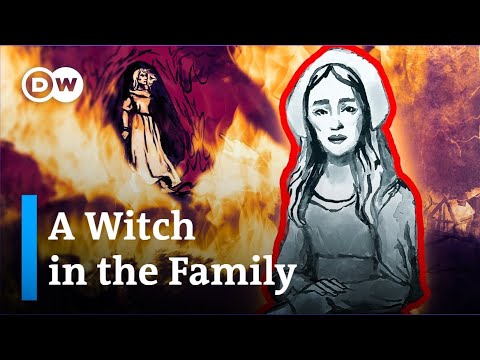
Why Witch Hunts are not just a Dark Chapter from the Past
Whether in Macbeth, Harry Potter or Hansel and Gretel, witches have a long tradition in literature and film, often celebrated as strong, independent women, or portrayed as the incarnation of evil. But in a recent global study, over 40 percent of those surveyed said they believe in malevolent witchcraft. So witches are not just the stuff of fantasy, nor a phenomenon of some distant medieval past. This episode of DW’s Arts Unveiled follows reporter Karin Helmstaedt, herself the descendant of a family that lost several members to witch hunts, as she goes searching for clues, speaking to experts and digging through archives in Germany.
The film begins with the true story of a witch hunt, and with Helmstaedt’s own family history. Her ancestors were among the people accused, tried and executed in the European witch hunts, and that personal connection gives the film its emotional centre. From there it traces the origins of the hunts, which began in the fifteenth century and reached their height in the sixteenth and seventeenth. Tens of thousands of people, most of them women, were executed across Europe, often after trials in which torture produced the confessions that condemned them.
A key part of the story is the Malleus Maleficarum, the Hammer of Witches, published in 1486 by the Dominican inquisitor Heinrich Kramer. The book gave witch-hunting a theory, a method and a justification, arguing that witches were real, that they worked with the devil, and that they should be hunted down and killed. The film shows how the book spread with the new technology of printing, and how it shaped the trials that followed for the next two centuries. It also sets out to debunk the common myths about the hunts: they were not a medieval phenomenon, they were not confined to ignorant villages, and the people who ran them were often educated lawyers, theologians and officials.
One of the film’s most affecting passages concerns Margarethe Kröber, one of the victims whose story survives in the archives, and the film follows Helmstaedt as she reads the records of her case. From there the story crosses the Atlantic to the witch hunts of the New World, above all Salem in 1692, and to the end of the hunts in Europe, as courts gradually stopped accepting spectral evidence and torture, and as the Enlightenment changed what educated people believed was possible.
But the film’s central point is that the story does not end there. In parts of Africa and Asia today, people accused of witchcraft are still attacked, driven from their homes and sometimes killed, and the film speaks to campaigners such as the Nigerian humanist Leo Igwe, who works to protect those accused. Belief in witchcraft, the film shows, is not a relic: it is a present-day reality for millions of people, and being singled out as a witch can still be deadly. The final chapters turn to witches in pop culture and political activism, from the feminist reclaiming of the witch to campaigns such as Witches of Scotland, which seeks pardons and recognition for the thousands executed in Scotland, and the film closes by asking what the witch hunt really was, and why it keeps coming back.
What the Film Explores
The film explores the machinery of the European witch hunts: how an accusation began, how a trial worked, and how torture, neighbourly grudges, bad harvests and religious fear combined to turn suspicion into execution. It shows that the hunts were not a single event but a long series of local panics, shaped by war, plague, economic hardship and the confessional conflicts of the Reformation, and that the people accused were often those on the margins of their communities: older women, widows, healers, and those who quarrelled with their neighbours.
It also explores the ideas behind the hunts. The Malleus Maleficarum gave judges a framework in which witchcraft was a real and organised threat, and the film explains how that framework survived for so long, and what finally undermined it. The answer it offers is not a single moment of enlightenment but a slow change in law, in science, and in what courts would accept as evidence, together with the simple fact that the hunts had never delivered the security they promised.
A third thread is the present. The film travels from the archives of southern Germany to the contemporary world, where accusations of witchcraft still ruin and end lives, and it asks what connects the two. Its answer is that the witch hunt is not really about witches at all, but about what a community does with fear, with misfortune, and with people it wants to blame. That, the film suggests, is why the pattern keeps recurring, in different forms, long after the trials themselves ended.
Key Themes
- Karin Helmstaedt’s family history and the personal cost of the hunts
- The origins of the great European witch hunts in the fifteenth century
- The Malleus Maleficarum and how printing spread the witch-hunting theory
- Debunking myths: the hunts were early modern, not medieval, and run by educated men
- The fate of Margarethe Kröber and the victims in the archives
- Salem in 1692 and the end of the hunts in Europe
- Witchcraft accusations in Africa and Asia today, and the work of Leo Igwe
- Witches in pop culture, feminism and the campaign for pardons in Scotland
Production and Background
Why Witch Hunts are not just a Dark Chapter from the Past is an episode of Arts Unveiled, the culture and history strand of DW History and Culture, presented by reporter Karin Helmstaedt. The film runs for about twenty-six minutes and combines archive research in southern Germany, interviews with historians and campaigners.
The film’s claim that more than 40 percent of people surveyed worldwide believe in malevolent witchcraft comes from a recent global study, and its contemporary reporting draws on campaigners including Leo Igwe and the Advocacy for Alleged Witches network. In Scotland, where several thousand people were executed for witchcraft, the Witches of Scotland campaign has sought pardons and a national memorial, and in 2022 the First Minister of Scotland issued a formal apology to those accused, a measure the film’s closing discussion reflects.
Recommended Companion Viewing
Explore authoritative investigative documentaries on related historical events and investigative subjects.

Road to Defeat: Adolf Hitler's Fatal Mistakes
Soviet War in Afghanistan 1979-1989 (Full Documentary)
Lexington and Concord: The Start of the American Revolution
Forgotten Heroes: The WWII Rescue Pilots
Frequently Asked Questions
When did the European witch hunts happen? They began in the fifteenth century and reached their height in the sixteenth and seventeenth centuries, rather than in the Middle Ages as is often assumed.
What was the Malleus Maleficarum? A book published in 1486 by Heinrich Kramer, arguing that witches were real and should be hunted down. It became the standard handbook for witch trials for the next two centuries.
How many people were executed? Historians estimate tens of thousands across Europe, most of them women, though exact figures are impossible to establish because many trial records have not survived.
Do witch hunts still happen? Yes. In parts of Africa and Asia, people accused of witchcraft are still attacked, driven from their homes and sometimes killed, and campaigners work to protect them.
What is the Witches of Scotland campaign? A campaign seeking pardons and recognition for the thousands of people, mostly women, accused of witchcraft in Scotland, which led to a formal apology from the Scottish government in 2022.