
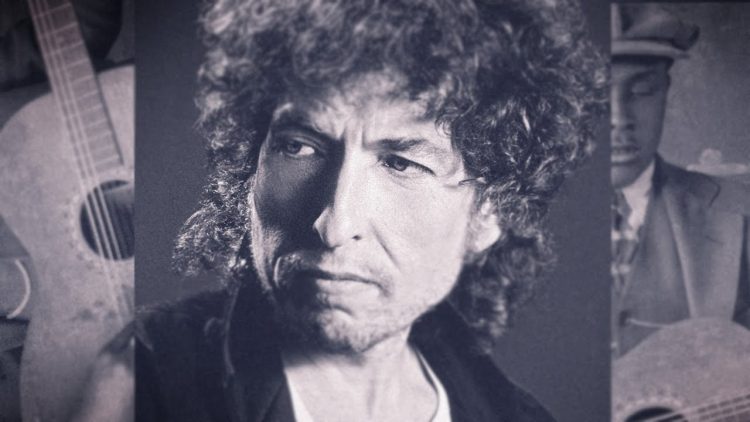
Bob Dylan’s Unreleased Masterpiece
Most Dylanologists disagree about which is the single greatest song in Bob Dylan’s catalogue, but few would deny “Blind Willie McTell” a place high in the running. The surprise is that it was never released at all.
The song was a product of the sessions for Infidels, the album Dylan released in 1983. Infidels was received as something of a return to form after the Christian-themed trilogy of Slow Train Coming (1979), Saved (1980) and Shot of Love (1981) that Dylan put out after being born again. The sessions were produced by Dylan with Mark Knopfler, and the best-known version of “Blind Willie McTell” features Knopfler on twelve-string guitar and Dylan himself on piano, playing a slow, stately ballad steeped in the blues. And yet, when the album was finished, the song was left off.
The song is named for Blind Willie McTell, the Georgia bluesman born William Samuel McTier in Thomson, Georgia, in 1898, who died in 1959. McTell was a twelve-string guitar master and a singer of extraordinary range, best known for “Statesboro Blues”, later made famous by the Allman Brothers Band. Dylan’s song is a tribute and a conversation: it borrows McTell’s name, his sound, and his world, and it uses them to sing about the American South — its beauty, its violence, and the long shadow of slavery.
For eight years the song existed only as a rumour and a bootleg, passed hand to hand among Dylan’s fans. Then, in 1991, it was officially released on The Bootleg Series Volumes 1-3 (Rare and Unreleased) 1961-1991, and listeners could finally hear what Dylan had thrown away. The response was immediate: here was a song that many consider among the finest he ever wrote, sitting in a vault for the better part of a decade. The film asks why — why Dylan would record a masterpiece and then decide it was not good enough, and what that decision says about an artist who has always been his own harshest critic.
What the Film Explores
The film explores the mystery of the outtake. Dylan’s career is full of songs he recorded and discarded — “Up to Me”, “Abandoned Love”, “Series of Dreams”, “She’s Your Lover Now” — and the film uses “Blind Willie McTell” as the supreme example of a pattern: an artist who writes more great songs than he can use, and who judges his own work by standards no one else can see.
It also explores the blues tradition that the song comes from. Blind Willie McTell is not a random namesake: he is the thread that connects Dylan to the country blues of the 1920s and 1930s, to the twelve-string guitar, to the songs about the South that Dylan grew up on.
Finally, the film explores what makes a song a masterpiece. Lefevre’s answer is not a single thing but a combination: the melody, the piano and twelve-string guitar, the lyric’s sweep across American history, and the performance, in which Dylan sounds like a man singing about a world he has seen. The film’s closing argument is that “Blind Willie McTell” endures not because it was released — for eight years it was not — but because it is true, and that its long journey from the studio to the bootleg to the official release is itself a story about how great art finds its audience, even when its creator tries to hide it.
Key Themes
- The outtake: “Blind Willie McTell” was recorded in 1983 during the Infidels sessions and left off the album.
- Eight years in the dark: the song circulated only as a bootleg until its official release in 1991 on The Bootleg Series Volumes 1-3.
- Mark Knopfler: the best-known version features Knopfler on twelve-string guitar and Dylan on piano.
- Blind Willie McTell: the Georgia bluesman (1898-1959), master of the twelve-string guitar and singer of “Statesboro Blues”.
- The blues tradition: Dylan’s song is built from older songs, stories and voices, rooted in the country blues of the 1920s and 1930s.
- Return to form: Infidels (1983) followed Dylan’s Christian trilogy of Slow Train Coming, Saved and Shot of Love.
- A harsh critic: Dylan has discarded many great songs; the film asks what his judgement says about his art.
Production and Background
The film is a Polyphonic production, from the channel of music essayist Noah Lefevre, whose long-form video essays are known for their rigorous research into a band, a song, or a sound.
“Blind Willie McTell” has only grown in stature since its release. It is now routinely ranked among Dylan’s finest songs, and its story — a masterpiece thrown away, then found — has become part of the Dylan legend.
Recommended Companion Viewing
Explore authoritative investigative documentaries on related historical events and investigative subjects.

Frequently Asked Questions
What is “Blind Willie McTell”? It is a song Bob Dylan recorded in 1983 during the sessions for his album Infidels. He left it off the album, and it circulated as a bootleg for eight years before its official release in 1991 on The Bootleg Series Volumes 1-3.
Who was Blind Willie McTell? Blind Willie McTell (1898-1959), born William Samuel McTier in Thomson, Georgia, was a blues singer and twelve-string guitar master, best known for “Statesboro Blues”. Dylan named his song for him as a tribute.
Why did Dylan leave the song off Infidels? Nobody knows for certain — Dylan recorded several versions and released none of them. The film argues that Dylan judged his own work by standards no one else could see, and that discarding great songs was a lifelong habit of his.
What does the best-known version sound like? It is a slow, piano-led ballad, with Dylan on piano and Mark Knopfler on twelve-string guitar, steeped in the sound of the country blues. It was recorded during the Infidels sessions in 1983.
More to watch
- The Untold History of Disco
- A World Without Beethoven?
- The healing power of music – How does music impact us?
- Music in Nazi Germany – The maestro and the cellist of Auschwitz
- The Strange World of William Shatner’s “Has Been”
Dylan’s song is built from a tradition older than rock and roll, and A World Without Beethoven? asks what music would be without one of its founding figures.







