
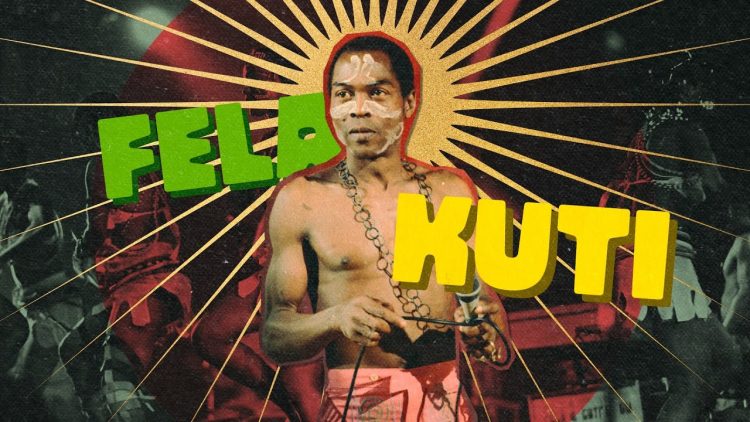
How Do You Tell the Story of Fela Kuti? (feat. Jad Abumrad)
Some lives are too big for a single story. Fela Kuti — Nigerian musician, political activist, and the principal innovator of Afrobeat — is one of them. This Polyphonic essay, made in conversation with Radiolab’s Jad Abumrad, does not try to give a tidy biography of Fela. Instead it asks a harder question: how do you tell the story of someone like this at all?
The problem starts with the music itself. Fela, born Olufela Olusegun Oludotun Ransome-Kuti in Abeokuta in 1938, created Afrobeat by fusing West African music with American funk and jazz, and the result was something entirely new: long, hypnotic songs built on polyrhythm and repetition, with lyrics that named corruption and oppression directly. With his band Africa ’70 — featuring the drummer and musical director Tony Allen — he became a star in Nigeria in the 1970s, and his songs were not entertainment that happened to be political. The politics were the point.
Then there is the life around the music. Fela was the son of Funmilayo Ransome-Kuti, a pioneering women’s rights and anti-colonial activist, and he grew up in a family that fought the colonial order. In 1970 he founded the Kalakuta Republic, a commune, recording studio and home for his band and followers, which he declared independent from the Nigerian state. It was raided repeatedly, and the most notorious raid came in 1977, after he released “Zombie”, a song mocking the blind obedience of the military. Soldiers stormed the compound, beat Fela, burned his home and studio, and threw his mother from a second-floor window. She died from her injuries.
That is already more than one story: a musical innovator, a political dissident, a son who lost his mother to the state he was singing against. And the film knows there are more. Fela was jailed by the government of Muhammadu Buhari in 1984 and held for twenty months. He formed a political party, the Movement of the People, and ran for president. He married twenty-seven women. He died in Lagos in 1997, and more than a million people are said to have attended his funeral. Each of those facts could be the centre of a different film, and each would leave the others out.
That is the question Polyphonic and Abumrad wrestle with. A story has to choose: where to begin, what to leave out, whose voice to trust. Fela’s own story is told by many people who loved him, feared him, fought him and followed him, and they do not agree. The essay treats that disagreement as part of the subject. To tell Fela’s story honestly is to admit that no single telling can hold him — and to try anyway, because the music and the politics still matter.
What the Film Explores
The film explores the difficulty of biography itself. Fela Kuti’s life contains enough material for a dozen documentaries — the music, the politics, the commune, the prison, the family — and any single account has to leave most of it out. The essay asks what gets lost in that choosing, and whether a story can be honest about its own limits. It is a film about storytelling as much as it is a film about Fela.
It also explores Afrobeat as a political act. Fela’s music was not a soundtrack to his activism; it was the activism. Songs like “Zombie” named the military government in language everyone could understand, sung in Pidgin English so that people across Africa could hear it. The film shows how that directness made him dangerous to the people in power, and how the state answered music with violence. The global rise of African dance music today owes a debt to the sound Fela built, but the film insists on remembering what that sound cost him.
The film looks closely at the Kalakuta Republic and what it meant. A commune that declared itself independent from military rule was not a lifestyle choice; it was a challenge to the state, and the state answered it as a challenge. The 1977 raid that destroyed Kalakuta and killed Fela’s mother is the darkest moment in his story, and the film treats it as the moment when the personal and the political became inseparable for him. After it, his music was not just protest. It was grief.
Finally, the film explores what remains. Fela died in 1997, but Afrobeat did not die with him. His sons Femi and Seun Kuti have carried the music forward, and generations of musicians — in Nigeria and far beyond it — have built on what he made. The film’s question, in the end, is not only how to tell Fela’s story, but why it still needs telling: because the music still moves people, and because the politics in it are still alive.
Key Themes
- Fela Kuti, principal innovator of Afrobeat, fusing West African music with funk and jazz.
- Africa ’70 and Tony Allen, the band behind his 1970s stardom.
- “Zombie”, the song that mocked the military and provoked the 1977 raid.
- The Kalakuta Republic, a commune declared independent from military rule.
- Funmilayo Ransome-Kuti, his mother, who died from injuries sustained in the raid.
- Twenty months in jail under the government of Muhammadu Buhari.
- Femi and Seun Kuti, the sons who carry Afrobeat forward.
- The problem of biography: how any single story can hold a life this large.
Production and Background
The video is a Polyphonic essay from 2025, made with Jad Abumrad, the host and creator of Radiolab, who joins the conversation about how Fela’s story should be told. Polyphonic is known for long, careful essays about music and the people who make it, and this one applies that approach to a figure who resists easy telling. It draws on the well-documented facts of Fela’s life — his birth in Abeokuta in 1938, the founding of Kalakuta in 1970, the raid of 1977, the imprisonment of 1984, and his death in Lagos in 1997 — and uses them to ask a question that goes beyond biography: what does it mean to tell a story well?
Recommended Companion Viewing
Explore authoritative investigative documentaries on related historical events and investigative subjects.

Frequently Asked Questions
Who was Fela Kuti? A Nigerian musician and political activist, born in 1938 and died in 1997, regarded as the principal innovator of Afrobeat, a genre combining West African music with American funk and jazz.
What is Afrobeat? The music Fela created: long, polyrhythmic songs fusing highlife, jazz, funk and traditional Yoruba music, with lyrics that confronted corruption and military rule.
What was the Kalakuta Republic? A commune, recording studio and home Fela founded in Lagos in 1970, which he declared independent from the Nigerian state. It was destroyed in a 1977 army raid.
What happened to Fela’s mother? Funmilayo Ransome-Kuti, a pioneering women’s rights activist, was thrown from a second-floor window during the 1977 raid on Kalakuta and died from her injuries.
Who carries on Fela’s music today? His sons Femi Kuti and Seun Kuti, who have kept Afrobeat alive and taken it to audiences around the world since his death in 1997.
More to watch
- The global rise of afro house music
- The healing power of music – How does music impact us?
- The Untold History of Disco
- Music in Nazi Germany – The maestro and the cellist of Auschwitz







