
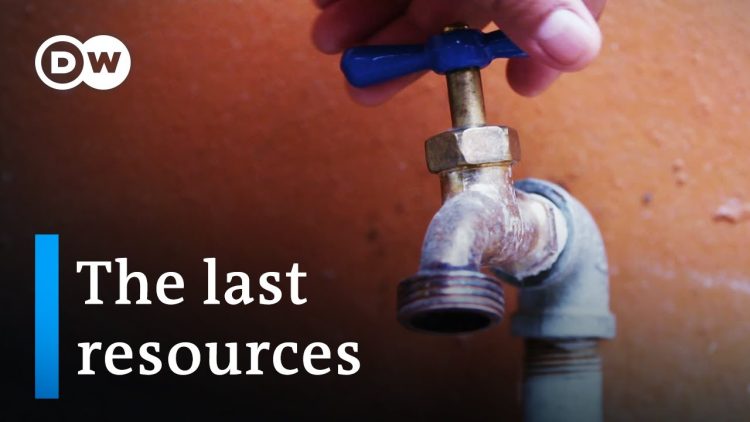
Who owns water? | DW Documentary
Climate change is causing temperatures to rise, and everyone is consuming more water — whether it is to make soda, microchips or cattle feed. But our reservoirs are running dry. Investors are buying water rights, prices are going up, and farmers are running out of water. Who owns water? Will there be more and more conflicts, even wars, over water? What will happen if our water disappears?
The numbers behind the question are stark. As of 2024, 2.1 billion people still lacked safely managed drinking water, and 3.4 billion lacked safely managed sanitation. Agriculture accounts for around seventy percent of all freshwater withdrawals, and only about two and a half percent of the Earth’s water is freshwater at all. Global water use has been rising by roughly one percent a year for four decades, and up to 3.5 billion people now live under conditions of water stress for at least one month a year.
The film follows the consequences on the ground. Livestock farmers are running out of water. In India, farmers can no longer irrigate their fields. People are fleeing their homes in large numbers, driven out by drought rather than war, and the film asks what happens to the places they leave and the places they arrive in.
The series began with the fight for water, the struggle over a resource that is becoming scarce, and continued with what happens when water dries up. This final part widens the lens to ownership: the legal systems, the markets, and the politics that decide who gets water and who does not. It is a film about a crisis that is already here, in the fields of India, in the reservoirs that no longer fill, and in the homes of the two billion people who cannot trust the water from their taps.
What the Film Explores
The film explores the idea that water is becoming a commodity. For most of human history, water was a commons — something that fell from the sky and flowed through the land, used by everyone and owned by no one. The film shows how that is changing: how water rights are bought and sold, how investors treat water as an asset, and how scarcity turns a shared resource into a source of profit for some and a source of suffering for others. The question of the title is not rhetorical.
It also explores the link between water and food. Agriculture takes seventy percent of the world’s freshwater, and the film follows that chain from the field to the table: the farmers in India who can no longer irrigate, the livestock farmers watching their wells run dry, and the food systems that depend on water that is no longer guaranteed.
Finally, the film explores the human cost of scarcity. Drought is already displacing people in large numbers, and the film asks what happens when that displacement becomes a flood: when entire regions can no longer support the people who live in them, and when the conflicts over water that the film warns about — between farmers and cities, between countries that share a river, between those who own the rights and those who need the water — stop being hypothetical and start being real.
Key Themes
- 2.1 billion people: as of 2024, that many still lacked safely managed drinking water.
- Seventy percent: agriculture accounts for around seventy percent of all freshwater withdrawals.
- Running dry: reservoirs are falling, drought is spreading, and farmers in India and elsewhere can no longer irrigate.
- Water as an asset: investors are buying water rights, and prices are rising as scarcity grows.
- Displacement: people are fleeing their homes in large numbers, driven by drought.
- Conflict: the film asks whether competition for water will lead to more conflicts, even wars.
- Part three: the final film in DW’s three-part series on the global water crisis.
Production and Background
The film is a DW Documentary production, the third part of a three-part series on water. Part one, “The fight for water,” looked at the struggle over a scarce resource; part two asked what happens when water dries up; this final part asks who owns it.
The water crisis the series describes is not a prediction but a measurement. The United Nations’ World Water Development Report 2023 found that more than a quarter of the world’s population lacks safe drinking water, and that water use has been rising by about one percent a year for forty years.
Recommended Companion Viewing
Explore authoritative investigative documentaries on related historical events and investigative subjects.

Frequently Asked Questions
How many people lack safe drinking water? As of 2024, 2.1 billion people lacked safely managed drinking water services, and 3.4 billion lacked safely managed sanitation, according to the United Nations.
What uses most of the world’s water? Agriculture accounts for around seventy percent of all freshwater withdrawals worldwide. Industry and domestic use account for most of the rest.
Can water be owned? In many places, yes: water rights can be bought and sold, and investors are increasingly treating water as an asset. The film asks whether a resource that every living thing needs should be owned at all, and who should decide.
Will there be wars over water? The film raises the question without answering it. Competition for water is already driving displacement and tension between farmers and cities and between countries that share rivers, and the risk grows as scarcity increases.
More to watch
- Rivers at risk – Water crisis on four continents
- Our drinking water – Is the world drying up?
- Climate change – living on the water
- Why cities are uncovering their buried rivers
- When the rains cease to fall – Indian farmers left alone
The farmers in this film’s India sequences face the same drought as When the rains cease to fall – Indian farmers left alone, which follows Indian farmers left to cope on their own.







