
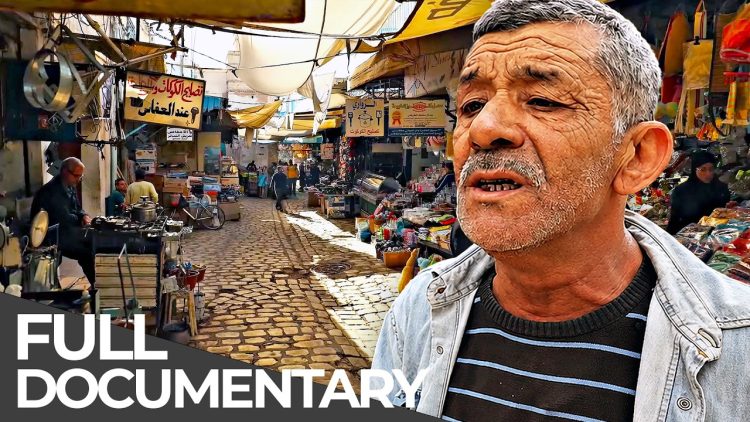
Earth Untold: Tunisia | Hidden Tales from the Crossroads of North Africa
Tunisia is a land shaped by thousands of years of civilisations, where ancient traditions survive alongside the modern. From the whitewashed villages and centuries-old pottery workshops of Djerba to desert oases, bustling medinas, Roman ruins, and the historic streets of Tunis, this documentary journeys across one of North Africa’s most fascinating countries. It is a journey through a place that has been a crossroads for millennia, and the film shows what that means on the ground, in the hands of the people who live there.
The film begins on Djerba, the island off Tunisia’s southern coast, where whitewashed villages and pottery workshops have kept their traditions for centuries. Djerba is famous for its crafts, and the film meets the potters and artisans whose work has been passed down through generations, shaping clay into the forms their grandparents made, in workshops that have barely changed. The island is a place where time moves slowly, and the film lets it, lingering on the craft and the people who practise it.
From Djerba the film moves across the country, and Tunisia’s variety is the point. There are desert oases, where palm groves rise out of the sand and water makes life possible in the driest of landscapes. There are medinas, the old walled quarters of the cities, where the streets are narrow, the shops are crowded, and the trade has been going on for centuries. And there are Roman ruins, the remains of an empire that ruled this coast two thousand years ago, standing in the open air as a reminder of how many civilisations have passed through this land.
The film’s heart is the people it meets along the way: the craftsmen, farmers, musicians and families preserving traditions passed down through generations. Tunisia’s heritage is not kept in museums alone, it is lived, in the pottery workshops and the farms, in the music and the markets, in the families who still make things the way their ancestors did. The film shows how those traditions survive alongside the modern, in a country that is both ancient and contemporary, and how the people who keep them alive are the real guardians of Tunisia’s culture.
By the end, the film has become a portrait of a country between worlds. Tunisia sits between the Mediterranean and the Sahara, between Europe and Africa, between the ancient and the modern, and it has been shaped by all of them. The documentary discovers the extraordinary cultural heritage hidden between the Mediterranean and the Sahara, and its closing argument is that Tunisia’s richness lies not in any single monument or tradition, but in the layering of them, thousands of years of civilisations, still visible in the streets, the workshops and the faces of the people who live there.
What the Film Explores
The film explores Djerba first, and it is the documentary’s most evocative stop. The island’s whitewashed villages and centuries-old pottery workshops are presented as a living tradition, not a museum piece, and the film shows the potters at work, shaping the clay that has been worked on the island for generations. Djerba is a place where the ancient and the modern coexist, and the film treats it as a microcosm of Tunisia itself.
A second thread follows the desert oases, and the film shows what water means in the Sahara. The oases are green islands in the sand, where palm groves and gardens are possible because of springs and wells, and the film shows the farmers who work them, and the life that gathers around them. The oases are a reminder that the desert is not empty, and that people have found ways to live in it for thousands of years.
A third thread follows the cities and their history, from the bustling medinas to the Roman ruins and the historic streets of Tunis. The medinas are the old hearts of the cities, where trade, craft and daily life have gone on for centuries, and the film shows their colour and their noise. The Roman ruins are the remains of a different Tunisia, an imperial province that left amphitheatres, temples and mosaics across the country, and the film treats them as part of the same story: a land that has always been a crossroads.
Running through the film is the question of heritage, and the film’s closing chapters look at how it survives. The craftsmen, farmers, musicians and families the film meets are not preserving tradition for tourists, they are living it, and the film’s argument is that this is what makes Tunisia’s heritage extraordinary: it is not behind glass, it is in the hands of the people. The documentary closes on the coast, between the Mediterranean and the Sahara, with the sense of a country that has been many things, and is still becoming.
Key Themes & Topics Examined
- Djerba: whitewashed villages and centuries-old pottery workshops
- Desert oases, where palm groves rise out of the sand
- Bustling medinas, and trade that has gone on for centuries
- Roman ruins, and an empire that ruled this coast
- The historic streets of Tunis
- Craftsmen, farmers, musicians and families keeping traditions alive
- A land between the Mediterranean and the Sahara
- Thousands of years of civilisations, layered into one country
Production & Background
The film is a Free Documentary production, part of the Earth Untold series, which journeys across countries and cultures to tell the stories that are rarely told. Free Documentary is the channel of the Free Documentary network, which aims to provide high-quality documentaries on YouTube for free, working with filmmakers from around the world and using the latest camera technology.
The documentary’s subject is the culture and heritage of Tunisia, and its framing is the one the description gives: a land shaped by thousands of years of civilisations, where ancient traditions survive alongside the modern, from the whitewashed villages and pottery workshops of Djerba to desert oases, bustling medinas, Roman ruins and the historic streets of Tunis. The film meets the craftsmen, farmers, musicians and families preserving traditions passed down through generations, and discovers the extraordinary cultural heritage hidden between the Mediterranean and the Sahara.
Recommended Companion Viewing
Explore authoritative investigative documentaries on related historical events and investigative subjects.

Greater Israel: How Christian Zionism became policy
America's Most Illegal Military Base
The Biggest Oil Spill You’ve Probably Never Heard Of
Men in the Modeling Business
Frequently Asked Questions
What is the film about?
A journey across Tunisia, from the whitewashed villages and pottery workshops of Djerba to desert oases, medinas, Roman ruins and the historic streets of Tunis.
Where is Djerba?
An island off Tunisia’s southern coast, famous for its whitewashed villages and centuries-old pottery workshops.
What makes Tunisia a crossroads?
Its position between the Mediterranean and the Sahara, and between Europe and Africa, has brought thousands of years of civilisations through the country, from the Romans to the present day.
Who does the film meet?
Craftsmen, farmers, musicians and families preserving traditions passed down through generations.
Who made the film?
Free Documentary, as part of its Earth Untold series.







