Something is jamming GPS over Europe. Here’s what we found
Something is disrupting GPS signals across Europe. Aircraft, ships and ordinary drivers have all felt it, and for a long time nobody knew where it was coming from. This film follows the hunt for the jammer, from a laboratory in Texas to a satellite in orbit, and it ends with a suspect that nobody expected. It is a detective story, and the clues are written in radio waves.
The hunt begins with the work of Professor Todd Humphreys and Dr Zach Clements at the University of Texas at Austin, whose research this story is based on. Humphreys and Clements study GNSS interference, the disruption of the satellite navigation signals the whole world depends on, and they shared their data, their time and the inside story of the hunt with the filmmakers. Their paper, by Clements, Kriezis and Humphreys, is called Chasing Lightning: Detecting, Characterizing, and Identifying a Powerful Space-Based GNSS Interference, and it is the backbone of the film.
The film explains first how GPS works, and how easy it is to jam. GPS signals are extraordinarily weak by the time they reach the ground, having travelled more than 20,000 kilometres from orbit, and a jammer does not need much power to drown them out. The film shows how a small device on the ground can disrupt navigation for miles around, and how the jamming over Europe was different: too powerful, too persistent and too widespread to be the work of a single ground station.
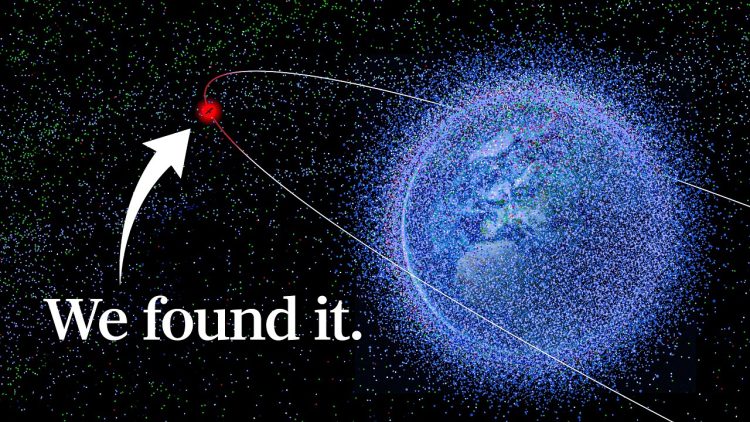
The investigation goes public, and then it narrows in. The film follows the researchers as they trace the interference, using software from KeepTrack to visualise the search through 15,000 satellites for the culprit, and GPSWise software to visualise the jamming and spoofing itself. Richard Bowden and Luis Enrique Aguado from GMV shared their independent work tracing the source, and Ben Watts shared his first-hand experience of GPS jamming and spoofing from the cockpit.
The trail leads to Cosmos 2546, a satellite, and to the possibility of a secret messaging service carried on the same signals that are disrupting navigation. The film lays out the evidence for the satellite as the source, and the questions that remain, and it closes with the question that makes the story matter to everyone: what happens if we lose GPS. The answer, the film shows, is that we would lose far more than directions. We would lose the timing signals that run power grids, financial markets and mobile networks, and the world would notice within minutes.
What the Film Explores
The film explores GPS itself first, and it is the documentary’s foundation. How does GPS work, and why is it so fragile? The film answers with the physics: signals from satellites more than 20,000 kilometres away, arriving at the ground weaker than a whisper, and a system that was never designed to resist deliberate interference. The film’s interactive GPS explainer, built on the work of Bartosz Ciechanowski, makes the technical argument visual, and the animation is some of the clearest in the film.
A second thread follows the jamming, and the film is at its most forensic here. How easy is it to jam GPS, and what does the jamming over Europe actually look like? The film shows the pattern of the disruption, the way it spreads across the continent, and the reasons the researchers concluded that the source was not on the ground. The hunt to find the jammer is told as a sequence of eliminations, each one narrowing the field, until only the sky is left.
A third thread follows the identification, and it is the film’s climax. Narrowing in on the jammer means searching through 15,000 satellites, and the film shows the KeepTrack software doing exactly that, visualising the search in real time. The identification of Cosmos 2546, and the question of whether the interference is a secret messaging service, is the film’s most surprising material, and it is presented with the caution it deserves: the evidence points to the satellite, but the purpose of the signals remains a matter of investigation.
Running through the film is the question of what we depend on. GPS is not just a navigation system. It is a timing system, and the film’s closing chapter, on what happens if we lose GPS, makes the stakes plain: power grids, financial markets, mobile networks and transport all rely on the same signals. The documentary closes on that vulnerability, and on the researchers who found the jammer, with the implication that the hunt is not over, and that the next interference event may already be under way.
Key Themes & Topics Examined
- GPS jamming over Europe: a disruption nobody could explain
- How GPS works, and why its signals are so easy to drown out
- Professor Todd Humphreys and Dr Zach Clements, University of Texas at Austin
- The hunt to find the jammer, across 15,000 satellites
- KeepTrack and GPSWise: visualising the search and the interference
- Cosmos 2546: the satellite at the centre of the trail
- A secret messaging service, hidden in the interference?
- What happens if we lose GPS: power, finance and mobile networks
Production & Background
The film is a Veritasium production, written, produced and directed by Emilia Gyles, presented by Derek Muller and Gregor Cavlovic, and edited by Peter Nelson, with assistant editing and sound design by James Stuart. The animators are Domonkos Jozsa, Emma Wright, Alex Drakoulis and Andrew Neet, and the executive producers are Casper Mebius, Derek Muller and Gregor Cavlovic. The film’s research was based on the work of Professor Todd Humphreys and Dr Zach Clements at the University of Texas at Austin, with contributions from Ramsey Faragher of the Royal Institute of Navigation, Richard D. Easton, Dana Goward of the Resilient Navigation and Timing Foundation, and Ben Watts.
The documentary’s subject is the hunt for the source of GPS jamming over Europe, and its framing is the one the description gives: something disrupting GPS signals across the continent, a hunt that runs from the laboratory to orbit, and a suspect in the form of the satellite Cosmos 2546. Its central reference is the paper by Clements, Kriezis and Humphreys, Chasing Lightning: Detecting, Characterizing, and Identifying a Powerful Space-Based GNSS Interference, and its chapters run from the jamming itself through how GPS works, how easy it is to jam, the hunt, the possible culprits, the investigation going public, narrowing in, Cosmos 2546, a secret messaging service, and what happens if we lose GPS.
Recommended Companion Viewing
Explore authoritative investigative documentaries on related historical events and investigative subjects.

The Man Who Refused to be a Trillionaire
Will Humans Love AI Robots?
We Made A Giant Zipper To Explain How It Works
Drones, Robots, and Super Sperm – The Future of Farming
Frequently Asked Questions
What is the film about?
The hunt for the source of GPS jamming over Europe, which researchers traced to a satellite in orbit.
How does GPS jamming work?
GPS signals are extraordinarily weak by the time they reach the ground, so a jammer does not need much power to drown them out.
Whose research is the film based on?
Professor Todd Humphreys and Dr Zach Clements at the University of Texas at Austin, authors of the paper Chasing Lightning on space-based GNSS interference.
What is Cosmos 2546?
The satellite the investigation identified as the source of the interference over Europe.
What happens if we lose GPS?
Far more than directions: power grids, financial markets, mobile networks and transport all rely on GPS timing signals.