
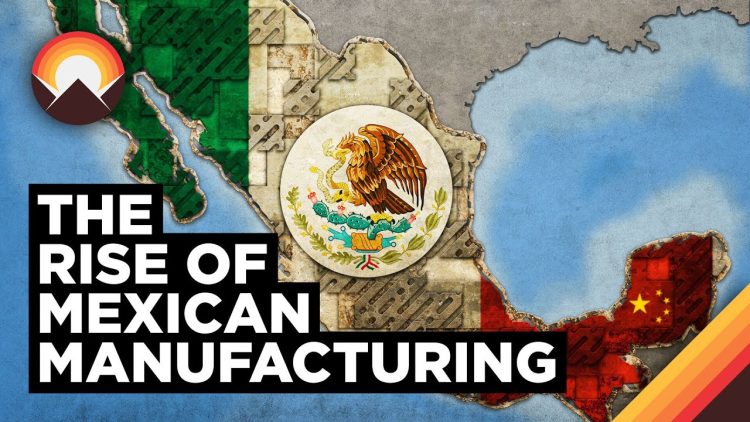
How Mexico is Becoming the New China
For twenty years, China was America’s factory. After joining the World Trade Organization in 2001, China became the workshop of the world, and by 2014 it was the United States’ largest trading partner. Then, in 2018, the United States imposed tariffs on Chinese goods, China retaliated, and the pandemic broke the supply chains that the whole system depended on. Companies started asking a question they had not asked for a generation: what if the factory were closer to home?
The shift began with the tariffs. In 2018 the Trump administration imposed new tariffs on imports from China under Section 301, at rates of ten to twenty-five percent on more than 250 billion dollars of goods, and China responded with tariffs of its own. The average American tariff on Chinese imports rose to about 19.3 percent, and roughly two-thirds of China’s exports to the United States remain subject to those tariffs. The effect was not to bring manufacturing back to America, as the tariffs’ supporters had hoped, but to push it somewhere cheaper and closer: Mexico.
The numbers tell the story. In the first four months of 2023, total trade between the United States and Mexico reached 263 billion dollars, representing 15.4 percent of all the goods the United States exported and imported, ahead of Canada at 15.2 percent and China at 12.0 percent. Mexican imports to the United States totalled 157 billion dollars in that period, and American exports to Mexico reached 107 billion. Between 2017 and 2023, Mexico’s exports to the United States climbed by 163 billion dollars, with vehicles contributing about thirty percent of the increase and electronics about fifteen percent. The automotive industry shows how the system works: an American plant produces an intermediate good, exports it to Mexico, where it becomes part of an assembly process in a maquiladora, a foreign-owned assembly plant, and the finished product is then imported back into the United States.
Mexico’s advantage is not only cost. It is geography, and it is the trade architecture built over thirty years: the North American Free Trade Agreement of 1994, replaced in 2020 by the United States-Mexico-Canada Agreement, which ties the three economies together and gives goods made in Mexico preferential access to the American market. It is also the pandemic’s lesson: when a container from Shanghai to Los Angeles costs more, takes longer, and can be delayed by a lockdown on the other side of the world, a truck crossing the border at Laredo starts to look like a better bet. The film’s conclusion is measured rather than triumphant: Mexico is not China, and it will not replace it entirely, but the centre of gravity of American manufacturing has moved, and it has moved south.
What the Film Explores
The film explores how a trade war reshapes a continent. The tariffs of 2018 were aimed at China, but their most durable effect was on Mexico, which became the beneficiary of a dispute it did not start.
It also explores the difference between reshoring and nearshoring. Reshoring means bringing production home to the United States; nearshoring means bringing it to a nearby country, and the film argues that nearshoring is what actually happened, because Mexico offered the combination the United States could not: competitive labour costs, no ocean to cross, and a trade agreement that made the border nearly frictionless for manufactured goods.
Finally, the film explores the limits of the story. Nearshoring is not a simple good-news tale: Mexico faces its own challenges, from security to energy to infrastructure, and the gains have been uneven, concentrated in the northern industrial states such as Nuevo Leon, Sonora, Chihuahua and Jalisco. The film also notes the twist that Chinese companies themselves have increased their exports to Mexico, using the USMCA as a way around American tariffs on Chinese goods. Mexico becoming the new China, the film suggests, does not mean China has gone away. It means the map has been redrawn, and everyone is still learning to read it.
Key Themes
- The tariff shock: American tariffs on Chinese goods in 2018, at ten to twenty-five percent on more than 250 billion dollars of imports, pushed manufacturers to look elsewhere.
- The top spot: at the start of 2023 Mexico overtook China as the United States’ largest trading partner, with 263 billion dollars of trade in the first four months of the year.
- Nearshoring: producing in a nearby country rather than across an ocean, Mexico offered competitive labour, proximity and a trade agreement.
- The forty-percent figure: the average import from Mexico is about forty percent American-made; for a Chinese import the figure is about four percent.
- The auto chain: American parts are exported to Mexico, assembled in maquiladoras, and imported back as finished vehicles.
- NAFTA to USMCA: the 1994 trade agreement and its 2020 successor tie the three North American economies together.
- The limits: gains are concentrated in northern Mexico, and Chinese firms are using Mexico as a route around American tariffs.
Production and Background
The film is a Wendover Productions documentary from 2023, written by Sam Denby and Tristan Purdy, with animation led by Josh Sherrington.
At nineteen minutes and eleven seconds, this is the shortest film in the batch, under the twenty-minute preference but well over the fifteen-minute threshold for a documentary post.
Recommended Companion Viewing
Explore authoritative investigative documentaries on related historical events and investigative subjects.

Why Can't Kids Read Anymore?
How to Lose $35 Billion Dollars Betting on AI
US Midterms 2026: Will Affordability Decide America’s 2026 Midterms?
How much influence do the super rich have?
Frequently Asked Questions
When did Mexico become America’s largest trading partner? At the start of 2023. In the first four months of that year, total trade between the United States and Mexico reached 263 billion dollars, or 15.4 percent of all American trade, ahead of Canada at 15.2 percent and China at 12.0 percent. China had held the top spot since 2014.
What is nearshoring? Nearshoring is the practice of sourcing or producing goods in a nearby country rather than a distant one. For American companies it usually means moving production from China to Mexico, which offers competitive labour costs, a shared border, and preferential access under the United States-Mexico-Canada Agreement.
What are maquiladoras? Maquiladoras are foreign-owned assembly plants in Mexico, mostly near the American border, where imported parts are assembled into finished goods for export. They are a central part of the cross-border manufacturing chain between the United States and Mexico.
Did the tariffs on China bring manufacturing back to America? Largely, no. The tariffs raised the cost of Chinese imports, but the manufacturing mostly moved to Mexico and other nearby countries rather than returning to the United States, a process economists call nearshoring rather than reshoring.
More to watch
- Rise of China
- How to Lose $35 Billion Dollars Betting on AI
- Neel Kashkari, President of the Minneapolis Fed, on Tariffs and More
- Former Adviser on Trump’s Economic Worldview
- Mexico’s Wild Side: The Heart of the Wild
The other side of this story is the country Mexico is replacing, and Rise of China shows how China became the world’s factory in the first place.







