
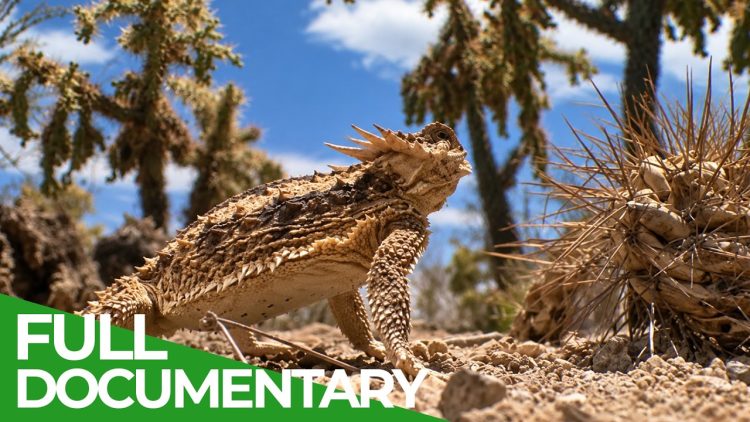
Mexico’s Wild Side: The Heart of the Wild
In the wild places of Mexico, every day is a battle for survival. That is the premise of this film, which follows the predators of the country’s deserts and rainforests and shows what it takes to live, and to kill, in landscapes that offer no second chances. From scorching deserts to tropical rainforests, the film moves through the habitats where Mexico’s hunters work, and it watches the struggle between hunter and hunted play out again and again.
The stars of the film are the predators. Powerful jaguars stalk their prey through the undergrowth, deadly snakes strike in the desert, and magnificent harpy eagles hunt high above the jungle floor. Each of them hunts in a different way, in a different world, and the film takes care to show how each animal’s body and behaviour fit the place it lives in. The jaguar is a creature of stealth and sudden power; the snake is a creature of patience; the eagle is a creature of height and speed.
What makes the film work is that it does not only show the hunters. It shows the hunted too, and the survival strategies that keep them alive: camouflage, speed, vigilance, and the habit of never quite relaxing. In the desert, a small animal that stops paying attention for a moment can become a meal. In the rainforest, the same is true from above, as the shadow of an eagle passes over the canopy.
The film is a companion piece to Mexico Untamed, the other Free Documentary Nature film about Mexico in this batch, but it is a different film. Where that one moves from the ocean to the rainforest and celebrates variety, this one stays on land and concentrates on the drama of predation. Both run for exactly 48 minutes and 5 seconds, and both were published in November 2026, but they tell their stories from opposite ends of the food chain.
By the end, the film has built a picture of Mexico as a country of edges: desert against jungle, hunter against hunted, and survival against the odds. It is a picture that depends on the wild places remaining wild, and the film leaves the viewer with a sense of how much would be lost if they did not.
What the Film Explores
The film explores the jaguar first, and with good reason. The jaguar is the largest cat in the Americas and the apex predator of Mexico’s forests, an animal that hunts by stealth and kills with a bite powerful enough to pierce the skull of its prey. In Mexico, jaguars live in the rainforests of the south and in the dry forests of the north-west, and they need large territories and healthy populations of deer, peccaries and other prey to survive. The film shows how elusive they are: even in places where jaguars are known to live, they are rarely seen, moving mostly at night and through cover so dense that a camera can be a few metres away and still miss them.
It then turns to the desert, where the rules of hunting are different. In the open ground of Mexico’s arid north, there is nowhere to hide, so the predators that live there rely on patience and camouflage instead. Snakes wait motionless for hours, striking only when prey comes within reach, and their venom does the work that muscle does for the jaguar. The film shows how the desert’s extremes, blazing heat by day and cold by night, shape every animal that lives there, and how water, more than food, is the resource that decides who survives.
The third hunter the film follows is the harpy eagle, one of the largest and most powerful eagles in the world. Harpy eagles hunt in the canopy of the rainforest, snatching monkeys, sloths and other tree-dwelling animals from the branches with talons as large as a human hand. They are birds of the deep forest, and they need large areas of unbroken canopy to hunt in, which makes them a living measure of how healthy a rainforest is. The film captures their hunting flights high above the jungle floor, where the scale of the forest itself becomes part of the story.
Finally, the film explores the prey, and the extraordinary range of defences that evolution has produced. Some animals rely on speed, some on camouflage, some on living in groups where many eyes watch for danger, and some on being dangerous themselves. The film’s argument, if it has one, is that the struggle between hunter and hunted is not a war with a winner, but a balance, and that the balance itself is what makes these wild places so alive.
Key Themes
- The jaguar, the Americas’ largest cat, hunting unseen in Mexico’s forests.
- Desert predators and the patience of snakes that hunt by ambush.
- The harpy eagle, a giant of the rainforest canopy, hunting from above.
- Survival strategies of prey: speed, camouflage, vigilance and strength in numbers.
- Desert and rainforest as two opposite worlds within a single country.
- The balance between hunter and hunted, and why it matters.
- Filming elusive animals, and the patience the work demands.
- Wild Mexico, and what is at stake if its habitats are lost.
Production and Background
Mexico’s Wild Side was released by Free Documentary Nature and runs for 48 minutes and 5 seconds, the same length as its companion film Mexico Untamed, which was published a week earlier. Both films draw on the channel’s library of nature footage, and both were published in November 2026. The harpy eagle it features is one of the world’s largest eagles, and the jaguar it follows is the largest cat in the Americas, a species whose Mexican population is concentrated in the forests of the south and the dry country of the north-west.
Recommended Companion Viewing
Explore authoritative investigative documentaries on related historical events and investigative subjects.

Destination Wild: Wild Islands - Falkland Islands
Viper Queens
The Wild Heart Of Spain
Attack and Defend: Cold Blooded Killers
Frequently Asked Questions
What animals does the film follow?
Jaguars stalking prey in the forest, snakes striking in the desert, and harpy eagles hunting above the jungle canopy, along with the animals they hunt.
Is this the same film as Mexico Untamed?
No. The two films share a length and a subject, Mexico’s wildlife, but Mexico Untamed ranges from the ocean to the rainforest, while this film concentrates on predators on land.
How big is a jaguar?
The jaguar is the largest cat in the Americas, a powerful forest predator that hunts deer, peccaries and other animals, mostly at night and mostly unseen.
What does a harpy eagle hunt?
Harpy eagles hunt in the rainforest canopy, taking monkeys, sloths and other tree-dwelling animals with talons as large as a human hand.
Where do Mexico’s deserts lie?
Mexico’s great deserts, including the Chihuahuan and Sonoran deserts, lie in the north of the country, while its rainforests are concentrated in the south.







