How this tiny country became the best at night trains in Europe
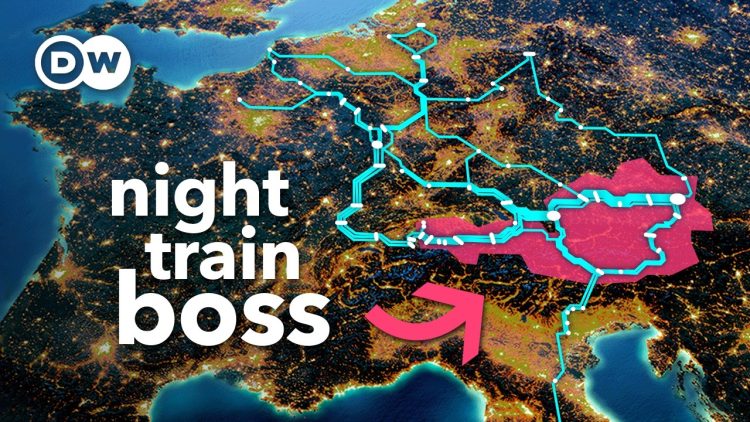
As Europe’s rail giants scrapped their sleeper cars, one tiny country went all in. Austria’s national railway, OBB, has built the continent’s largest night train network, carrying millions of passengers across borders while everyone else hit the brakes. This film is the story of how Austria quietly conquered the night — and of what the rest of Europe gave up when it decided that sleeper trains were a thing of the past.
The film begins on board, with a room tour. The night train is not a nostalgic relic in this telling; it is a working hotel on rails, with compartments, bunks, and a dining car where dinner is served as the landscape rolls past in the dark. The reporter travels through the night, and the film uses the journey to make its case: a night train is not just a way of getting from one city to another, but a way of travelling that uses the hours you would otherwise spend asleep. You board in the evening, you wake up in another country, and the journey itself has cost you no time at all.
Then the film turns to history, and the history is a story of retreat. Night trains were once a normal part of European travel, and then, one by one, the big operators withdrew. Germany’s Deutsche Bahn ended its overnight services in 2016, and other national railways followed. The reasons were familiar: high costs, low margins, competition from budget airlines, and the sense that travellers wanted speed above all. Austria did the opposite. Where others saw a dying business, OBB saw an opening — and it bought the rolling stock others were discarding and built a network around it.
What made Austria different, the film argues, is a set of advantages that other countries did not share. Its position at the centre of Europe puts it within an overnight journey of many of the continent’s great cities. Its railway invested when others were retreating, and it kept the expertise — the crews, the carriages, the timetables — that the rest of Europe was losing. And it had a state railway willing to treat night trains as a public service worth keeping, rather than a commercial product to be judged on a single year’s profit.
By the end, the film has become a story about more than trains. Night trains, the film shows, are also a climate story: a sleeper train has a far smaller ecological footprint than a short-haul flight, and studies cited by the film argue that night trains could replace a significant share of European flights. The documentary closes on the private players entering the market — the new operators, the new routes, the new competition — and on the question of whether Austria’s bet will become Europe’s future, or remain a small country’s exception.
What the Film Explores
The film explores the journey first, and it is the documentary’s most seductive material. The room tour, the bunks, the dinner in the dining car — the film wants the viewer to feel what a night train is like, and to understand why people who take one rarely go back to flying. The journey is the argument: a night train turns dead time into travel time, and it does so in a way that a plane, with its queues and its airports, cannot match.
A second thread follows the history, and the film is at its most pointed here. The retreat of the European night train was not an accident, and it was not inevitable. It was a series of decisions, made by railway after railway, to abandon overnight services as too expensive and too difficult. Austria’s decision to go the other way — to buy the discarded carriages, to keep the crews, to build the network — is presented as a choice, and the film’s point is that choices can be reversed. What one country did, others could do.
A third thread follows the economics, and the film takes it seriously. Night trains are expensive to run: the carriages, the staff, the tracks, the timetables that have to work across borders and across railway systems. The industry’s qualms are real, and the film gives them time — the costs, the complexity, the competition from airlines that can undercut a sleeper fare. But the film’s argument is that the economics look different when you count the whole cost, including the climate cost of flying, and when you count the value of a journey that takes no daytime hours at all.
Running through the film is the question of the future. The private operators are coming, the routes are multiplying, and the network Austria built is becoming a model. The documentary’s closing question is whether the night train’s return will be a niche for enthusiasts, or the beginning of a different way of moving around Europe — one that runs while you sleep, and wakes you up somewhere new.
Key Themes & Topics Examined
- Austria’s OBB, and the continent’s largest night train network
- The room tour: a hotel on rails, travelling while you sleep
- The great retreat: Europe’s railways abandoning sleeper cars
- Austria’s advantages: geography, investment, and a state railway that stayed
- The economics: why night trains are expensive, and why they may still be worth it
- The climate case: night trains against short-haul flights
- The industry’s qualms, and the complexity of cross-border timetables
- Private operators, and the night train’s uncertain future
Production & Background
The film is a DW Planet A production, reported by Katharina Schantz, with camera work by Henning Goll and editing by Andreas Hyronimus. Planet A is DW’s series on the shift toward an environmentally friendly world, and this episode follows its pattern: a problem hiding in plain sight — in this case, the disappearance of a low-carbon way of travelling — and the country that refused to let it go.
The documentary’s sources include studies on the ecological footprint of night trains and on their potential to replace flights in Europe, including work published by the German Federal Ministry for Digital and Transport and by the European Parliament. Its chapters run from the room tour to the history, the dinner break, Austria’s advantages, the industry’s qualms, and the private players now entering the market.
Recommended Companion Viewing
Explore authoritative investigative documentaries on related historical events and investigative subjects.

Rivers at risk - Water crisis on four continents
The organized crime hiding in your fridge
Lithium – New Gold Rush in the Andes
Frequently Asked Questions
What is the film about?
How Austria’s national railway, OBB, built Europe’s largest night train network while other countries scrapped their sleeper cars — and whether the night train can come back.
Why did other countries abandon night trains?
High costs, low margins, competition from budget airlines, and the sense that travellers wanted speed above all. Germany’s Deutsche Bahn ended its overnight services in 2016.
What makes Austria different?
Its central position in Europe, a railway that invested when others retreated, and a state operator willing to keep night trains running.
Are night trains better for the climate?
Yes — the film cites studies showing a far smaller ecological footprint than short-haul flights, and argues night trains could replace a significant share of European flights.
Who made the film?
DW Planet A, reported by Katharina Schantz, with camera work by Henning Goll and editing by Andreas Hyronimus.