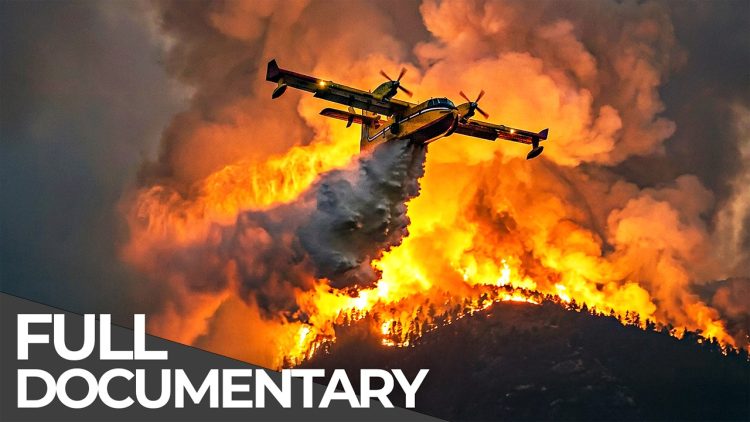
World’s Most Destructive Wildfires | How Mega-Fires Become Uncontrollable
Wildfires are among nature’s most destructive forces, capable of engulfing entire forests, threatening cities and spreading faster than firefighters can contain them. This film looks at the fires that grow beyond all control, the mega-fires that turn from a local emergency into a disaster measured in hundreds of square kilometres. It asks a simple question with a frightening answer: how does a fire become unstoppable, and why are such fires becoming more common?
The film travels to three places where the answer is written in ash. In California, it looks at the Station Fire, the devastating blaze that burned through the Angeles National Forest north of Los Angeles. The Station Fire began on 26 August 2009, near a Forest Service ranger station on the Angeles Crest Highway, and burned for almost two months, until 16 October. It consumed more than 160,000 acres of mountain forest, destroyed 89 homes, and killed two firefighters, Captain Tedmund Hall and Firefighter Specialist Arnaldo Quinones, who died on 30 August when their truck went off a cliff as they tried to escape the flames. It remains the largest wildfire in the modern history of Los Angeles County.
From California the film moves to Europe, to dangerous blazes near Marseille, on the French Mediterranean coast, and to the widespread wildfires of Portugal. The Mediterranean is one of the most fire-prone regions on Earth, and the film shows why: long, hot, dry summers, strong winds that drive flames through scrub and pine forest, and towns and cities built close to the wildland edge. Portugal has suffered some of Europe’s worst fire disasters in recent years, and the film uses its fires to show how quickly a blaze can turn from a forest fire into a threat to whole communities.
Through eyewitness accounts, firefighting operations and scientific research, the film explains the physics of the mega-fire. Wind is the first ingredient, pushing flames forward and carrying embers kilometres ahead of the fire front, where they start new fires faster than crews can chase them. Drought is the second, drying out vegetation until whole landscapes become fuel. Extreme heat is the third, raising temperatures so high that fires create their own weather, with towering columns of smoke and flame that generate lightning and winds of their own. When all three come together, a fire stops behaving like a fire and starts behaving like a storm.
What the Film Explores
The film explores the Station Fire first, and it treats it as the case study that explains everything else. The fire started as arson, near a ranger station, and spread through the rugged San Gabriel Mountains, threatening suburbs on the foothills below, from La Canada Flintridge and Pasadena to Altadena and Glendale. More than 12,000 structures were threatened, and the firefighting effort cost nearly 95 million dollars. The film shows how the terrain worked against the firefighters: steep canyons that funnelled wind and flame, dry chaparral that burned fiercely, and a fire that moved faster than crews could reposition. It was not contained until rain arrived in mid-October, almost two months after it began.
A second thread follows the fires of the Mediterranean, and the film shows how a different landscape produces the same disaster. Near Marseille, the danger comes from the mistral, the strong north-westerly wind that sweeps down the Rhone valley and drives flames through the dry scrub of Provence. In Portugal, the danger comes from vast plantations of eucalyptus and pine, planted for timber and paper, which burn intensely when the summer turns hot and dry. The film shows firefighters in both countries working the same problem as their Californian colleagues: a fire that moves faster than people, in terrain that gives it every advantage.
A third thread follows the science, and the film gives the researchers their due. Fire scientists explain the fire triangle, heat, fuel and oxygen, and show how drought and heat change the equation, turning living vegetation into dead fuel and raising the intensity of a fire beyond anything crews can stand in front of. The film explains spotting, the way embers are carried ahead of the fire to start new blazes, and it shows how a large fire can generate its own weather system, with a column of smoke and heat that produces lightning and winds that push the fire in new directions. This is the moment a fire becomes a mega-fire: when it stops responding to the weather and starts making its own.
Key Themes & Topics Examined
- The Station Fire of 2009, the largest in Los Angeles County’s modern history
- Two firefighters killed, 89 homes destroyed, more than 160,000 acres burned
- Blazes near Marseille, and the Mediterranean’s fire-prone summers
- Portugal’s widespread wildfires, and the danger to whole communities
- Wind, drought and extreme heat: the three ingredients of a mega-fire
- Spotting, and how embers start new fires kilometres ahead of the front
Production & Background
The film is a Free Documentary production, part of the channel’s series on the natural world and on disasters. Free Documentary is the channel of the Free Documentary network, which aims to provide high-quality documentaries on YouTube for free, working with filmmakers from around the world and using the latest camera technology.
Recommended Companion Viewing
Explore authoritative investigative documentaries on related historical events and investigative subjects.

The organized crime hiding in your fridge
Lithium – New Gold Rush in the Andes
The $200 million black market you never heard of
Frequently Asked Questions
What is the film about?
How the world’s most destructive wildfires grow into unstoppable mega-fires, from California’s Station Fire to blazes near Marseille and in Portugal.
What was the Station Fire?
A wildfire that burned in the Angeles National Forest north of Los Angeles from 26 August to 16 October 2009, consuming more than 160,000 acres, destroying 89 homes and killing two firefighters.
What makes a mega-fire uncontrollable?
The combination of wind, drought and extreme heat, which lets a fire spread faster than firefighters can contain it, carry embers kilometres ahead, and even generate its own weather.
Why are mega-fires becoming more common?
Because the conditions that create them, hotter summers, longer dry seasons and drier forests, are becoming more frequent, and fire seasons are getting longer.