
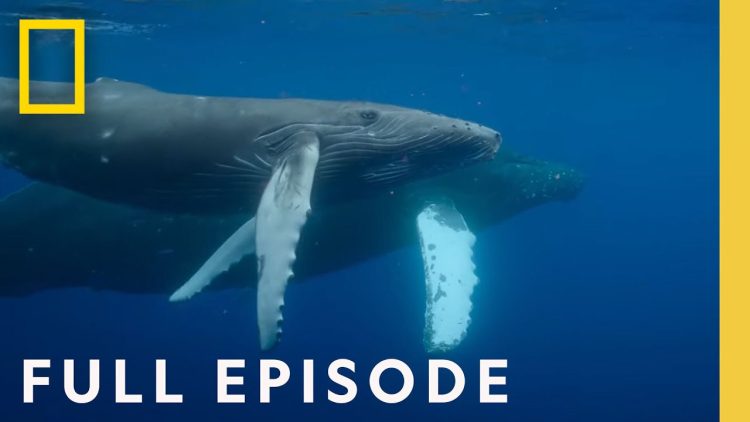
Oceans Odysseys: Incredible Animal Journeys (Full Episode) | National Geographic
Jump on board with the dedicated ocean moms risking it all to bring new life into the world. That is the promise of this episode of Incredible Animal Journeys, the National Geographic series narrated by Jeremy Renner, and it is a promise the film keeps. The episode follows the great ocean odysseys — the long migrations animals make to give birth and to protect their young — and it does so through the mothers: a humpback whale leading her newborn calf across the Pacific, a green turtle battling sharks to lay her eggs on the beach where she herself was born, and the red crabs of Christmas Island, born on land and marching en masse to the sea.
The heart of the episode is the humpback whale. A female humpback travels some 3,000 miles from the feeding grounds of Alaska to the calm waters of Hawaii, where she gives birth — a moment the cameras capture for the first time, as the newborn calf rises, with a gentle nudge from its mother, to take its very first breath of air.
The other journeys are no less extraordinary. The green turtle returns to the beach where she was born, navigating thousands of miles of open ocean to lay her eggs in the sand, while her hatchlings, once they emerge, must survive the gauntlet of predators on the beach and in the shallows. The Christmas Island red crabs, born on land, mass-migrate to the ocean in their millions, a trek filmed by low-to-the-ground cameras that follow the terrifying journey across the forest floor.
What makes the episode work is its scale. Incredible Animal Journeys is a sweeping series that follows Earth’s most incredible creatures through a life on the move, from the Antarctic to the African savanna and from the Pacific to Alaska, and this first episode sets the pattern: intimate stories of individual animals, told against the vastness of the ocean, with the science of navigation — the Earth’s magnetic field, the stars, the moon, ocean currents and the animals’ own senses — woven in without ever slowing the story down. Jeremy Renner’s narration brings warmth and humour to material that could easily have been solemn, and the result is a film that is as much about motherhood as it is about migration.
What the Film Explores
The film explores migration as a parental act. The journeys it follows are not undertaken for food or territory but for the next generation: the humpback travels 3,000 miles to give birth in warm, safe water; the turtle crosses an ocean to lay her eggs where she was born; the crabs march to the sea so their young can begin life in the water.
It also explores the science of how animals find their way. Humpbacks, turtles and crabs navigate thousands of miles using the Earth’s magnetic field, the position of the sun and stars, ocean currents and their own senses, returning to the same beaches and the same waters year after year. The film presents this navigation as one of nature’s great unsolved puzzles: we know the animals do it, and we are only beginning to understand how.
Finally, the film explores the human shadow over these journeys. The entangled humpback, the fishing line, the predators that have learned to wait at the beaches — the film is honest that the ocean these mothers cross is not the ocean of a century ago. The narration touches on mankind’s impact throughout the series, and it becomes the focus of the finale, but even in this first episode the message is clear: these odysseys have continued for generations, and whether they continue for generations more depends, in part, on us.
Key Themes
- The humpback mother: a 3,000-mile journey from Alaska to Hawaii to give birth, with the calf’s first breath filmed for the first time.
- The green turtle: returning across the ocean to lay her eggs on the beach where she herself was born, while sharks wait offshore.
- The red crabs: millions of Christmas Island crabs, born on land, mass-migrating to the sea in one of nature’s great spectacles.
- Navigation: magnetic fields, stars, moon and currents guide animals across thousands of miles to the same beaches and waters.
- The circle of life: babies learning to fend for themselves, and mothers who do not always succeed — death is part of the story.
- Human impact: fishing gear entangles a juvenile humpback, and the filmmakers themselves intervene to free a whale bound by line.
- Jeremy Renner: the actor narrates the series, bringing warmth and humour to the animals’ stories.
Production and Background
The film is the first episode of Incredible Animal Journeys, a seven-part National Geographic series that premiered on Sunday 19 November 2023, with the first two episodes airing together and the rest following on subsequent Sundays, streaming on Disney+ and Hulu from the next day. The series follows Earth’s most incredible creatures through a life on the move — from humpback whales to dung beetles, monarch butterflies and barn swallows — and this episode, at 46 minutes, is the ocean chapter.
The series’ structure is worth knowing: six narrative episodes follow the animals, and a finale, “Behind the Journey”, shows the making of the series, including the moments when the filmmakers had to intervene to help animals in harm’s way.
Recommended Companion Viewing
Explore authoritative investigative documentaries on related historical events and investigative subjects.

Africa’s Wildest Coast: Life At The Sweeping Edge
Raja Ampat: Life in the Coral Kingdom
High-Tech Shark Deterrence - Australia's New Strategy for Safe Beaches
Wonder Shore: Africa's Most Spectacular Coastline
Frequently Asked Questions
What is Incredible Animal Journeys? A seven-part National Geographic documentary series, narrated by Jeremy Renner, that follows animals through the great migrations of their lives. It premiered on 19 November 2023, and “Ocean Odysseys” is its first episode.
What happens in Ocean Odysseys? The episode follows ocean mothers: a humpback whale giving birth in Hawaii and leading her calf back to Alaska, a green turtle returning to her birth beach to lay eggs, and the red crabs of Christmas Island migrating to the sea.
Was the humpback birth really filmed for the first time? Yes — reviewers and National Geographic both note that the episode captures the birth of a humpback whale for the first time, with the newborn calf rising to the surface for its first breath.
How far do humpback whales migrate? The female in this episode travels about 3,000 miles from the feeding grounds of Alaska to the warm waters of Hawaii to give birth, and then makes the return journey with her calf.
More to watch
- Eat Or Be Eaten: Ocean Predators
- High-Tech Shark Deterrence – Australia’s New Strategy for Safe Beaches
- Nature’s Smartest Animals
- Our Nature: Call of the Wild
- Masai Mara: African Wildlife Stories
The ocean’s hunters are the other side of this story, and Eat Or Be Eaten: Ocean Predators shows what the mothers in this film are protecting their young from.







