
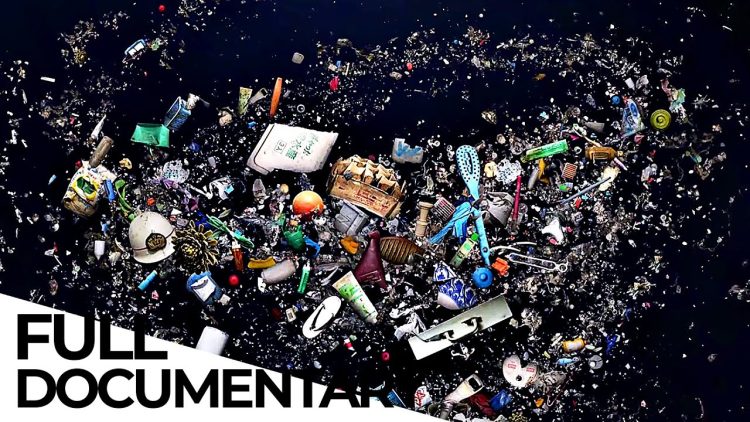
What Happens to Plastic in the Ocean | The Mystery of Missing Plastic | ENDEVR Documentary
Ninety-nine percent of the plastic that should be floating in the oceans is missing. Even accounting for the plastic that washes up on beaches or is trapped in Arctic ice, millions of tonnes has simply disappeared. That is the mystery at the heart of this film, a 2016 documentary carried by the aggregator channel ENDEVR: where does all the plastic go? As most plastic never deteriorates, it simply breaks down into smaller and smaller particles, invisible to the human eye. In this film, scientists embark in search of microplastics — small, mostly invisible, toxic — and find that they are home to a new ecosystem, the plastisphere. But where are they?
The numbers are the starting point. A study published in Science in 2015, led by Jenna Jambeck of the University of Georgia, estimated that between 4.8 and 12.7 million metric tons of plastic entered the ocean in 2010 alone, from people living within 50 kilometres of the coastline — about 8 million tons as a midpoint, the equivalent of five grocery bags full of plastic on every foot of coastline in the 192 countries examined. The world now produces more than 380 million tonnes of plastic every year. Most of it is less dense than water and should float, so the surface of the ocean should be thick with it. But the best estimates of the plastic afloat at sea are orders of magnitude lower: one widely quoted figure is around 250,000 tonnes, more than a hundred times less than a single year’s input.
The film follows the scientists trying to close it. One hypothesis is that the plastic is washing back ashore, but that does not explain why the missing plastic is mostly smaller than a millimetre. Another is that ultraviolet light and wave action break large pieces into smaller ones, and that those smaller particles — microplastics — are swallowed by organisms or sink into sediments. A study of deep-sea sediments found microplastic up to four orders of magnitude more abundant, per unit volume, in sediments from the Atlantic, the Mediterranean and the Indian Ocean than in plastic-polluted surface waters.
What the scientists find, wherever they look, is life. Microplastics are not sterile fragments: a single particle is big enough to provide housing for thousands of microorganisms, and together they form communities that scientists call the plastisphere. A 2013 study by researchers at the Woods Hole Oceanographic Institution and the Marine Biological Laboratory found not only diverse communities of microbes living on ocean plastic but also pits eaten into the fragments, suggesting the microbes were breaking the plastic down. The film’s warning is that this new ecosystem is also a new vector: a 2018 study of more than 120,000 reef-building corals across the Asia-Pacific found that the likelihood of disease rose from 4 percent to 89 percent when corals were in contact with plastic. The missing plastic, the film argues, is not gone. It is everywhere, in pieces too small to see, carrying life — and disease — with it.
What the Film Explores
The film explores a scientific mystery that is also a failure of imagination. For decades, the image of ocean plastic was the garbage patch: a visible island of trash. The reality, the film shows, is almost the opposite: five subtropical gyres hold, between them, only some 7,000 to 35,000 tons of plastic, most of it bobbing just beneath the surface in particles smaller than a centimetre.
It also explores the plastisphere, the new ecosystem that plastic has created. Every fragment of plastic in the ocean becomes a raft, carrying bacteria, algae and other organisms across distances they could never travel on their own, and potentially carrying pathogens and invasive species with them.
Finally, the film explores what can be done. It is a 2016 film, made before the wave of plastic bans and recycling pledges that followed, and its tone is sober rather than hopeful: the plastic already in the ocean is not going anywhere, because plastic does not biodegrade, it only fragments.
Key Themes
- The missing 99 percent: about 8 million tons of plastic enter the ocean each year, but only around 250,000 tons can be found floating at the surface.
- Microplastics: sunlight and waves break plastic into particles smaller than a millimetre, invisible to the naked eye and impossible to clean up.
- The plastisphere: each particle becomes a home for thousands of microbes, a new ecosystem of plastic rafts drifting across the ocean.
- Deep-sea sediments: microplastic is up to four orders of magnitude more abundant in deep-sea sediments than in surface waters.
- The garbage patches: five subtropical gyres hold only 7,000 to 35,000 tons between them — real, but a tiny fraction of the total.
- Coral disease: contact with plastic raises the likelihood of disease in reef-building corals from 4 percent to 89 percent.
Production and Background
The film is a 2016 documentary carried by ENDEVR, the documentary aggregator channel, which presents high-class documentaries, investigations and explainers on business, economics, geopolitics and social issues.
The missing plastic problem remains one of the great unsolved questions in ocean science. The Jambeck study’s estimate of 8 million tons a year has become the standard figure, and the gap between what goes in and what floats has never been closed. The plastisphere, named in 2013, is now a recognised field of study, and the search for the missing plastic continues — in sediments, in organisms, and in particles so small they can only be found with a microscope.
Recommended Companion Viewing
Explore authoritative investigative documentaries on related historical events and investigative subjects.

The Plastic Problem - A PBS NewsHour Documentary
Who owns water? | DW Documentary
The $200 million black market you never heard of
Frequently Asked Questions
How much plastic enters the ocean each year? About 8 million metric tons, according to the widely cited 2015 study in Science by Jenna Jambeck and colleagues, which estimated 4.8 to 12.7 million tons entering the ocean in 2010.
What is the missing plastic problem? The gap between the millions of tons of plastic entering the ocean each year and the roughly 250,000 tons found floating at the surface — more than a hundred times less than a single year’s input.
What is the plastisphere? The community of microorganisms that colonises plastic debris in the ocean.
Where does the missing plastic go? Scientists believe it fragments into microplastics that sink into deep-sea sediments, are eaten by marine organisms, or break down into particles too small to detect — but the full accounting has never been closed.
More to watch
- Bioplastics and Other Innovations Against Climate Change
- The billion-dollar waste business
- Displaced on Java – A village battling rising sea levels
- Will renewables stop the climate crisis?
- Backbreaking Work: Deep-Sea Fishing in the Arctic Ocean
Stopping the flow starts with alternatives, and Bioplastics and Other Innovations Against Climate Change looks at the materials that could replace the plastic in the first place.







