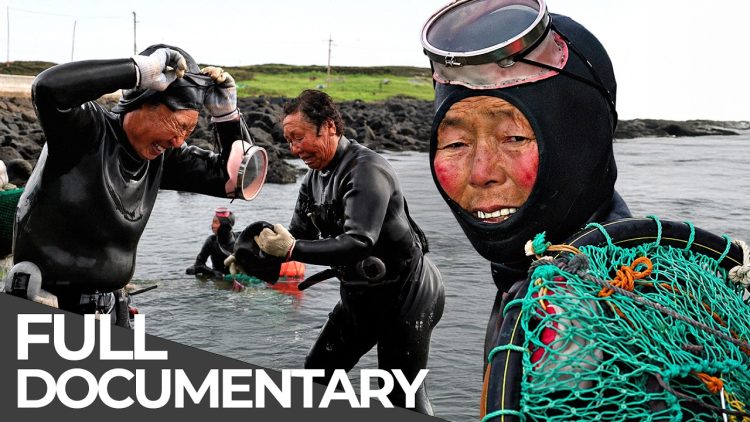
World’s Oldest Divers | Haenyeo: South Korea’s Most Dangerous Tradition
In Jeju Province, off the southern coast of Korea, are the women of the sea who hold the breath of life. Typhoons and the barren volcanic soil of the islands left the people enduring years of poor harvests and famine, and for survival, women looked to the frigid sea. Haenyeo, women of the sea, still exist, and they have been diving without air tanks for more than 1,000 years. They go into waters 10 to 20 metres deep to harvest seaweed and shellfish to make a living, working seven to eight hours a day without even a sip of fresh water, and at the end of the day they return with sumbisori, a whale-like noise at the end of their breath.
They make a living in the same sea, but each has a different story. A mother and her daughters dive together, making themselves a third-generation haenyeo family. Another started diving to pay off the debts of her gambling husband. Many hold their breath to support their children through school. One haenyeo continues her life at sea despite having lost her daughter, a fellow haenyeo, to the sea. They have only one thing in common: all hold their breath for life. For a better life, they hold their breath as long as they can.
The community is divided into three tiers, Group A, B and C, based on only one thing: the length of breath. One’s rank is determined by the sum of breath, and they believe the sum is predetermined at birth. Group B shall never brave the waters of Group A. Every year, there are deaths due to mulsum, or breathing underwater, which refers to the water haenyeos drink when they run out of their own breath. Life, for these women of the sea, is about holding one’s breath, and containing and controlling one’s desire.
This film is a seven-year record of the lives of the haenyeo in Udo, an islet in the province of Jeju, known as the birthplace of haenyeo. It is a close look into the lives of strong women who stand on the boundary of life and death, filmed over years rather than weeks, so that the routines, the risks and the relationships have time to become familiar. The length of the record is the film’s strength: it shows not a single dive, but a life.
By the end, the film has become a portrait of a tradition that is also a livelihood, and of women who have made the sea their workplace for a thousand years. The haenyeo dive because their families need them to, and because the sea is what they know. Every dive could be their last, and the women know it. They dive anyway, because the sea is where their lives are, and because holding their breath is how they hold their families together.
What the Film Explores
The film explores the diving first, and it is the documentary’s foundation. Ten to twenty metres down, without air tanks, for seven to eight hours a day: the film shows the work in detail, the descent, the harvest of seaweed and shellfish, the return to the surface, and the sumbisori, the whale-like sound at the end of each breath that gives the haenyeo their rhythm. The diving is not a performance. It is a job, and the film treats it as one.
A second thread follows the individual women, and the film is at its most intimate here. The mother and daughters diving together as a third generation, the woman who started diving to pay off her husband’s debts, the mothers holding their breath to put their children through school, the woman who lost her daughter to the sea and kept diving: each story is different, and each one shows a different reason for the same dangerous work. The film’s seven years of filming let these stories unfold slowly.
A third thread follows the community and its rules, and the film takes them seriously. The three tiers, Group A, B and C, ranked by the length of breath, and the belief that the sum of breath is predetermined at birth, are not background detail. They are the structure of the community, and the film shows how they shape who dives where, and who takes which risks. The deaths from mulsum, the water swallowed when a diver runs out of breath, are the dark side of that structure, and the film does not look away from them.
Running through the film is the question of what the tradition costs and what it gives. The haenyeo stand on the boundary of life and death every time they dive, and the film’s closing argument is that this is not a metaphor. It is the literal truth of their working lives, and it has been true for more than a thousand years. The film closes on the women themselves, still diving, still holding their breath, still making a living from a sea that has given them everything and taken some of them away.
Key Themes & Topics Examined
- Haenyeo: women of the sea, diving without air tanks for over 1,000 years
- Jeju and Udo, the birthplace of the haenyeo
- Ten to twenty metres down, seven to eight hours a day
- Sumbisori: the whale-like sound at the end of each breath
- Three tiers, Group A, B and C, ranked by the length of breath
- Mulsum: the water swallowed when a diver runs out of breath
- A mother and daughters, a third-generation haenyeo family
- Seven years of filming on the boundary of life and death
Production & Background
The film is a Free Documentary production, a seven-year record of the lives of the haenyeo in Udo, an islet in the province of Jeju. Free Documentary is passionate about sharing the beauty and diversity of the world through high-quality documentaries available for free on YouTube, working with filmmakers from around the world equipped with the latest camera technology.
The documentary’s subject is the haenyeo, the women divers of Jeju, and its framing is the one the description gives: women who have dived without air tanks for more than 1,000 years, working seven to eight hours a day in waters 10 to 20 metres deep, divided into three tiers by the length of their breath, and living on the boundary of life and death. The film was recorded over seven years in Udo, known as the birthplace of haenyeo.
Recommended Companion Viewing
Explore authoritative investigative documentaries on related historical events and investigative subjects.

A World Without Beethoven?
How A 2000 Year Old Recipe Conquered The Ancient World
Frequently Asked Questions
What is the film about?
The haenyeo of Jeju, South Korea, women who have dived without air tanks for more than 1,000 years to harvest seaweed and shellfish.
How deep do the haenyeo dive?
Into waters 10 to 20 metres deep, working seven to eight hours a day without even a sip of fresh water.
What is sumbisori?
The whale-like noise the haenyeo make at the end of each breath when they return to the surface.
How is the community ranked?
In three tiers, Group A, B and C, based only on the length of breath, which they believe is predetermined at birth.
Where was the film made?
Over seven years in Udo, an islet in the province of Jeju, known as the birthplace of haenyeo.