
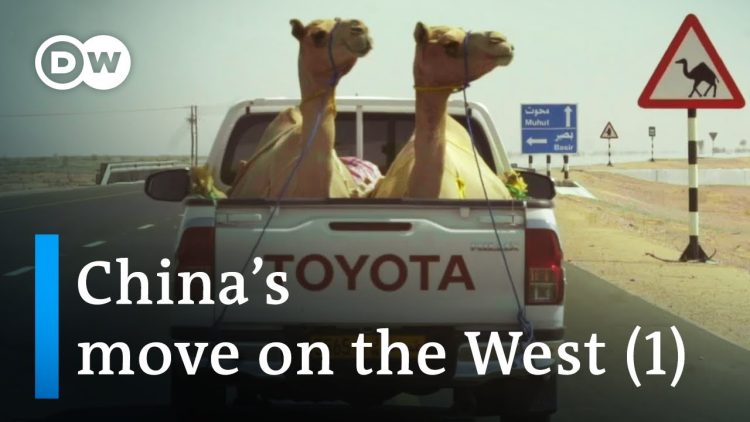
The New Silk Road, Part 1: From China to Pakistan | DW Documentary
The New Silk Road is a mammoth project intended to connect China with the West. It is a gigantic infrastructure project that Beijing says will benefit everyone, a network of roads, railways, ports and airports between Asia and Europe, built through the largest investment programme in history. But this two-part documentary shows China’s predominant self-interest and geopolitical ambitions, and it does so by travelling the route, by sea and by land, from Shenzhen to Islamabad.
The old Silk Road is a legend; the New Silk Road is real. The journey begins in Shenzhen, on the Pearl River Delta, where China’s rise to an economic superpower began 40 years ago. The market-economy experiment turned Shenzhen into a mega-metropolis, and the film starts there because the city shows what Chinese investment and ambition can build.
The team takes a container ship towards Southeast Asia, and its first stop is the port city of Sihanoukville in Cambodia. A joke is making the rounds there these days: you can now travel to China without a passport and without leaving your own country. Sihanoukville is now almost part of China itself. The Chinese have financed practically everything built here in the recent past: the extension of the port, new roads, bridges and factories. Many Cambodians are unhappy and feel like losers in the boom. Rising prices and rents are making the poor even poorer, while for land and house owners it is a bonanza. The same investment, the film shows, can be a blessing and a burden depending on which side of it you stand.
In Myanmar, resistance is already growing. Locals in Kachin have successfully blocked a new dam project, asking how the Chinese could produce energy for their own country whilst leaving the locals themselves without electricity. The Myanmar government pulled the emergency brake, and the huge Chinese dam project did not get beyond the first concrete piers in the river. It is one of the film’s clearest examples of the limits of the New Silk Road: for all its scale, it still has to pass through countries with their own politics, their own people and their own ability to say no.
The journey ends on the Karakoram Highway, from Kashgar in China across the Roof of the World to Islamabad in Pakistan, one of the most difficult and dangerous roads in a breathtaking mountain world. Once the road is finished, it often disintegrates again, and rock falls and landslides block the highway as if the Karakoram Mountains are trying to deny China strategic access to the Arabian Sea. The first part of the report ends in Islamabad, with the road unfinished, the mountains unconquered, and the question of who the New Silk Road really serves still open.
What the Film Explores
The film explores the gap between what Beijing says and what the road delivers. The official story is that the New Silk Road benefits everyone, connecting Asia and Europe in a shared prosperity. The film’s journey tells a more complicated story: in Sihanoukville, the boom enriches landowners and impoverishes renters; in Myanmar, a dam is blocked by the people it was supposed to help; on the Karakoram, the mountains themselves resist. The film’s argument is that the New Silk Road is not a gift but a strategy, and that its benefits flow, above all, to China.
It also explores how infrastructure becomes influence. A port, a road or a railway is not only concrete and steel; it is a relationship, and the country that builds it gains a say in the country that receives it. The film shows how Chinese financing has reshaped Sihanoukville, and how that reshaping feels to the Cambodians living through it. The way a global trade in resources reshapes the places it touches is the same pattern in a different commodity, and the film is part of a wider story about who profits when the world is connected.
The film looks closely at resistance, and at the places where the project meets its limits. The Kachin dam is the clearest example, but the Karakoram Highway is another: a road that the mountains keep breaking, in a region where geography itself is a political actor. The film suggests that the New Silk Road’s greatest obstacle is not rival powers or a lack of money, but the stubborn reality of the places it passes through.
Finally, the film explores what the New Silk Road means for the West. The project is intended to connect China with Europe, and the film’s reporters travel it to show European viewers what is being built in their name and with their markets in mind. The question it leaves is whether the West should see the New Silk Road as an opportunity, a threat, or something in between — and whether it has any say in the answer at all.
Key Themes
- The New Silk Road, the largest investment programme in history.
- Shenzhen, where China’s rise to an economic superpower began.
- Sihanoukville, the Cambodian port city transformed by Chinese finance.
- The Cambodians who feel like losers in the boom, as prices and rents rise.
- The Kachin dam in Myanmar, blocked by local resistance.
- The Karakoram Highway, from Kashgar across the Roof of the World to Islamabad.
- Rock falls and landslides, and a road the mountains keep breaking.
- China’s self-interest and geopolitical ambitions, behind the promise of shared benefit.
Production and Background
The film is a DW Documentary production from 2019, the first part of a two-part report, running just under 43 minutes. A team of reporters travels the route by sea and by land, and the film’s strength is that it shows rather than tells: the port in Sihanoukville, the concrete piers of the blocked dam in Myanmar, the broken highway in the Karakoram. DW Documentary’s films are known for taking a global story and following it to the ground, and this one applies that method to one of the largest infrastructure projects in human history.
Recommended Companion Viewing
Explore authoritative investigative documentaries on related historical events and investigative subjects.

The Mölln Attacks - Surviving Racist Terror
The Scramble to Rewrite Biden's Record on Gaza
Mission in the Alps: The Mountain Rescuers
Secret Mission: Former Child Soldier's Risks His Life To Save His Son
Frequently Asked Questions
What is the New Silk Road? A mammoth Chinese infrastructure project — also known as the Belt and Road Initiative — intended to connect China with the West through a network of roads, railways, ports and airports between Asia and Europe.
Where does this film travel? From Shenzhen on the Pearl River Delta, by container ship to Sihanoukville in Cambodia, through Myanmar, and then over the Karakoram Highway from Kashgar in China to Islamabad in Pakistan.
Why are Cambodians unhappy in Sihanoukville? Chinese investment has built the port, roads, bridges and factories, but rising prices and rents are making the poor even poorer, while land and house owners profit.
What happened to the dam in Myanmar? Locals in Kachin blocked a new Chinese dam project, asking why China should produce energy for itself while leaving locals without electricity. The government stopped it, and it never got beyond the first concrete piers.
Is this the whole story? No. This is part one of a two-part documentary; the second part continues the journey from Kyrgyzstan to Duisburg in Germany.
More to watch
- Congo's blood minerals – The high price of high-tech
- Road to WW2: 1931 – 34
- Homo Sapiens: How Humans Conquered the Planet
- Why Dictators Are Afraid of Literature







