
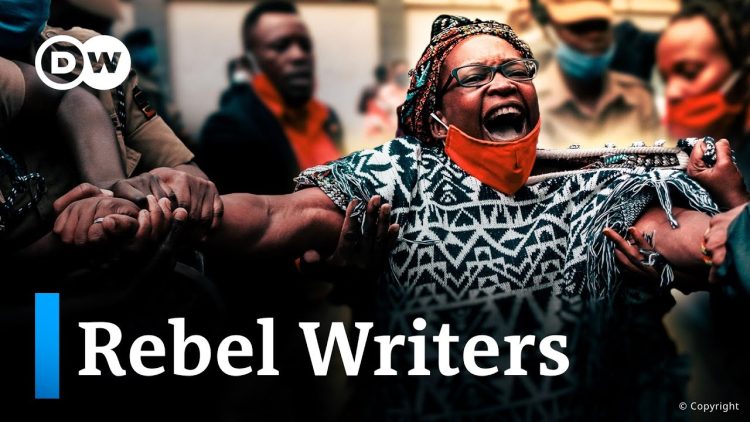
Why Dictators Are Afraid of Literature
Writers have no armies, no police and no weapons. Yet autocrats fear them. That is the starting point of this episode of Arts Unveiled, which asks why dictators are so afraid of literature, and talks to the writers who have paid the price for it. The answer, offered by Indian-born British-American novelist Salman Rushdie, is that writers offer alternative versions of the world, and a regime that depends on a single version cannot tolerate another.
Rushdie knows the cost better than most. He survived an assassination attempt in 2022, more than three decades after Ayatollah Khomeini issued a fatwa against him for alleged blasphemy over his novel The Satanic Verses. The attack, on a stage in New York state, left him seriously injured and became a reminder that a sentence passed in one country can reach across the world and across the decades.
He is not alone. The film points out that the number of writers persecuted and driven into exile has been increasing all over the world for years. The episode follows five writers in all, each facing a different regime and a different form of pressure, and each refusing to give up. Their stories are told in turn, and together they build a picture of how censorship works in practice, not as an abstract idea but as prison cells, revoked citizenships and death threats.
The film is structured around its interviews, moving from one writer to the next, and it lets each of them explain in their own words what their writing means and why it frightens those in power. The result is a short film with a wide reach, taking in Uganda, Iran, Turkey, Nicaragua and Russia, and showing that the fear of literature is not confined to one country or one kind of regime.
Underneath the individual stories is a larger question about what literature does. A novel or a poem can say what a newspaper cannot, can carry a memory a regime wants erased, and can reach readers a censor cannot count. That is why the film ends by asking what the future holds for writers, and whether the pressure on them will grow or whether their persistence will outlast it.
What the Film Explores
The film explores Stella Nyanzi’s story first, in the chapter devoted to her confrontation with Uganda’s President Yoweri Museveni. Nyanzi, a writer and academic, was imprisoned twice in a high-security jail, and her family was threatened, because of a poem that was judged insulting to the president. Her case shows how a single poem can be treated as a crime, and how a regime can use prison not only to punish a writer but to warn every other writer watching.
It then turns to Rushdie himself, and to the long shadow of the fatwa issued against him in 1989. The film traces the connection between that sentence and the attack in 2022, and asks what it means to live for decades under a threat that never formally ends. Rushdie’s answer, in essence, is to keep writing, and to insist that the freedom to imagine differently is not a luxury but a necessity.
The next chapters take in Burhan Sonmez, the Turkish Kurdish novelist who serves as president of PEN International, the worldwide association of writers. Sonmez has been imprisoned under various Turkish regimes and still receives death threats. His story shows the other side of the picture: the international networks that writers build to protect each other, and the way a writers’ organisation can become a target in its own right.
The film also follows Gioconda Belli, the bestselling Nicaraguan author, whose citizenship was revoked by President Daniel Ortega’s government and whose property was confiscated. She lives in exile and continues to write against what she calls an unjust regime. And it closes its portraits with Dmitry Glukhovsky, the Russian author of dystopian novels, who has lived in exile since the start of the war in Ukraine, was declared a foreign agent, and was sentenced to eight years in prison for condemning the war. His case shows how quickly a bestselling author can become an enemy of the state.
Key Themes
- Why writers threaten autocrats: they offer alternative versions of the world.
- Salman Rushdie, the fatwa of 1989 and the assassination attempt of 2022.
- Stella Nyanzi and the price of a poem in Uganda.
- Gioconda Belli, stripped of citizenship and property in Nicaragua, writing from exile.
- Burhan Sonmez, PEN International and the defence of imprisoned writers.
- Dmitry Glukhovsky, declared a foreign agent and sentenced for opposing the war in Ukraine.
- Exile as a condition of modern writing, and how writers keep working away from home.
- The future of free expression, and whether pressure on writers will keep growing.
Production and Background
Why Dictators Are Afraid of Literature is an episode of Arts Unveiled, the culture strand of DW History and Culture, and it runs for 26 minutes. It is built around interviews with Rushdie, Nyanzi, Belli, Sonmez and Glukhovsky, with a further mention of Belarusian poet Volha Hapeyeva, and its chapters follow the structure of the interviews, moving from one writer’s confrontation to the next. PEN International, the organisation Sonmez leads, is the worldwide association of writers that campaigns for freedom of expression and for writers who are imprisoned or threatened because of their work.
Recommended Companion Viewing
Explore authoritative investigative documentaries on related historical events and investigative subjects.

Congo's blood minerals - The high price of high-tech
Secret Mission: Former Child Soldier's Risks His Life To Save His Son
Behind the Polarization
Fmr. Trump Envoy on Negotiating the Abraham Accords | Jason Greenblatt (Interview)
Frequently Asked Questions
Which writers appear in the film?
Salman Rushdie, Stella Nyanzi, Gioconda Belli, Burhan Sonmez and Dmitry Glukhovsky, with a mention of Belarusian poet Volha Hapeyeva.
What happened to Salman Rushdie?
He survived an assassination attempt in 2022, decades after a fatwa was issued against him in 1989 for alleged blasphemy over his novel The Satanic Verses.
Why was Stella Nyanzi imprisoned?
She was jailed twice in Uganda and her family was threatened because of a poem that was judged insulting to President Yoweri Museveni.
What happened to Gioconda Belli?
The Nicaraguan government revoked her citizenship and confiscated her property. She lives in exile and continues to write.
What is PEN International?
It is the worldwide association of writers that defends freedom of expression and campaigns for writers who are imprisoned, threatened or driven into exile. Burhan Sonmez is its president.







