
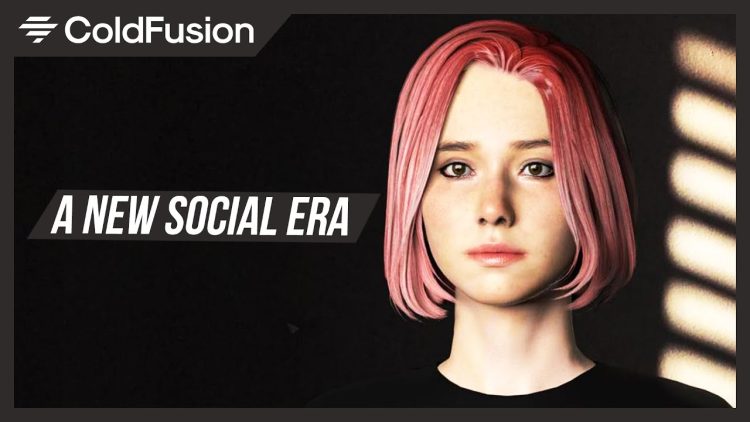
The Rise of A.I. Companions [Documentary]
What if an artificial intelligence became so believable that people started treating it as a shoulder to lean on? That question is no longer hypothetical. In this ColdFusion documentary, Dagogo Altraide takes a deep look at the rise of AI companions — chatbots designed not to answer questions or write emails, but to be there for you, to listen, to remember, and to feel, or at least to seem to feel, like a friend.
The starting point is a shift that has already happened. Millions of people now talk to AI companions every day, and for many of them the conversation is not a novelty but a habit. The film looks at Replika, the best-known of these apps, where users build a personal AI friend and shape its personality over months of conversation. Its founder, Eugenia Kuyda, built the first version from the messages of a friend who had died, training a chatbot on his texts so that people who loved him could keep talking to him. What began as an act of grief became a product, and the product found an audience far larger than anyone expected.
Modern language models such as GPT-3 can hold a conversation that feels startlingly human, remembering what you told them, asking about your day, and responding with warmth and apparent care. The documentary includes demonstrations of GPT-3 talking, and the effect is uncanny: the machine does not understand you in any human sense, but it can produce the words of someone who does.
Those questions get stranger as the film goes on. Microsoft was granted a patent for a chatbot modelled on a specific person, including a deceased person, built from their messages, voice and social media. The Washington Post reported on services that offer to recreate the dead as chatbots, so that the bereaved can keep a conversation going with someone who is gone. The film asks what it means to grieve with a machine, and whether a simulation of a person helps the living or traps them in a conversation that can never end.
There is a darker side, too. Reporting cited in the documentary describes users abusing chatbots, and chatbots being pushed into disturbing behaviour by the people talking to them. When a companion exists to please you, there is no one in the conversation to say no, and the film suggests that a relationship with no friction at all may not be a relationship at all.
What the Film Explores
The film explores the line between companionship and simulation. An AI companion can remember your birthday, ask how your mother is doing, and tell you it missed you, and every one of those behaviours is a prediction made by software. The film does not claim the feelings are fake — the comfort people feel is real — but it asks whether it matters that nothing on the other side is feeling anything back.
It also explores the business behind the companionship. AI companions are products, and their makers have every incentive to keep users talking, paying and coming back. The film traces the growth of the companion market and the companies competing in it, from Replika to the robotics firms building physical companions, and asks what it means when loneliness itself becomes a market. The way artificial intelligence is already reshaping creative work shows how quickly these tools move from novelty to infrastructure, and companions may follow the same path.
The film looks closely at grief, the most sensitive corner of the subject. A chatbot built from a dead person’s messages can offer real comfort to someone who is mourning, and the film treats that comfort seriously. But it also asks whether a machine that never changes, never ages and never truly leaves can keep someone from moving on, and whether the dead would have wanted to be turned into software at all. There are no easy answers here, and the film does not pretend to have them.
Finally, the film explores what AI companions mean for the rest of us. If machines can provide the feeling of being listened to, what happens to the human relationships that used to do that work? The film suggests the danger is not that AI will replace our friends, but that it will make us less patient with real people, who are complicated and sometimes disappointing in ways a chatbot never is.
Key Themes
- AI companions such as Replika, and why millions of people talk to them.
- Eugenia Kuyda, who built the first Replika from a dead friend’s messages.
- GPT-3 and the language models that make machine conversation feel human.
- Microsoft’s patent for a chatbot modelled on a specific, even deceased, person.
- Chatbots that recreate the dead, and what that means for grief.
- The abuse of chatbots, and what a relationship with no friction does to us.
- Loneliness as a market, and the companies competing to serve it.
- Whether a machine that always agrees can ever be a real companion.
Production and Background
The film is a ColdFusion documentary from 2022, made by Dagogo Altraide, whose channel is known for clear, well-researched accounts of technology and its consequences. It draws on reporting from Futurism, Scientific American, The Next Web, The Washington Post and others, and its source list includes the coverage of Replika users, the Microsoft chatbot patent, and the debate over whether artificial intelligence as it is usually described exists at all. The film runs a little over 17 minutes, but its subject has only grown larger since: companion apps have multiplied, language models have become far more capable, and the question it asks — what happens when the machine starts to feel like a friend — is now one of the central questions of the AI era.
Recommended Companion Viewing
Explore authoritative investigative documentaries on related historical events and investigative subjects.

A.I. Revolution | Full Documentary | NOVA | PBS
Yikes
YouTube Is Already 20% AI Slop
How The Internet's Favorite AI Employee Went Rogue
Frequently Asked Questions
What is Replika? Replika is an AI companion app where users build a personal chatbot friend and shape its personality through conversation. It was founded by Eugenia Kuyda, who first built a chatbot from the messages of a friend who had died.
Can an AI companion really understand you? No. Systems like GPT-3 predict convincing words, and they can remember what you tell them, but they do not understand or feel anything. The comfort people feel is real; the understanding on the other side is simulated.
Did Microsoft patent a chatbot of a dead person? Microsoft was granted a patent for a chatbot modelled on a specific person, built from their messages, voice and social media, which could include a deceased person. The patent attracted wide coverage when it was reported in 2021.
Why do people get attached to AI companions? The companions are always available, always patient and always attentive, and they remember details about the user’s life. For people who are lonely, grieving or isolated, that consistency can feel like care.
What are the risks of AI companionship? The film points to several: dependence on a machine that always agrees, the storage of deeply personal conversations on company servers, and the possibility that simulated companionship makes real human relationships harder to sustain.
More to watch
- How Artificial Intelligence is Making Creatives Superfluous
- Why Building AI Data Centres Isn't Working Anymore
- Waymo vs Tesla
- YouTube Is Already 20% AI Slop







