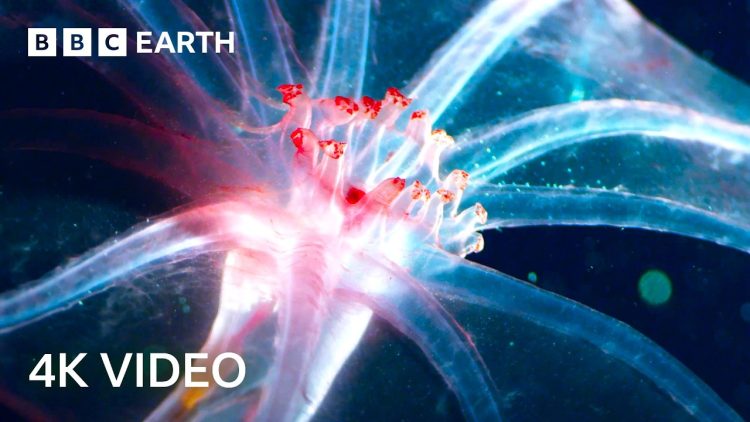
Blue Planet II in 4K Narrated By Sir David Attenborough | BBC Earth
Sixteen years after the original Blue Planet changed the way the world saw the sea, Sir David Attenborough returned to the oceans. Blue Planet II, first broadcast in 2017, is the BBC Natural History Unit’s seven-part journey through the planet’s marine world, from sunlit coral reefs to the lightless deep, and this BBC Earth presentation brings its most remarkable moments together in a single film.
The scale of the undertaking is hard to overstate. Filming took place over more than four years, involving 125 expeditions across 39 countries and producing more than 6,000 hours of underwater footage from over 4,000 dives. The result is a portrait of the oceans built from new technology and old patience: cameras that could follow a hunting whale, submersibles that could descend into the deep, and crews willing to wait days for a few seconds of behaviour no one had ever filmed before.
The film moves through the ocean’s worlds one by one. In the open ocean, it shows the hunters and the hunted of the blue desert, where food is scarce and every encounter matters. On the coral reefs, it finds cities of extraordinary density and colour, where tiny fish and vast predators live side by side in a space no bigger than a town. In the deep, it descends to a place we know less about than the surface of the moon, where creatures make their own light: glowing fish that communicate through bioluminescence, flashing and pulsing in the dark in a language of light.
Some of the film’s most striking animals are the ones that seem least like animals at all. The Portuguese man o’ war drifts on the surface, a floating colony of specialised organisms working as one, its long stinging tentacles trailing beneath it like a deadly curtain. It is beautiful and dangerous in equal measure, and the film treats it as a reminder that the ocean’s strangest creatures are often the ones that reveal how little we understand about life in the sea.
But this is not only a film about wonders. The final part of the series, Our Blue Planet, turns to the damage humans are doing to the seas, and that thread runs through this presentation too. The oceans the film celebrates are the same oceans filling with plastic, warming, and losing the reefs and coasts that sustain so much life. Attenborough’s narration never lectures; it simply shows what is at stake, and trusts the viewer to feel the weight of it.
What the Film Explores
The film explores how much of the ocean is still unknown. The deep sea is the largest habitat on the planet, and most of it has never been seen by human eyes. Blue Planet II treats that ignorance as a kind of wonder: every dive could reveal a behaviour, a species or a relationship that science had not recorded before, and the film is built from those firsts. The coral reefs it visits are among the most diverse ecosystems on Earth, and the film shows them as living cities, not scenery.
It also explores the ingenuity of ocean life. The glowing fish of the deep use light to hunt, to hide and to talk to one another. Reef fish use colour, speed and cooperation to survive in crowded water. Predators from sharks to orcas hunt with strategies that look, to a human eye, almost like planning. The film’s argument, made quietly through its images, is that intelligence and ingenuity are not land animals’ property; the sea is full of them.
The film looks closely at the relationship between the ocean and the people who live beside it. Coastal communities, fishing fleets and whole cultures depend on the sea, and the film shows that dependence without romanticising it. The ocean gives food, work and meaning, and it also takes lives, wrecks boats and swallows coasts. That double nature is part of what makes the film feel honest rather than simply beautiful.
Finally, the film explores what we are doing to the seas. The plastic that now drifts through every ocean, the warming water that bleaches coral, the noise and the nets: the film does not hide any of it. Its most famous legacy is the change it helped to bring about in public attitudes to plastic, and that change began with viewers seeing, in high definition, what their rubbish does to the creatures they had just fallen in love with.
Key Themes
- Sir David Attenborough’s return to the oceans, sixteen years after the first Blue Planet.
- Bioluminescence, and the glowing fish that communicate with light in the deep.
- The Portuguese man o’ war, a drifting colony that is beautiful and deadly.
- Coral reefs as crowded, colourful cities of ocean life.
- The deep sea, the largest and least-known habitat on Earth.
- Four years of filming, 125 expeditions and 39 countries behind the series.
- The hunters of the open ocean, and how they survive in a blue desert.
- Human damage to the seas, from plastic to warming water.
Production and Background
Blue Planet II is a 2017 British nature documentary series produced by the BBC Natural History Unit, with executive producers James Honeyborne and Mark Brownlow, and music by Hans Zimmer, David Fleming and Jacob Shea. It was a co-production between the BBC Natural History Unit, BBC America, Tencent, WDR, France Télévisions and CCTV-9, in partnership with The Open University, and it ran for seven episodes: One Ocean, The Deep, Coral Reefs, Big Blue, Green Seas, Coasts, and Our Blue Planet. It was the most-watched television programme in the United Kingdom in 2017, and its final episode’s message about plastic waste was credited with shifting public opinion and policy in several countries. This BBC Earth upload presents the series’ material as a single 66-minute film in 4K.
Recommended Companion Viewing
Explore authoritative investigative documentaries on related historical events and investigative subjects.

Eat Or Be Eaten: Reef Predators
High-Tech Shark Deterrence - Australia's New Strategy for Safe Beaches
Our Planet | Coastal Seas | FULL EPISODE | Netflix
Frequently Asked Questions
Who narrates Blue Planet II? Sir David Attenborough, who also narrated the original Blue Planet in 2001. He was 91 when the series was first broadcast.
How many episodes are there? Seven: One Ocean, The Deep, Coral Reefs, Big Blue, Green Seas, Coasts, and Our Blue Planet.
How was it filmed? Over more than four years, with 125 expeditions in 39 countries, producing over 6,000 hours of underwater footage from more than 4,000 dives.
What is bioluminescence? Light produced by a living organism. In the deep sea, where no sunlight reaches, many fish and other creatures make their own light to hunt, hide and communicate.
What is a Portuguese man o’ war? A drifting marine animal that looks like a single jellyfish but is actually a colony of specialised organisms working together, with long stinging tentacles that trail beneath a gas-filled float.
More to watch
- Forgotten Islands: The Last Coral Paradise
- Raja Ampat: Life in the Coral Kingdom
- The Gulf Stream: Warming the North Atlantic
- Eat Or Be Eaten: Reef Predators