
The Tribe That Left the Forest | Mlabri: Asia’s Forgotten People
Deep in the forests along the borders of Thailand and Laos lived one of the last hunter-gatherer peoples of Asia. For generations, the Mlabri survived beneath the dense jungle canopy, moving through the wilderness and living in simple shelters made from leaves and branches. They were a people of the forest in the fullest sense: their home was the rainforest, their food came from it, and their knowledge of it was the knowledge that kept them alive. This documentary, which first aired in 2016, follows the story of a people whose ancient lifestyle survived into the 21st century, and of what happened when the modern world reached them.
The Mlabri are also known as the Phi Tong Luang, the spirits of the yellow leaves, a name given to them because of the leaf shelters they built and abandoned as they moved through the forest. They are one of the smallest ethnic groups in the region, numbering only a few hundred people, and for most of their history they lived as nomads, moving from place to place in small family groups, hunting, gathering and building temporary shelters that they left behind when they moved on. Their way of life was one of the oldest in Asia, a hunter-gatherer existence that had changed little for centuries, even as the world around them transformed.
In the early 2000s, that way of life began to disappear. The Mlabri were resettled in villages and missions by governments and aid organisations, and the nomadic life that had defined them for generations came to an end. The film shows what resettlement meant in practice: houses instead of leaf shelters, fields instead of forest, schools and clinics instead of the knowledge passed down through families. For some, resettlement brought security and services they had never had. For others, it brought loss: the loss of the forest, of the freedom to move, and of a way of life that could not be lived in a village.
Today, the Mlabri stand between two worlds: the traditions of their forest-dwelling ancestors and the realities of modern life. The film follows them through rare access to Mlabri communities, and it listens to their memories of a time when the rainforest was their only home. The older generation remembers the forest as a place of freedom and plenty, where they knew every plant and every animal, and where they moved as they pleased. The younger generation has grown up in villages, going to school, wearing modern clothes, and speaking the languages of their neighbours. The film does not romanticise either world, but it shows the tension between them, and the difficulty of holding on to a culture when the life that sustained it is gone.
What the Film Explores
The film explores the Mlabri’s history first, and it wants the viewer to understand how old their way of life is. The Mlabri are believed to be descended from some of the earliest inhabitants of Southeast Asia, and their language is related to the Khmuic languages of the region. For generations, they lived as hunter-gatherers in the forests of what is now northern Thailand and Laos, moving in small groups and living off the forest. The film shows how that life worked: the leaf shelters that gave them their name, the hunting and gathering that fed them, and the knowledge of plants and animals that was passed down through families, from parents to children, in the forest itself.
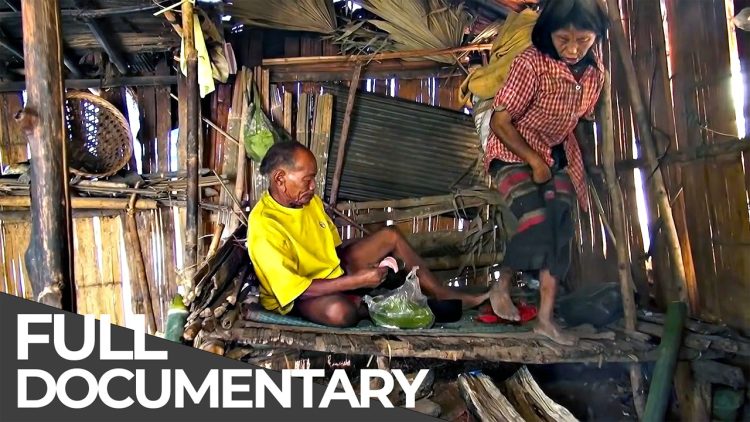
A second thread follows the resettlement, and the film shows how it happened and what it changed. In the early 2000s, governments and aid organisations moved the Mlabri into villages and missions, with the aim of giving them access to education, healthcare and a settled life. The film shows the villages as they are now: wooden houses, fields, schools, and a life that is recognisably modern, but also a life in which the Mlabri are among the poorest and most marginalised people in the region. The film does not present resettlement as a simple good or a simple harm, but as a change that brought both security and loss, and it lets the Mlabri themselves describe what they gained and what they lost.
A third thread follows the culture, and the film gives the Mlabri’s memories the fullest treatment. Through rare access to Mlabri communities, the film records their stories of the forest: the hunts, the shelters, the spirits they believed in, and the freedom of a life without fences or fields. The film shows how that culture is kept alive, in the stories the elders tell, in the language they speak, and in the knowledge of the forest that some of them still carry. It also shows how fragile that survival is: when a language is spoken by only a few hundred people, and when the young grow up in villages rather than in the forest, each generation carries a little less of what the last one knew.
Key Themes & Topics Examined
- The Mlabri, one of the last hunter-gatherer peoples of Asia
- The Phi Tong Luang, the spirits of the yellow leaves, and their leaf shelters
- A nomadic life in the forests of Thailand and Laos, unchanged for generations
- Resettlement in the early 2000s, into villages and missions
- Between two worlds: the traditions of the forest and the realities of modern life
- Rare access to Mlabri communities, and their memories of the rainforest
Production & Background
The film is a Free Documentary production, part of the channel’s series on the peoples and cultures of the world. Free Documentary is the channel of the Free Documentary network, which aims to provide high-quality documentaries on YouTube for free, working with filmmakers from around the world and using the latest camera technology. The documentary first aired in 2016.
Recommended Companion Viewing
Explore authoritative investigative documentaries on related historical events and investigative subjects.

Frequently Asked Questions
What is the film about?
The Mlabri, one of the last hunter-gatherer peoples of Asia, whose nomadic life in the forests of Thailand and Laos disappeared in the early 2000s.
Who are the Mlabri?
A small hunter-gatherer people of the Thailand-Laos border forests, also known as the Phi Tong Luang, the spirits of the yellow leaves, after the leaf shelters they built and left behind as they moved.
What happened to the Mlabri in the early 2000s?
They were resettled in villages and missions by governments and aid organisations, and their nomadic way of life, which had survived into the 21st century, came to an end.
When did this documentary first air?
In 2016, according to the film’s own description.







