
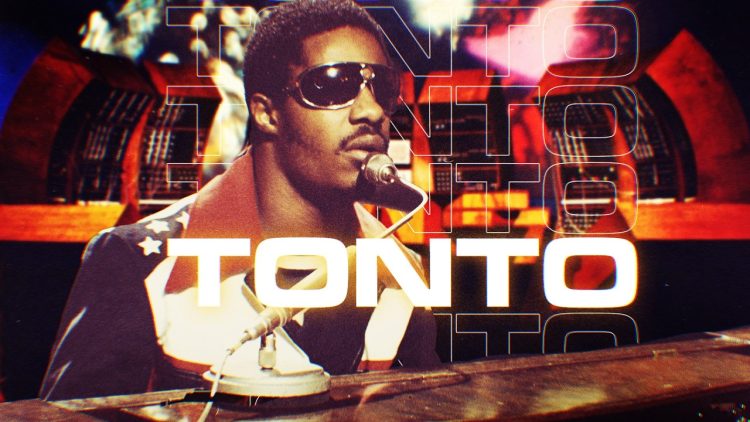
This Giant Synth Changed Stevie Wonder’s Life
Stevie Wonder’s classic albums of the early 1970s sound like nothing that came before them, and the reason is a machine the size of a room. This Polyphonic video essay tells the story of TONTO, the giant synthesiser built by Robert Margouleff and Malcolm Cecil, and how it changed Stevie Wonder’s life and music.
TONTO stands for The Original New Timbral Orchestra, and it was the first, and still the largest, multitimbral polyphonic analogue synthesiser in the world. It started as a Moog modular synthesiser, a Series III bought by Margouleff in 1968, and it grew as he and Cecil added modules from ARP and other makers, along with custom-built controllers, until it stood six feet tall, spread across some 300 square feet and weighed about a ton.
Margouleff and Cecil formed a duo, Tonto’s Expanding Head Band, and recorded an album, Zero Time, in 1971. Stevie Wonder heard it and was impressed enough to seek them out, and what followed was one of the great collaborations in popular music. Beginning in 1972, Margouleff and Cecil worked with Wonder on a string of albums: Music of My Mind, released in March 1972, Talking Book, seven months later, Innervisions in 1973 and Fulfillingness’ First Finale in 1974.
The film explains why the collaboration worked. Wonder, who had taken control of his career on his twenty-first birthday in May 1971, wanted to be involved in every step of the recording process, and TONTO allowed him to arrange his own tracks, layering sounds himself rather than handing the work to session musicians and arrangers. Margouleff describes a three-day stretch in which the three of them recorded seventeen songs together for their first release, and the energy of that session runs through the albums: the clavinet riff of Superstition, the synthesiser bass lines, the layered textures that made Talking Book and Innervisions sound like they came from another planet.
What the film captures, beyond the technical story, is the relationship between the three men. Margouleff talks about Wonder not as a star but as a collaborator, a musician who heard sounds in his head and needed a machine that could make them real. Cecil, who died in March 2021, was the engineer who built the machine and kept it running. Together they made four albums that still define what soul music can sound like, and the film argues that none of them would have sounded the same without the giant synthesiser in the room.
What the film explores
The first part of the film is the story of the machine itself. Margouleff bought one of the first Moog Series III synthesisers in 1968, met the British bassist and electronics expert Malcolm Cecil at a Manhattan recording studio, and within weeks the two were building the largest synthesiser in the world, combining the Moog with ARP modules, custom controllers and a joystick that let them shape sounds in real time. The film explains what made TONTO different: most synthesisers of the time could play one note at a time, but TONTO could play several voices at once, each with its own sound, which made it possible to build whole arrangements on a single machine.
The second part is the meeting with Stevie Wonder. Wonder had been a child star at Motown, recording as Little Stevie Wonder from the age of eleven, and by 1971 he was fighting for artistic control. The film shows how TONTO gave him that control: with Margouleff and Cecil as his engineers, he could play almost every instrument on his albums himself, building tracks layer by layer, and the result was a run of five albums between 1972 and 1976, ending with Songs in the Key of Life, that are now regarded as one of the greatest sequences in popular music.
The third part looks at the legacy. TONTO was sold to the National Music Centre in Calgary in 2013, where it now stands as a museum piece, and Cecil’s death in 2021 closed the story of its builders. But the sounds it made possible are everywhere: in the synthesiser music that followed, in hip-hop samples of Wonder’s records, and in the idea, now taken for granted, that a single musician with the right machine can make a whole record alone. The film ends with Margouleff reflecting on a collaboration that lasted only a few years but changed music for good.
Key Themes
- TONTO, The Original New Timbral Orchestra, the largest analogue synthesiser ever built.
- Robert Margouleff and Malcolm Cecil, the duo behind the machine.
- Zero Time (1971), the album that caught Stevie Wonder’s ear.
- Music of My Mind and Talking Book, Wonder’s breakthrough albums of 1972.
- Innervisions (1973) and the engineering Grammy it won.
- How TONTO let Wonder arrange and play his own records.
- The seventeen songs recorded in three days at the start of the collaboration.
- TONTO’s afterlife at the National Music Centre in Calgary.
Production and Background
The film is a Polyphonic video essay, published in June 2026, built around the channel’s full interview with Robert Margouleff, which is available on Nebula.
At twenty-eight minutes, the film is a concise version of a much longer conversation, and it draws on Margouleff’s own memories rather than on archive footage alone.
Recommended Companion Viewing
Explore authoritative investigative documentaries on related historical events and investigative subjects.

Grace Potter's Lynchian Road Trip
The Joy of "I Spy" Album Covers
How the Internet Changed Music Videos
A World Without Beethoven?
Frequently Asked Questions
What is TONTO? TONTO stands for The Original New Timbral Orchestra. It was a room-sized analogue synthesiser built from 1968 by Malcolm Cecil and Robert Margouleff, starting from a Moog Series III and growing with ARP modules and custom controllers until it stood six feet tall and weighed about a ton. It was the first, and still the largest, multitimbral polyphonic analogue synthesiser.
Which Stevie Wonder albums used TONTO? Music of My Mind (March 1972), Talking Book (October 1972), Innervisions (1973) and Fulfillingness’ First Finale (1974), all with Margouleff and Cecil as associate producers, engineers and programmers. TONTO’s sounds also appear on later Wonder projects, and the duo’s work won an engineering Grammy for Innervisions.
Who were Margouleff and Cecil? Robert Margouleff was an American record producer and engineer who bought one of the first Moog synthesisers in 1968. Malcolm Cecil (1937-2021) was a British jazz bassist turned electronics expert. Together they formed Tonto’s Expanding Head Band and released the album Zero Time in 1971.
Where is TONTO now? In 2013 it was acquired by the National Music Centre in Calgary, Canada, where it is preserved and displayed. Malcolm Cecil sold it to the centre after keeping it in his studio for decades.
What is the Polyphonic film based on? On an interview with Robert Margouleff recorded for his audiobook Shaping Sounds, in which he tells the story of TONTO, the Stevie Wonder sessions and the synthesiser revolution. The full interview is available on Nebula.
More to watch
- The global rise of afro house music
- The healing power of music – How does music impact us?
- Music in Nazi Germany – The maestro and the cellist of Auschwitz
- How Kyle Gordon Makes Music Funny
- The Joy of “I Spy” Album Covers
For more on what music does to us, The healing power of music – How does music impact us? looks at the science behind the feeling.







