
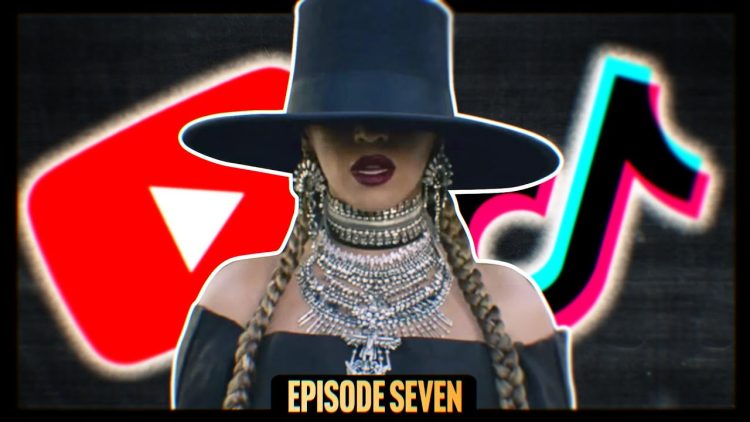
How the Internet Changed Music Videos
For forty years the music video was a television object. It lived on a schedule, it was chosen by a channel, and if you missed it, you missed it. Then the internet arrived, and the music video became something else entirely: a link, a share, a search result, a billion-view count, a fifteen-second clip.
The story starts on August 1, 1981, when MTV, Music Television, launched in the United States with the words “Ladies and gentlemen, rock and roll”, spoken by John Lack, and the first video ever played on the network: the Buggles’ “Video Killed the Radio Star”, a title that turned out to be prophetic in the opposite direction. Within its first years MTV made the video an art form and a commercial necessity: Queen’s “Bohemian Rhapsody”, filmed in four hours in 1975 for 4,500 pounds, is often credited as the first modern music video, and Michael Jackson’s “Thriller”, directed by John Landis in 1983, a thirteen-minute short film that cost around 500,000 dollars, became the most successful music video ever made and MTV’s first world premiere.
YouTube changed the gate. Launched in 2005, it made every video available on demand, searchable, shareable and countable, and the count became the new measure of a song’s reach. The turning point came in December 2012, when Psy’s “Gangnam Style” became the first video to reach one billion views, breaking YouTube’s view counter, which had been built on a 32-bit number that could not hold more than about 2.1 billion. The platform had to rebuild its counting system because a Korean pop video had outgrown it.
The internet changed the form as well as the distribution. OK Go’s treadmill video in 2006 showed that a clever idea shot in one take could travel further than a million-dollar production, and the short-form era that followed, from Vine to TikTok, shrank the video again, into clips designed to be watched, copied and remixed rather than simply seen. Lefevre’s argument is that the music video did not die when MTV stopped playing videos around the clock. It multiplied: the gatekeepers lost their monopoly, the audience gained the remote control, and the video became, for the first time, a genuinely democratic art form, made by anyone, watched by everyone, and counted in the open.
What the Film Explores
The film explores the shift from scarcity to abundance. On MTV there were only so many hours in a day and only so many slots, and the channel’s choices were the public’s choices. On the internet there is no schedule and no limit, and the audience’s choices are the public’s choices.
It also explores the change in who the video is for. A television video was made for a channel and a timeslot; an internet video is made for a search, a share and a feed. The film traces how artists learned to make videos that worked as thumbnails, as opening seconds, and as clips that could be cut up and reused, and how the video’s job changed from selling a record to being the record’s public life.
Finally, the film explores what was lost. MTV’s golden age, from its launch in 1981 to the early nineties, was a shared culture: everyone saw the same videos at the same time, and the conversation the next day was a common one. The internet’s abundance ended that shared schedule, and the film is honest about the trade: we gained access and lost the moment when a whole generation watched the same thing together. The question it leaves open is whether the billion-view era is a better one, or just a bigger one.
Key Themes
- MTV’s first night: on August 1, 1981, MTV launched with the Buggles’ “Video Killed the Radio Star” as its first video.
- Bohemian Rhapsody: Queen’s 1975 video, filmed in four hours for 4,500 pounds, is often credited as the first modern music video.
- Thriller: Michael Jackson’s 1983 short film, directed by John Landis at a cost of around 500,000 dollars, became the most successful music video ever made.
- YouTube: launched in 2005, it made videos searchable, shareable and countable, and ended MTV’s monopoly on what the world watched.
- Gangnam Style: in December 2012 Psy’s video became the first to reach one billion views, breaking YouTube’s 32-bit view counter.
- The one-take idea: OK Go’s treadmill video in 2006 showed that a clever concept could travel further than a million-dollar production.
- The short-form era: from Vine to TikTok, videos shrank into clips made to be watched, copied and remixed.
Production and Background
The film is a Polyphonic video essay by Noah Lefevre, from the channel’s long-running series on the history and meaning of popular music.
The music video’s history is still being written in the open: the most-watched videos on YouTube are now counted in the tens of billions, the short-form clip has become the dominant format, and the question of what a music video is for — promotion, art, or something else entirely — is still being argued, one upload at a time.
Recommended Companion Viewing
Explore authoritative investigative documentaries on related historical events and investigative subjects.

Insane Stories from the Early Days of MTV
This Giant Synth Changed Stevie Wonder's Life
The Joy of "I Spy" Album Covers
A World Without Beethoven?
Frequently Asked Questions
What was the first video played on MTV? The Buggles’ “Video Killed the Radio Star”, played at 12:01 a.m. on August 1, 1981, when MTV launched in the United States. The channel’s first words were “Ladies and gentlemen, rock and roll”, spoken by John Lack.
What is the most successful music video ever made? Michael Jackson’s “Thriller”, directed by John Landis in 1983. The thirteen-minute film cost around 500,000 dollars, was MTV’s first world premiere video, and was listed by Guinness World Records as the most successful music video, selling over nine million copies.
What was the first video to reach one billion views on YouTube? Psy’s “Gangnam Style”, which passed one billion views in December 2012. The count broke YouTube’s view counter, which had been built on a 32-bit number, and the platform had to upgrade to 64-bit counting.
When did YouTube launch? YouTube launched in 2005. It made music videos available on demand, searchable and shareable, and ended the era in which a television channel decided what videos the public could see.
More to watch
- The Untold History of Disco
- The global rise of afro house music
- The healing power of music – How does music impact us?
- A World Without Beethoven?
- Music in Nazi Germany – The maestro and the cellist of Auschwitz
The video era began with dance music’s visual revolution, and The Untold History of Disco tells the story of the sound that taught pop how to move.







