
Why a Swedish company is putting WINGS on boats
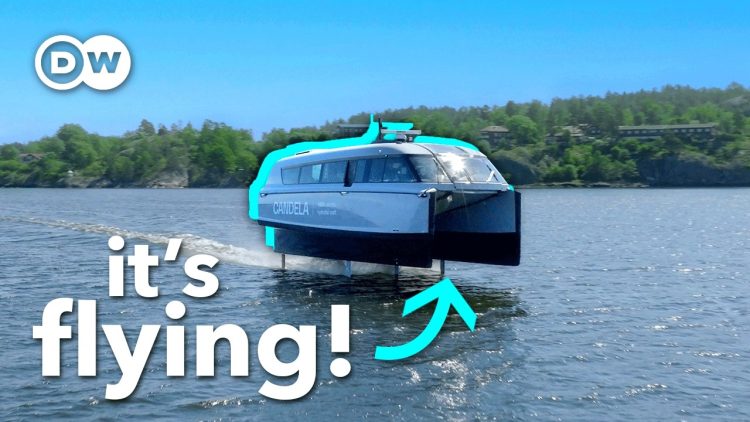
It looks like a gimmick from a James Bond film, but it is one hundred percent real. Candela, a company based in Stockholm, is making fully-electric hydrofoil ferries that float not on but above the water. The boats lift themselves out of the water on computer-controlled wings, called foils, and fly across the surface at speed, leaving barely a wake behind them. This film goes to Stockholm to meet the company, ride the boat, and find out why anyone would put wings on a ferry.
The boat at the centre of the film is the Candela P-12 Shuttle, known as Nova, tested in regular public transport service in Stockholm. The route runs from Tappström on Ekerö to central Stockholm, near City Hall, a journey that took 55 minutes by conventional ferry and now takes around 30. The P-12 carries 25 passengers and is, according to its manufacturer, the first computer-controlled electric hydrofoil ferry in serial production.
The film explains the problem the P-12 is trying to solve, the problem that has held electric boats back for years: batteries. A conventional ferry pushes a huge amount of water aside as it moves, and that takes a lot of energy, more than batteries can easily supply for a full day’s service. The hydrofoil changes the equation. By lifting the hull clear of the water, the foils cut the drag dramatically, and the boat uses far less energy to go faster. The result is a vessel that can run a real commuter service on battery power alone.
The results from the Stockholm trial, run in 2024 and 2025 and evaluated by the Swedish Transport Administration, are striking. Energy consumption fell by 66 percent and carbon dioxide emissions by more than 90 percent compared with diesel ferries. Ridership on the Ekerö route grew by 22.5 percent, and 95 percent of passengers said they were satisfied. Because the hydrofoil produces so little wake, the ferry was granted an exemption to travel at around 25 knots instead of the normal 12-knot limit, and the transport agency has suggested extending similar exemptions to other routes.
By the end, the film has become a story about what a ferry can be. The P-12 is not just a cleaner boat, it is a faster one, a quieter one, and a more frequent one, because smaller, cheaper vessels can run more often than large diesel ferries. The film visits the hydrofoil factory, shows how the boats are built, and looks at the potential for hydrofoils in cities around the world, where waterways are often the fastest route through a congested city. The question it leaves is whether the future of urban transport floats above the water.
What the Film Explores
The film explores the meeting with Candela first, and it wants the viewer to understand what the company is trying to do. Based in Stockholm, Candela set out to build an electric boat that could compete with diesel on speed, range and cost, and the film shows the team, the workshop and the boat itself, explaining how the computer-controlled foils work and why they make such a difference. The film treats the company as an engineering story, not a marketing one, and it is interested in the physics as much as the product.
A second thread follows the battery problem, and the film is at its most explanatory here. Shipping is hard to electrify because water is heavy and drag is high, and the film shows why conventional electric ferries struggle: they need huge batteries, which make them heavier, which makes them need more energy. The hydrofoil breaks that cycle by lifting the hull out of the water, and the film uses the P-12 to show how the physics works, with the foils doing the work that would otherwise be done by brute force.
A third thread follows the trial itself, and the film gives it the fullest treatment. The P-12 ran in regular service on Route 89 between Ekerö and Stockholm, carrying real commuters, and the film shows the boat taking off and the journey across the water. The trial’s results, from the Swedish Transport Administration’s final report, are presented as the proof that the idea works: shorter journeys, more riders, far lower emissions, and passengers who want to come back.
Running through the film is the question of potential, and the film’s closing chapters look at where hydrofoils go next. The film visits the factory where the P-12 is built, and shows how serial production could bring costs down. It also looks at the wider picture, with other cities preparing hydrofoil ferries, and orders for the P-12 already placed for service in Norway. The documentary closes on the water, with the boat flying above it, and the argument that the ferry of the future may not touch the water at all.
Key Themes & Topics Examined
- Candela, the Stockholm company putting wings on boats
- The P-12 Shuttle: a fully-electric hydrofoil ferry
- Shipping’s battery problem, and why electric ferries struggle
- Taking off: how computer-controlled foils lift the hull clear
- The Stockholm trial: Ekerö to City Hall in 30 minutes, not 55
- 66 percent less energy, more than 90 percent less CO2
- 25 knots where other boats are limited to 12, thanks to the tiny wake
- The hydrofoil factory, and the potential for cities worldwide
Production & Background
The film is a DW Planet A production, reported by Malte Rohwer-Kahlmann, with camera work by Marco Borowski, video editing by Neven Hillebrands, supervising editors Kiyo Dörrer and Adam Baheej Adada, and fact-checking by Jeannette Cwienk. Planet A is DW’s series on the shift towards an environmentally friendly world. The film’s further reading includes the Stockholm trial’s final report and the physics of hydrofoiling from MIT. Its chapters run from meeting Candela through shipping’s battery problem, taking off, the hydrofoil factory, and the potential of hydrofoils.
The documentary’s subject is the Candela P-12 electric hydrofoil ferry, and its framing is the one the description gives: it looks like a gimmick from a James Bond film, but it is one hundred percent real, and Candela, based in Stockholm, is making fully-electric hydrofoil ferries that float not on but above the water. The trial results cited in the film, from the Swedish Transport Administration’s evaluation of the 2024-2025 pilot on Route 89, are drawn from the public reporting of that trial.
Recommended Companion Viewing
Explore authoritative investigative documentaries on related historical events and investigative subjects.

OpenAI Kills Sora Then Descends Into Chaos
We Made A Giant Zipper To Explain How It Works
Will Artificial Intelligence Save Us Or Kill Us?
Waymo vs Tesla
Frequently Asked Questions
What is the film about?
Candela, the Stockholm company making fully-electric hydrofoil ferries that lift their hulls above the water on computer-controlled wings, and the trial that proved the idea works.
How does a hydrofoil ferry work?
Computer-controlled foils lift the hull clear of the water, cutting drag dramatically, so the boat uses far less energy to go faster, and leaves barely a wake.
How much faster is the P-12?
On the Stockholm trial route from Ekerö to City Hall, the journey fell from around 55 minutes by conventional ferry to around 30 minutes.
What were the trial’s results?
Energy use fell by 66 percent and CO2 emissions by more than 90 percent compared with diesel ferries, ridership grew by 22.5 percent, and 95 percent of passengers were satisfied.
Who made the film?
DW Planet A, reported by Malte Rohwer-Kahlmann.







