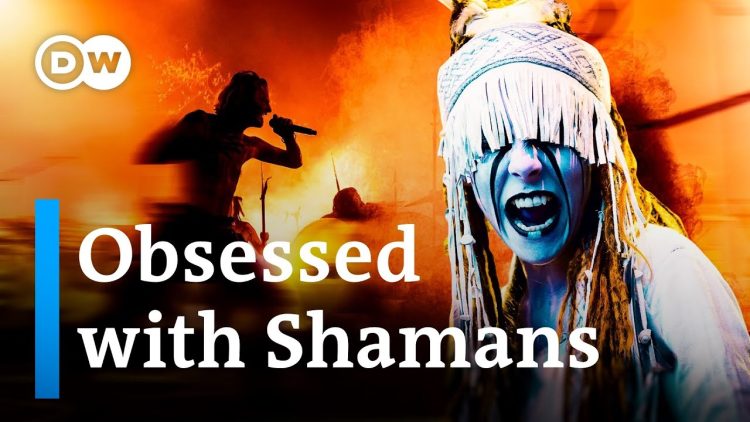
Why is Shamanism so Attractive to Artists?
Whether in dance, the visual arts or music, shamanism is making an unexpected comeback. Artists are turning to the practices of shamans, the healers and mediators of traditional societies, and weaving them into contemporary art. Unlike in the 1960s and 1970s, when people wanted to expand their consciousness and step outside of reality, the emphasis now is on healing society and oneself. Humankind and nature are in need of collective awareness, mindfulness and spiritual healing, and the film asks what practices of shamanism artists are adopting, what fundamental needs they are tapping into, whether the artists see themselves as shamans or healers, and who the real shamans are and were.
The film takes the viewer on a transcendental trip through the artists who have made shamanism part of modern art. Joseph Beuys, the German artist who presented himself as a shamanic figure and declared that everyone is an artist, is the starting point, and the film follows the thread through Carlos Castaneda, whose books about the Yaqui sorcerer Don Juan brought shamanic ideas to a mass audience in the 1960s and 1970s, to Marina Abramović, whose transgressive performance art uses endurance, pain and ritual in ways that echo shamanic practice, and to Jim Morrison, the Doors singer who styled himself as a shaman and became a hero of the hippie movement. Each of them used the figure of the shaman differently, and the film shows what they had in common: a belief that art could heal, transform and connect.
The film also meets the artists who are doing it now. Igor Sakharov-Ross is presented as the artist who burns your ego, using fire and ritual to strip away the self. Lu Yang takes a spiritual and digital journey, combining Buddhist imagery, video games and digital avatars into work that treats the screen as a place of ritual. The Norwegian-Danish-German band Heilung performs music built from reconstructed Iron Age instruments and texts, in concerts that feel like ceremonies. Dimitris Tsiamis shows how shamans achieve trance and ecstasy, through drumming, dance and repetition. And Choy Ka Fai brings multimedia shamanism to the stage, using technology to stage the rituals of traditional healers.
What the film finds is that the new shamanism is not about escaping reality, but about facing it. The artists it meets are responding to a world that feels broken: a climate in crisis, societies divided, and individuals anxious and exhausted. Shamanic practice offers them a language for healing, for attention, and for connection with nature and with each other. The film is careful to distinguish the real from the fake, and it asks the uncomfortable question directly: who are the real shamans, and who is borrowing their clothes? The traditional shamans of Siberia, Central Asia and the Americas spent years learning their craft, and the film does not pretend that an artist who burns incense on stage is the same thing.
What the Film Explores
The film explores what shamans are first, and it wants the viewer to understand the original before the imitation. A shaman, in the traditional societies of Siberia, Central Asia and the Americas, is a person who mediates between the human world and the world of spirits, entering trance to heal the sick, find lost things, and guide the dead. The film shows how that role works, and how it differs from the artist’s: the shaman is chosen by the community, trained over years, and accountable to the people they serve, while the artist is free to borrow the forms without the obligations. That difference is the film’s central tension, and it returns to it again and again.
A second thread follows the history, and the film traces shamanism’s path from the 1960s to the present. In the 1960s and 1970s, the counterculture discovered shamanism through Castaneda’s books and through the psychedelic movement, and the emphasis was on expanding consciousness and stepping outside of reality. Jim Morrison embodied that moment, styling himself as a shaman and making the Doors’ concerts into rituals. The film shows how that version of shamanism faded, and how a different version took its place: one focused on healing, on mindfulness, and on the relationship between humankind and nature, which the film presents as the defining concern of the new shamanic art.
A third thread follows the contemporary artists, and the film is at its most vivid here. Sakharov-Ross’s fire rituals, Lu Yang’s digital spirituality, Heilung’s reconstructed Iron Age ceremonies, Tsiamis’s exploration of trance and ecstasy, and Choy Ka Fai’s multimedia rituals are all presented as different answers to the same question: how can art heal? The film shows each artist at work, and it lets them explain themselves, and it does not hide the strangeness of what they do. The point is not that their work is familiar, but that it is sincere, and that the audiences who gather for it are looking for something that conventional art does not give them.
Key Themes & Topics Examined
- Shamanism’s comeback in dance, visual art and music
- The 1960s and 1970s: expanding consciousness and stepping outside reality
- The present: healing society and oneself, and the need for collective awareness
- Joseph Beuys, the artist who presented himself as a shaman
- Carlos Castaneda, and the books that brought shamanism to a mass audience
- Marina Abramović, and transgressive performance art as ritual
Production & Background
The film is a DW History and Culture production, part of the Arts Unveiled series, which looks at the stories behind art, culture and history. Its chapters run from the introduction through Igor Sakharov-Ross, Lu Yang, what shamans are, Marina Abramović, real and fake shamans, the band Heilung, Dimitris Tsiamis on trance and ecstasy, Jim Morrison and the hippie movement, shamanism in modern Europe, Choy Ka Fai, and the conclusion.
Recommended Companion Viewing
Explore authoritative investigative documentaries on related historical events and investigative subjects.

Immigration Under President Trump’s First Term: Kids Caught in the Crackdown
Why Dictators Are Afraid of Literature
Epstein Goes Africa With Chris Tucker & Clinton
Germany: Violence against women - Causes, consequences and ways forward
Frequently Asked Questions
What is the film about?
Why shamanism is making an unexpected comeback among artists, and what practices they are adopting, from ritual and trance to digital spirituality.
How is today’s shamanic art different from the 1960s?
In the 1960s and 1970s the emphasis was on expanding consciousness and stepping outside reality; now it is on healing society and oneself, and on collective awareness and mindfulness.
Which artists does the film feature?
Joseph Beuys, Carlos Castaneda, Marina Abramović and Jim Morrison, alongside contemporary artists including Igor Sakharov-Ross, Lu Yang, Dimitris Tsiamis and Choy Ka Fai, and the band Heilung.
What is a shaman?
In traditional societies, a shaman is a person who mediates between the human world and the world of spirits, entering trance to heal the sick and guide the community.