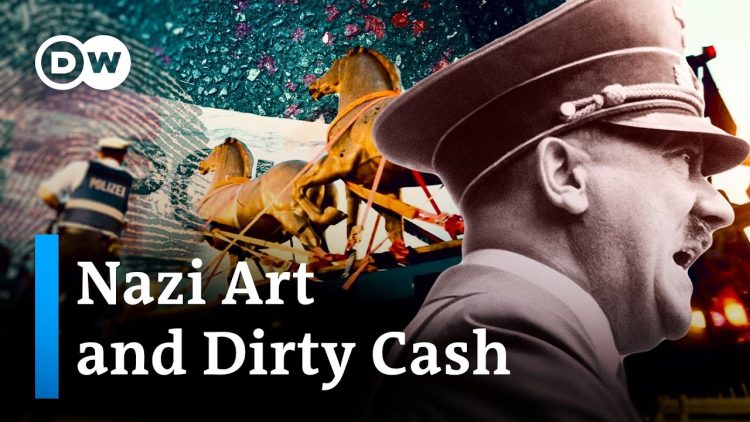
The Secret Trade Routes of Hitler’s Stolen Masterpieces
What happened to Hitler’s horses? On this episode of DW’s Arts Unveiled, the film takes a look back at the fascinating investigation which led to the recovery of two bronze statues after they had disappeared for decades, and explores the dilemma of dealing with Nazi artworks. The entire saga unfolded like an enthralling art crime thriller, moving from Berlin to Amsterdam and the United States, landing on the black market for millions, and ending in their recovery. The characters include an elderly Berlin collector, a fictional Texan named Moss, a shady car dealer and a renowned art detective.
The horses were created by Josef Thorak, one of Adolf Hitler’s favourite artists, who received the commission in 1939 to create decorative pieces for the gardens of the New Reich Chancellery in Berlin. Thorak was among the hundred so-called God-gifted artists, a list compiled by the Nazis of the artists they favoured and exempted from military service. The two rearing stallions, cast in bronze, were monumental works.
In 1943, as British bombers set the German capital ablaze, Hitler had his beloved horses hidden away in the Oderbruch region east of Berlin. After Germany was liberated by the Allies in 1945, the horses found themselves in a Soviet barracks in Eberswalde, and after that their trail went cold. For decades, no one knew where they were. They had vanished into the confusion of the war’s end, when artworks, archives and entire collections were looted, hidden or destroyed across Europe, and the horses became one of the great missing pieces of Nazi art.
It was only in 2013, when a Berlin collector received an offer to purchase the horses, that she recognised the explosive nature of the artefacts and alerted Police Commissioner Rene Allonge, a Berlin detective who took up the case. At the same time, the Dutch art detective Arthur Brand was investigating the matter on his own account, creating the persona of a fictional Nazi art collector, Moss, a wealthy Texan collector of statues from the Thousand-Year Reich. Brand and Allonge eventually joined forces, and after various twists and turns, they cracked the case. The bronze statues were discovered during a raid in the summer of 2015 in the small town of Bad Dürkheim, north of Karlsruhe, and the recovery made headlines around the world.
The horses are now back in Berlin, in the German capital’s Zitadelle Spandau, where they are displayed with historical context. But the question remains: what should be done with Nazi art? Should it be shown, stored, or exhibited with explanation? Berlin has chosen the last of these in the case of the horses, displaying them as historical artefacts rather than as works to be admired, since most original works from that era were understandably destroyed to erase the memory of the Nazi regime. The film leaves the viewer with that dilemma.
What the Film Explores
The film explores the world of Nazi art and the trade in it. Hitler’s regime did not only loot the art of its victims; it also commissioned monumental works of its own, and the film shows how Thorak’s horses fit into that programme, as symbols of a regime that wanted its power made visible in stone and bronze. It also shows how the market for such works survived the war, with collectors, dealers and middlemen trading in objects whose history made them both valuable and toxic.
It also explores the investigation itself, which is the heart of the film. The story of Allonge and Brand, working from different directions and eventually together, is told as a detective story, with false leads, undercover personas and a raid at the end of it. Brand’s invention of Moss, the fictional Texan, is a reminder of how much of art crime investigation depends on bluff and patience, and the film gives full credit to the Berlin collector whose decision to call the police, rather than buy the horses quietly, set the recovery in motion.
A third thread is the moral question the film ends on. The horses are works by a talented sculptor, made for a criminal regime, and their display raises questions that go beyond this one case. Museums across Europe hold works looted by the Nazis, works commissioned by them, and works whose provenance is still unclear, and the film’s closing discussion, about whether to show, store or contextualise such objects, reflects a debate that is still very much alive.
Key Themes
- Josef Thorak and the 1939 commission for the New Reich Chancellery
- The God-gifted artists and the Nazi programme of monumental art
- The horses’ concealment in 1943 and their disappearance after 1945
- The 2013 offer to a Berlin collector and the call to the police
- Commissioner Rene Allonge and the Berlin investigation
- Arthur Brand and the fictional Texan collector Moss
- The 2015 raid in Bad Dürkheim and the recovery of the statues
- What to do with Nazi art: show it, store it, or exhibit it with context
Production and Background
The Secret Trade Routes of Hitler’s Stolen Masterpieces is an episode of Arts Unveiled, the culture and history strand of DW History and Culture. The film runs for about twenty-six minutes and tells the story through interviews, archive material and location filming, following the trail of the horses from Berlin to the Oderbruch, to Eberswalde, and finally to Bad Dürkheim.
The facts of the case are a matter of public record. The two bronze horses, known as the Stepping Horses, were made by Josef Thorak for the Reich Chancellery, disappeared at the end of the war, and were recovered by police in Bad Dürkheim in 2015 after an investigation led by Rene Allonge with the help of Arthur Brand, the Dutch art detective known for recovering stolen works including Picasso’s Buste de Femme. The horses are now displayed at the Zitadelle Spandau in Berlin, where they form part of an exhibition on art and power under the Nazis.
Recommended Companion Viewing
Explore authoritative investigative documentaries on related historical events and investigative subjects.

How these Oscar Winners Changed Movie History
Inside A Perfectly-Preserved 15th-Century Medieval Manor House
Frequently Asked Questions
Who was Josef Thorak? An Austrian sculptor who became one of Hitler’s favourite artists, commissioned in 1939 to make monumental bronze horses for the gardens of the New Reich Chancellery in Berlin.
What are the God-gifted artists? A list of around a hundred artists compiled by the Nazi regime, exempting them from military service because their work was considered essential to German culture.
Where were the horses hidden? Hitler had them moved to the Oderbruch region in 1943 to protect them from bombing. After the war they were held in a Soviet barracks in Eberswalde, and then their trail went cold for decades.
How were they found? In 2013 a Berlin collector was offered the horses and alerted police commissioner Rene Allonge. Working with Dutch art detective Arthur Brand, who posed as a fictional Texan collector, the investigators traced the statues to Bad Dürkheim, where they were seized in a raid in the summer of 2015.
Where are the horses now? They are displayed at the Zitadelle Spandau in Berlin, exhibited with historical context as artefacts of the Nazi period rather than as works to be admired on their own terms.