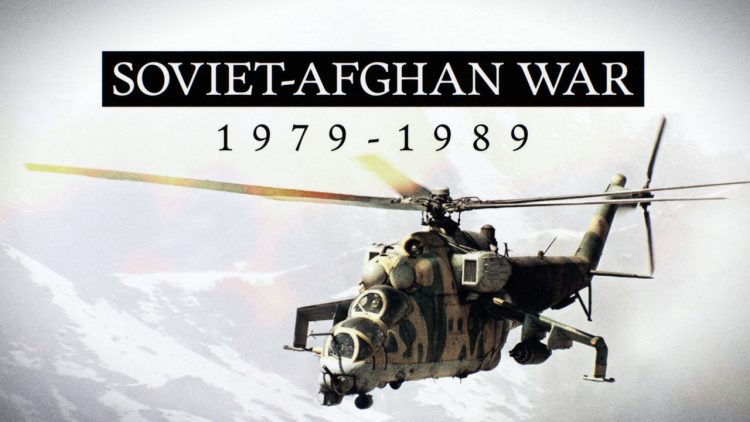
Soviet War in Afghanistan 1979-1989 (Full Documentary)
When the Soviet Union invaded Afghanistan in late 1979, the Politburo planned for a quick show of force that would help the fledgling Afghan communist regime to consolidate power. That was the plan. What happened instead is the subject of this film: the Soviet Army was embroiled in a ten-year counter-insurgency against Afghan mujahedeen and their supporters in Pakistan, Saudi Arabia, Iran and the USA — a war that lasted a decade, and that changed Afghanistan, the Soviet Union and the world.
The film is built in three acts, and its chapter structure tells the story plainly. It opens with the question of why the Soviet Union invaded Afghanistan at all — the decision in Moscow, the regime in Kabul, and the calculation that a quick show of force would be enough. Then it moves into the war itself, from 1980 to 1985, the years when the quick intervention became a grinding counter-insurgency. And it closes with the withdrawal, from 1985 onward, and the long road out of a war that had no easy ending.
What makes the film work is its refusal to treat the war as a single event. The invasion was one decision, made by a small group of men in Moscow. The war that followed was something else: a decade of fighting in mountains and valleys against an enemy that knew the ground, had support across the border, and had no reason to stop. The documentary follows that transformation — from a show of force to a war of attrition.
The film also looks at the war from the other side of the border. The mujahedeen were not fighting alone: their supporters in Pakistan, Saudi Arabia, Iran and the USA are part of the story, and the documentary presents the war as an international one from the start — a Cold War conflict fought on Afghan ground, with Afghan lives at its centre. That international dimension is what made the war so hard to win and so hard to leave.
By the end, the film has become a study in how wars outgrow their reasons. The Politburo’s plan was for a quick show of force; ten years later, the Soviet Army was still there. The documentary’s argument is that this war is not a footnote to the Cold War — it is one of the places where the Cold War was fought, and where its costs were paid.
What the Film Explores
The film explores the invasion first: why the Soviet Union went into Afghanistan in late 1979, and what the Politburo thought it was doing. The fledgling Afghan communist regime needed help to consolidate power, and Moscow believed a quick show of force would provide it. The documentary treats that decision as the hinge of the whole story — a decision made with confidence, on the assumption that the war would be short, and that the Afghan government would then stand on its own. The film shows how wrong that assumption was, and how quickly it became clear.
A second thread follows the war itself, from 1980 to 1985, and the film is at its most detailed here. The Soviet Army found itself fighting a counter-insurgency against the mujahedeen — an enemy that fought on its own ground, with support from across the border in Pakistan, and with backing from Saudi Arabia, Iran and the USA. The documentary follows the grinding logic of that kind of war: the difficulty of holding ground, the cost of every operation, and the way a war fought in mountains and valleys resists the very idea of a quick victory.
A third thread follows the withdrawal, and the film treats it as a story in its own right rather than an epilogue. Getting out of Afghanistan took years, and the documentary follows the long road from the decision to leave to the last troops crossing the border. The withdrawal was not a victory and not quite a defeat — it was the end of a ten-year commitment that had outlived its reasons, and the film presents it as the moment when the Soviet leadership finally accepted what the war had been telling them for years.
Running through the film is the question of what the war cost, and who paid it. The documentary’s sources — from Svetlana Alexievich’s Boys in Zinc to Rodric Braithwaite’s Afgantsy and Steve Coll’s Ghost Wars — point to a war whose costs were borne above all by Afghans and by the young Soviet soldiers sent to fight it. The film’s argument is that the war matters because of the people caught in it — and because its end marked the beginning of the end for the Soviet Union itself.
Key Themes & Topics Examined
- The Politburo’s plan: a quick show of force to help the Afghan communist regime
- The invasion of late 1979, and why Moscow thought the war would be short
- The Soviet Army’s ten-year counter-insurgency against the mujahedeen
- Support from Pakistan, Saudi Arabia, Iran and the USA
- The war years 1980-1985, and the grinding logic of counter-insurgency
- The withdrawal — the long road out of a war that outlived its reasons
- The human cost, borne above all by Afghans and young Soviet soldiers
- A war that helped bring the Soviet Union itself toward its end
Production & Background
The film is a Real Time History documentary, presented by Jesse Alexander, written by Jesse Alexander, directed and edited by Toni Steller, with research by Florian Wittig and Sofia Shirogorova and fact-checking by Florian Wittig. It is built from authentic historical footage — the film states that all photos and film in its documentaries are authentic historical footage — with maps by MapTiler and OpenStreetMap contributors.
The documentary’s sources are listed in full in its description, and they range across the literature of the war: Alexievich’s Boys in Zinc, Braithwaite’s Afgantsy, Coll’s Ghost Wars, Crile’s Charlie Wilson’s War, and the memoirs of Soviet soldiers. The film’s three chapters — why the Soviet Union invaded, the war of 1980-1985, and the withdrawal — structure a story that runs for an hour and a half, and that treats the war as one of the defining conflicts of the late Cold War.
Recommended Companion Viewing
Explore authoritative investigative documentaries on related historical events and investigative subjects.

Beyond Stonewall: Exploring LGBTQ+ History Through the Smithsonian Archives
The Lost Home Movies of Nazi Germany
Washington DC: The Seat of Power
Frequently Asked Questions
Why did the Soviet Union invade Afghanistan?
In late 1979, the Politburo planned a quick show of force that would help the fledgling Afghan communist regime consolidate power. The film opens with that decision — and with how wrong the assumption of a short war turned out to be.
How long did the war last?
Ten years. The Soviet Army was embroiled in a counter-insurgency against the mujahedeen from the invasion in late 1979 until the withdrawal a decade later.
Who supported the mujahedeen?
According to the film, their supporters included Pakistan, Saudi Arabia, Iran and the USA — which made the war an international Cold War conflict fought on Afghan ground.
How is the film structured?
In three chapters: why the Soviet Union invaded Afghanistan, the war of 1980-1985, and the Soviet withdrawal from Afghanistan.
Who made the film?
Real Time History, presented and written by Jesse Alexander, directed and edited by Toni Steller, with research by Florian Wittig and Sofia Shirogorova.