Wild Islands: Caribbean: The Jewel of the Tropics
Discover the wild side of the Caribbean: an island world shaped by volcanoes, hurricanes, coral reefs, rainforests, and turquoise seas. That is the promise of this film, and it is a promise the Caribbean keeps. The islands that most of the world knows as beaches and resorts are, this documentary shows, one of the most surprising wildlife worlds on Earth — a place where the forces that built the islands are still at work, and where the animals that live there have adapted to them in extraordinary ways.
The film’s argument is that the Caribbean’s wildlife cannot be understood without its geology. The islands were built by volcanoes, and they are still shaped by them. They sit in the path of hurricanes, and they are remade by every storm season. Their coasts are fringed by coral reefs, and their interiors are covered in rainforest. Each of these forces — fire, wind, water, and green — has left its mark on the animals, and the documentary follows them one by one, from the reefs to the rainforest canopy.
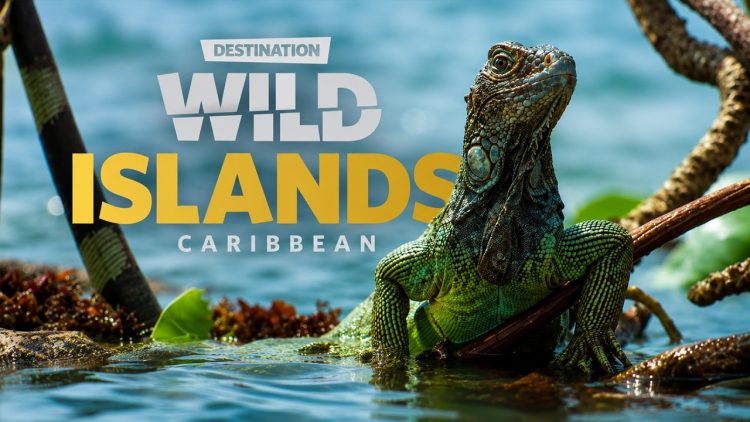
The cast is the film’s pleasure. Nesting leatherback turtles come ashore on the beaches, the largest turtles on Earth, returning to the sand where they were born. Tiny hummingbirds — some of the smallest birds in the world — hover over the forest flowers. Humpback whales pass through the turquoise seas on their migrations. Glowing lagoons shimmer at night, bat-filled caves echo in the dark, scarlet ibis flash red over the wetlands, and resilient island reptiles bask on the rocks. The film does not present these animals as a list. It presents them as neighbours, sharing an archipelago that is both paradise and proving ground.
What makes the film more than a catalogue is its attention to survival. The Caribbean’s animals live with forces that would destroy a less adapted world: hurricanes that strip the forest, volcanoes that bury it, seas that rise and fall. The documentary shows how the wildlife endures — how the turtles keep returning, how the birds keep nesting, how the reefs keep growing back, and how the islands themselves, shaped by catastrophe, are also shaped by recovery. The Caribbean, the film argues, is not a fragile Eden. It is a tough, resilient, endlessly inventive place.
By the end, the film has made its case: that the jewel of the tropics is not the beaches, but the wild life that the beaches hide. The volcanoes, the hurricanes, the reefs and the rainforests have made an island world unlike any other — and the animals that live there, from the leatherbacks to the hummingbirds, are the proof. The documentary closes on the turquoise seas and the green interiors, and on the thought that the Caribbean’s wild side is the side worth knowing.
What the Film Explores
The film explores the islands first, and it is the documentary’s central idea. The Caribbean is an archipelago, a chain of islands scattered across a turquoise sea, and each island is its own world — shaped by its volcano, its reef, its forest, its history. The film follows that geography, island by island, and it shows how the same sea can produce a hundred different wild places.
A second thread follows the sea, and the film is at its most vivid here. The coral reefs, the turquoise shallows, the humpback whales on migration, the leatherback turtles coming ashore — the sea is where the Caribbean’s wildlife is most spectacular, and the documentary lingers there. The glowing lagoons, lit by the tiny organisms in the water, are the film’s most magical image: a sea that glows, in the dark, with life.
A third thread follows the land — the rainforests, the caves, the wetlands, and the animals that live in them. The hummingbirds, the scarlet ibis, the bats in their caves, the island reptiles on their rocks — the film follows them through the green interior, and it treats the forest as a world of its own: dense, loud, and full of life that is easy to miss if you do not know how to look.
Running through the film is the force of nature itself — the volcanoes and the hurricanes that built the Caribbean and keep remaking it. The documentary’s point is that the wildlife is not there in spite of these forces, but because of them. The islands are shaped by catastrophe, and the animals are shaped by the islands. The Caribbean’s wild side is the story of life adapting to a world that never sits still.
Key Themes & Topics Examined
- The Caribbean, an island world shaped by volcanoes and hurricanes
- Coral reefs, rainforests, and turquoise seas
- Leatherback turtles, nesting on the beaches where they were born
- Tiny hummingbirds, and the forest flowers they feed on
- Humpback whales, passing through on migration
- Glowing lagoons, bat-filled caves, and scarlet ibis
- Resilient island reptiles, on the rocks of the archipelago
- A wild world built by catastrophe, and rebuilt by recovery
Production & Background
The film is a Free Documentary – Nature production, from the channel’s Destination Wild series on the world’s wild islands. Free Documentary – Nature aims to provide high-quality nature documentaries on YouTube for free, working with renowned filmmakers and production studios, and this episode follows its pattern: stunning shots from the depths of the oceans and from above, telling the story of a place and its wildlife.
The documentary’s subject is the wildlife of the Caribbean, from the coral reefs to the rainforest canopy. Its framing is the one the description gives: an island world shaped by volcanoes, hurricanes, coral reefs, rainforests and turquoise seas, and the surprising wildlife — from nesting leatherback turtles to hummingbirds, humpback whales, glowing lagoons, bat-filled caves, scarlet ibis and island reptiles — that thrives across it.
Recommended Companion Viewing
Explore authoritative investigative documentaries on related historical events and investigative subjects.

World's Most Isolated Town
Call of the Wild
Destination Wild: Wild Islands - Falkland Islands
Wild Malaysia: Life on the Emerald Islands
Frequently Asked Questions
What is the film about?
The wild side of the Caribbean — an island world shaped by volcanoes, hurricanes, coral reefs and rainforests, and the wildlife that thrives across it.
What animals does the film show?
Nesting leatherback turtles, tiny hummingbirds, humpback whales, scarlet ibis, bats, and resilient island reptiles, among others.
What is a glowing lagoon?
A lagoon whose waters shimmer at night, lit by the tiny organisms living in the water — one of the film’s most striking images of the Caribbean’s sea life.
Why are the islands so wild?
Because they were built by volcanoes, are remade by hurricanes, and are fringed by coral reefs and covered in rainforest — forces that have shaped the animals as much as the islands.
Who made the film?
Free Documentary – Nature, as part of its Destination Wild series on the world’s wild islands.