
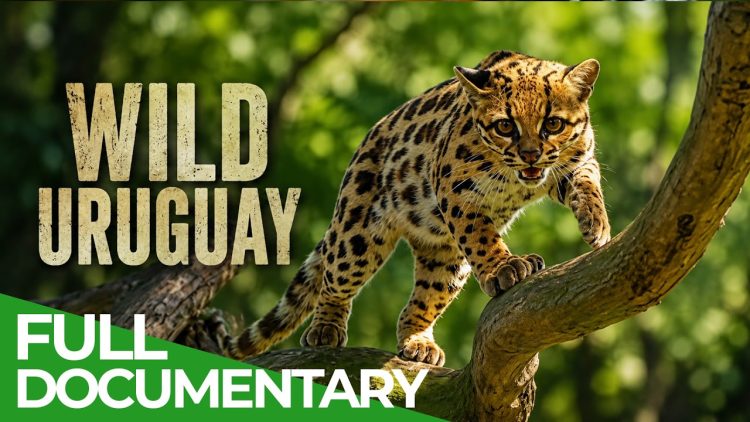
Wild Uruguay: Life in the Wildest Corner of the World
Uruguay is a small country, and it is not the first place most people think of when they think of wild South America. That, this film argues, is exactly the point. In this small country, different worlds of wildlife come together: the Pampas, the Atlantic Forest, the Gran Chaco, vast wetlands and Atlantic shores all meet in Uruguay, creating one of the continent’s most surprising natural landscapes. This documentary explores that hidden corner — a place where nature is constantly changing, adapting, and full of unexpected encounters.
The film’s argument is that Uruguay’s wildness comes from its position. It sits at a crossroads, where the great ecosystems of South America overlap. The grasslands of the Pampas run into the forests of the Atlantic coast; the dry woodlands of the Gran Chaco meet the wetlands and the shore. Each of these worlds brings its own animals, and the result is a country that holds far more wildlife than its size would suggest. The documentary’s method is to follow that overlap, habitat by habitat, and to show what lives in each one.
The cast is the film’s pleasure. Giant rheas stride across the grasslands. Endangered pampas deer graze where they can still find cover. Elusive wild cats move through the forest edge. River otters work the waterways, caimans bask on the banks, sea turtles come ashore, and massive colonies of fur seals crowd the coast. The film does not present these animals as a list. It presents them as neighbours — creatures sharing a small country, each in its own corner of it, each adapted to a landscape that is always changing.
What makes the film more than a catalogue is its attention to change. Uruguay’s nature, the documentary shows, is constantly adapting: to the seasons, to the water, to the meeting of ecosystems that never sits still. A wetland fills and empties. A forest edge advances and retreats. The animals move with it, and the film follows them — through the grasslands, along the rivers, and out to the Atlantic shore where the fur seals gather in their thousands.
By the end, the film has made its case: that the wildest corner of the world is not always the biggest or the most famous, and that a small country at a crossroads can hold a whole continent’s wildlife in miniature. Uruguay, the documentary suggests, is a hidden corner of South America — and the hidden corners are worth looking at, because they are where the surprises are.
What the Film Explores
The film explores the crossroads first, and it is the documentary’s central idea. The Pampas, the Atlantic Forest, the Gran Chaco, the wetlands and the Atlantic shores all meet in Uruguay, and the film follows that meeting — showing how each ecosystem reaches into the country, and what each one brings with it. The landscapes are the point as much as the animals are: a small country, holding several worlds at once.
A second thread follows the grasslands, and the film is at its most open here. The Pampas are the great grasslands of South America, and in Uruguay they are home to the giant rheas and the endangered pampas deer — animals of open country, built for distance and for watchfulness. The documentary follows them across the grass, and it treats the grassland as a world of its own: flat, exposed, and full of life that is easy to miss if you do not know how to look.
A third thread follows the water — the rivers, the wetlands and the shore. River otters, caimans and sea turtles belong to the water, and the film follows them through it: the otters working the rivers, the caimans on the banks, the turtles coming ashore, and the fur seals in their massive colonies on the coast. The water is where Uruguay’s worlds meet most visibly, and the documentary lingers there.
Running through the film is the wild cats — the elusive hunters of the forest edge, the animals the film mentions but does not promise to show easily. Their elusiveness is part of the point. Uruguay’s wildness is not a safari park. It is a place where the animals are there, but you have to look, and the film’s pleasure is in the looking: the unexpected encounters, in a corner of South America that most of the world has never thought to visit.
Key Themes & Topics Examined
- Uruguay, a small country at the crossroads of South America
- The Pampas, the Atlantic Forest and the Gran Chaco, meeting in one place
- Giant rheas and endangered pampas deer, on the open grasslands
- Elusive wild cats, at the forest edge
- River otters, caimans and sea turtles, in the rivers and wetlands
- Massive colonies of fur seals, on the Atlantic shore
- A landscape constantly changing and adapting
- South America’s hidden corner, and its unexpected encounters
Production & Background
The film is a Free Documentary – Nature production, from 2020, presented under the titles Wild Uruguay: Life in the Wildest Corner of the World, Wild Uruguay: Life in South America’s Wildest Corner, and Wild Uruguay: Rivers of Painted Birds. Free Documentary – Nature aims to provide high-quality nature documentaries on YouTube for free, working with renowned filmmakers and production studios.
The documentary’s subject is the wildlife of Uruguay, where the Pampas, the Atlantic Forest, the Gran Chaco, the wetlands and the Atlantic shores all meet. Its cast, as the description lists them, runs from giant rheas and endangered pampas deer to wild cats, river otters, caimans, sea turtles and the massive fur seal colonies of the coast.
Recommended Companion Viewing
Explore authoritative investigative documentaries on related historical events and investigative subjects.

Wonder Shore: Africa's Most Spectacular Coastline
Can Trees Save the Planet?
Africa’s Wildest Coast: Life At The Sweeping Edge
Climate protection from moors
Frequently Asked Questions
What is the film about?
The wildlife of Uruguay, a small South American country where the Pampas, the Atlantic Forest, the Gran Chaco, the wetlands and the Atlantic shores all meet.
Why is Uruguay so rich in wildlife?
Because it sits at a crossroads where several of South America’s great ecosystems overlap, each bringing its own animals into a small country.
What animals does the film show?
Giant rheas, endangered pampas deer, elusive wild cats, river otters, caimans, sea turtles and massive colonies of fur seals.
When was the film made?
The documentary is from 2020, and is presented under several related titles, including Wild Uruguay: Rivers of Painted Birds.
Who made the film?
Free Documentary – Nature, the nature channel of Free Documentary, which publishes high-quality wildlife documentaries free on YouTube.







