Food Globalization: The Truth Behind Cheap Food | ENDEVR Documentary
Who is paying the real price for the cheap food in our supermarkets? That is the question this investigative documentary from 2013 sets out to answer, and it does so by following three staples, bananas, vegetables and fish, from where they are produced to where they are sold. The answer it finds is that the low price on the shelf is not a miracle of efficiency.
The film starts in Italy, where vegetables are grown for supermarkets across Europe. The workers picking them are largely illegal migrants from sub-Saharan Africa, living in appalling conditions and working long hours under the control of the caporalato, the illegal gangmaster system. A caporale, or gangmaster, recruits workers informally, transports them to the fields and takes a cut of their pay, charging them as well for transport, food and water. The system has operated in southern Italy for more than a century, and it is not a fringe practice: according to Istat, nearly 20 per cent of Italy’s agricultural labour force was in informal and exploitative arrangements in 2021.
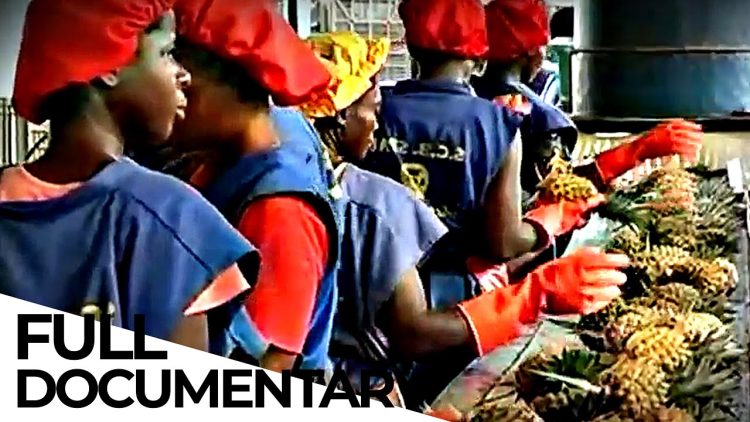
From Italy the film moves to Cameroon, where the banana industry stands accused of appropriating land, polluting the environment and bribing local politicians. Bananas are one of the world’s most traded fruits, and the plantations that grow them for export are vast, industrial operations. The film shows the other side of that scale: communities that lost their land to the plantations, rivers polluted by the chemicals used to keep the fruit unblemished, and a local politics in which the banana companies are among the most powerful actors in the country.
The third staple is fish, and the film goes to Guinea, on the west coast of Africa, where fish stocks are being plundered by foreign fleets. The waters off Guinea are among the richest fishing grounds in the Atlantic, and they are fished by industrial vessels from Europe and Asia that take far more than the local artisanal fishermen ever could. The African workers on those ships, the film reports, are often exploited and abused, working in dangerous conditions for little pay. Meanwhile the local fishermen, whose families have fished these waters for generations, find their catches shrinking as the industrial fleets take the fish before they reach the shore.
The film’s argument is that these three stories are one story. The global food system is built to deliver cheap food to rich countries, and the way it does that is by moving the costs somewhere else: onto migrant workers in Italy, onto farming communities in Cameroon, onto fishermen in Guinea. The people at the end of the chain, the shoppers, never see those costs, and the film’s purpose is to make them visible.
What the film explores
The first part of the film is the Italian vegetable fields, and it is a close look at how the caporalato actually works. The film shows the workers’ living conditions, the early-morning pick-ups, the long days in the fields and the deductions that eat into already low wages. It also shows the economics behind it: supermarkets demand low prices and steady supply, farmers operate on thin margins, and the gangmaster is the mechanism that makes the numbers work by squeezing the only cost that can still be squeezed, labour.
The second part is Cameroon and the banana plantations. The film traces the history of the banana trade in the country, from the colonial plantations to the modern export industry, and it sets out the three charges against it: land taken from local communities, pollution of soil and water, and corruption of local politics. The banana is the film’s example of a commodity whose price is set by a global market that the people who produce it have no power over.
The third part is Guinea and the fishing fleets. The film explains how the waters off West Africa became a target for distant-water fleets, how the agreements that allow them to fish are negotiated, and what happens to the local fishing communities when the industrial boats take the catch. It also looks at the conditions on board the foreign vessels, where African crew members report exploitation and abuse. The film ends by bringing the three stories together: the same logic, cheap food for the rich world, paid for by the poor world.
Key Themes
- The real price of cheap food, and who pays it.
- Italy and the caporalato, the illegal gangmaster system.
- Migrant workers from sub-Saharan Africa in appalling conditions.
- Cameroon: bananas, land appropriation and pollution.
- The banana companies and local politics.
- Guinea: foreign fleets plundering West African fish stocks.
- Exploitation and abuse of African workers on fishing vessels.
- One global food system, one logic, three continents.
Production and Background
The film is an ENDEVR investigative documentary from 2013, published on the ENDEVR channel in June 2022.
The film’s subject, the caporalato, has been the focus of Italian law and journalism for decades. Italy criminalised the gangmaster system in 2016, and the deaths of migrant workers, including the Indian farmworker Satnam Singh in 2024, have kept it in the news.
Recommended Companion Viewing
Explore authoritative investigative documentaries on related historical events and investigative subjects.

Big Tech Is Acting Dodgy At the Moment
Bill Gates' Daughter is in Trouble
The Food Mafia - How Criminals Infiltrate the Global Food Supply Chain | ENDEVR Documentary
Deceptively Real and Life-Threatening - On the Trail of Product Counterfeiters
Frequently Asked Questions
What is the caporalato? It is Italy’s illegal gangmaster system. A caporale, or gangmaster, recruits farm workers informally, transports them to the fields, and takes a cut of their wages, often charging them as well for transport, food and water. The system has operated in southern Italy for more than a century and still traps hundreds of thousands of migrant workers in exploitative conditions.
Why is food so cheap in European supermarkets? The film argues that the low price is achieved by pushing costs down the supply chain. Retailers demand low prices, farmers work on thin margins, and the pressure lands on the workers who have the least power: migrants, small farmers in exporting countries, and artisanal fishermen.
What is happening to bananas in Cameroon? The film reports that the banana industry in Cameroon stands accused of appropriating land from local communities, polluting the environment with the chemicals used on the plantations, and bribing local politicians, while the people who grow the fruit see little of the money it earns.
What is happening to fish off Guinea? Foreign industrial fishing fleets from Europe and Asia take large catches from Guinea’s rich waters, leaving less for local artisanal fishermen. The film also reports that African workers on those foreign vessels are often exploited and abused.
Is the film still relevant? Yes. The supply chains it describes have not fundamentally changed, and the caporalato, the banana trade and the plundering of West African waters remain live issues more than a decade after the film was made.
More to watch
- How a Mexican Migrant Farmer’s Journey to the U.S. Turned Fatal
- When the rains cease to fall – Indian farmers left alone
- China’s plan to never run out of food
- Inside a high-tech lab designing food for a hotter world
- The billion-dollar waste business
The same pressures fall on workers closer to home, and How a Mexican Migrant Farmer’s Journey to the U.S. Turned Fatal follows one man caught in them.