
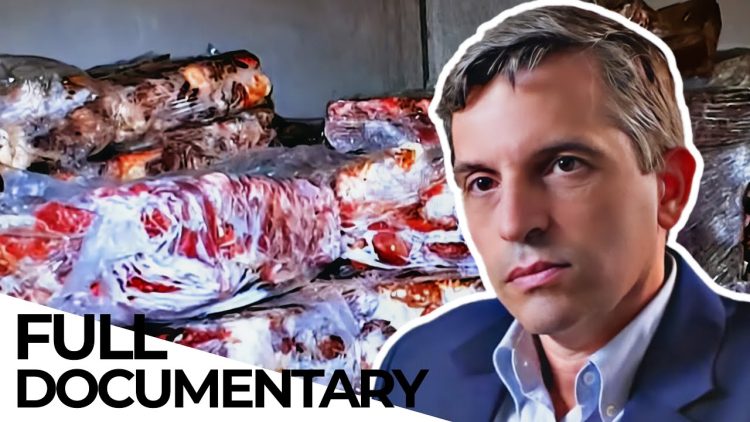
The Food Mafia – How Criminals Infiltrate the Global Food Supply Chain | ENDEVR Documentary
Horse meat labelled as beef. Honey diluted with cheap sugar syrups. Counterfeit extra-virgin olive oil. Food crime is a multi-billion-dollar industry affecting everything from the cheapest to the most expensive ingredient, and the film puts a figure on it: 10 percent of what we eat is thought to be adulterated. Criminal syndicates are infiltrating the global food supply chain, undermining the ability of consumers to trust what is on the label and what ends up on their plate. In Italy, entire sectors of the food industry are controlled by the mafia. All over the world, well-organised criminal networks work together to penetrate complex supply chains.
The scandal that made food fraud famous is the one the film opens with. In January 2013, the Food Safety Authority of Ireland found horse DNA in frozen beef burgers sold by Tesco and other supermarkets in Britain and Ireland — one Tesco burger tested at 29 percent horse DNA — and in February, Findus frozen beef lasagne was found to contain up to 100 percent horsemeat. Millions of products were recalled across 13 European countries, and the trail ran through processing plants in Ireland, France and Britain, to meat bought in Poland and Romania, via a dealer in Cyprus who had sub-contracted to a trader in the Netherlands.
The film’s argument is that horsemeat was not an exception but a business model. The scams range from the intentional mislabelling of inferior products to pass them off as premium items, to the outright substitution of one food for another. Olive oil is diluted with cheaper vegetable oil — in the EU’s Operation Opson in 2011, officers seized 13,000 bottles of dodgy olive oil, along with 30 tonnes of fake tomato sauce and 77,000 kilograms of counterfeit cheese. Honey is bulked out with sugar syrup. Fish is mislabelled: cheap species sold as expensive ones, and in the United States the food fraud database of the U.S. Pharmacopeial Convention lists olive oil, milk, saffron, honey and coffee among the most commonly adulterated ingredients.
The Italian thread is the darkest. The film shows how entire sectors of Italy’s food industry are controlled by organised crime, from the olive groves to the distribution networks, and how the mafia’s grip on food is not a sideline but a core business: food is something everyone buys, every day, and a criminal network that controls it controls a river of cash. The food fraud brigades the film follows — the specialist police units in Italy and France — work against that reality with DNA testing, paper trails and raids, but the film is honest about the odds: for every shipment they seize, many more get through, and the consumer has almost no way of telling the difference between the real thing and the fake.
What the Film Explores
The film explores how a supply chain becomes a crime scene. Modern food travels through so many hands — farmers, processors, brokers, distributors, retailers — that by the time it reaches the shelf, its origin is a matter of paperwork rather than knowledge.
It also explores the economics of fraud. The film’s point is that food crime is not committed by small-time crooks but by organised networks that treat it as a business, with margins that rival the drug trade and risks that are far lower. A drug shipment seized at a border is a loss; a shipment of fake olive oil seized at a border is a fine.
Finally, the film explores what the consumer can do, and its answer is sobering. The film asks how we can identify food fraud, and what can be done to stop it, and it follows the fraud brigades as they test, trace and raid. But it is frank that the individual shopper is almost defenceless: you cannot taste the difference between real and fake olive oil, you cannot see the horsemeat in a lasagne, and the label is only as honest as the weakest link in the chain.
Key Themes
- The horsemeat scandal: in 2013, Tesco burgers tested at 29 percent horse DNA and Findus lasagne at up to 100 percent, with recalls across 13 countries.
- The 10 percent figure: the film’s estimate that a tenth of what we eat is adulterated, from the cheapest staples to the most expensive ingredients.
- Olive oil fraud: extra-virgin oil diluted with cheaper vegetable oil; Operation Opson seized 13,000 bottles of fake oil in 2011.
- Honey and fish: honey bulked out with sugar syrup, cheap fish sold as expensive species, saffron and coffee among the most adulterated foods.
- The Italian mafia: entire sectors of Italy’s food industry controlled by organised crime, from the groves to the distribution networks.
- The food fraud brigades: specialist police units in Italy and France using DNA testing, paper trails and raids to fight back.
Production and Background
The film is a 2017 production by the German broadcaster WDR, originally titled “Die Lebensmittel-Mafia”, and on YouTube it is carried by ENDEVR, the documentary aggregator channel, under the title “The Food Mafia”. ENDEVR’s own description gives it the alternate title “The Horse Meat Gate — The Food Crime Syndicate”, which is the name of the horsemeat case at its centre.
Food fraud has only grown since the film was made. Operation Opson, the Europol-Interpol operation against fake food and drink, has run every year since 2011 and now seizes tens of thousands of tonnes of counterfeit food annually, and the horsemeat scandal led to new EU rules on food fraud and traceability. But the film’s central claim — that the global food chain is long, opaque and vulnerable, and that organised crime has learned to exploit it — remains as true as it was in 2017.
Recommended Companion Viewing
Explore authoritative investigative documentaries on related historical events and investigative subjects.

Big Tech Is Acting Dodgy At the Moment
Bill Gates' Daughter is in Trouble
How Germany's elite research institution fails young scientists
Daddy Harland
Frequently Asked Questions
What was the 2013 horsemeat scandal? In January 2013, Irish food safety inspectors found horse DNA in frozen beef burgers sold by Tesco and other supermarkets; a month later, Findus beef lasagne was found to contain up to 100 percent horsemeat.
How much of our food is adulterated? The film puts the figure at about 10 percent. The most commonly adulterated foods include olive oil, honey, milk, saffron, coffee and fish, according to the U.S.
Is food fraud dangerous? Usually the danger is not the substitute itself — horsemeat is eaten in many countries — but the unknown: horses treated with the drug phenylbutazone, banned in food animals, could enter the food chain, and the fraud shows that traceability has broken down.
What is Operation Opson? An annual Europol-Interpol operation against counterfeit food and drink, running since 2011.
More to watch
- Deceptively Real and Life-Threatening – On the Trail of Product Counterfeiters
- Fake Steak – Future-Proof Food And Lab-Grown Meat
- Rebibbia: Mafia Bosses on Stage
- China’s plan to never run out of food
- Inside a high-tech lab designing food for a hotter world
Food fraud is part of a much bigger counterfeiting economy, and Deceptively Real and Life-Threatening follows the investigators chasing fake products of every kind.







