The Kichwa People | Ecuador: The Amazon Tribe That Fought Back | Free Documentary
Deep in Ecuador’s Amazon rainforest, the Kichwa people of Sarayaku have lived in harmony with nature for generations. Their ancestral traditions, spiritual beliefs and connection to the land form the foundation of their identity. But when oil exploration threatened their home, the community refused to back down.
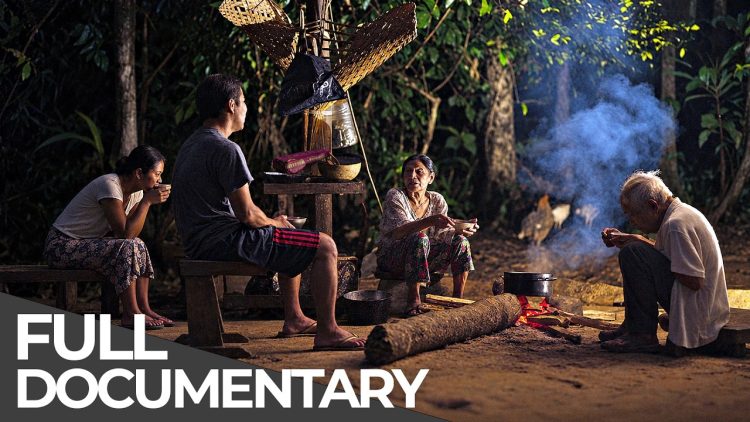
The story begins with the land itself. Sarayaku is a Kichwa community on the Bobonaza River in the Ecuadorian Amazon, one of twenty-eight communities along the river whose ancestral title was confirmed by the Ecuadorian state in 1992. The Kichwa of Sarayaku live by hunting, fishing and farming in the forest, and their spiritual life is bound up with the rivers, the trees and the animals they share the territory with. The forest is not only where they live.
The threat came in the form of a contract. In July 1996, the Ecuadorian state oil company signed an agreement with the Argentinean company Compañía General de Combustibles, known as CGC, to explore for oil in Bloque 23, an area of some 20,000 hectares in the Amazon, about 65 per cent of which the Sarayaku people have a legal or ancestral claim to. The community was never consulted. In 2002, the company began seismic surveys, cutting trails through the forest, building heliports, destroying caves, waterfalls and underground rivers the Sarayaku used for drinking water, and damaging at least one site of particular spiritual importance.
The Sarayaku fought back with the tools they had. They documented what was happening with cameras, they organised, and they took their case to the Inter-American human rights system, with the help of their lawyers and the Centre for Justice and International Law. In April 2010 the Inter-American Commission on Human Rights brought the case to the Inter-American Court of Human Rights, and on 27 June 2012 the Court ruled unanimously in the Sarayaku’s favour. It held Ecuador responsible for violating the community’s rights to consultation, to indigenous communal property and to cultural identity, and for severely jeopardising their right to life and personal integrity by allowing the explosives to be planted on their land. It was the first time the Court had recognised the violation of the collective rights of an indigenous community in this way, and it established that the duty to consult indigenous peoples before projects that affect them is a general principle of international law.
The victory did not end the struggle. The explosives had to be removed, the damage had to be repaired, and the community has had to keep defending its territory against new threats ever since. But the ruling changed the law for the whole of the Americas, and it made the Sarayaku famous as a community that stood up to a state and a multinational and won. The film tells that story through the people who lived it, in their own words, in the forest they refused to give up.
What the film explores
The first part of the film is the world of Sarayaku itself: the forest, the river, the way of life that the Kichwa have maintained for generations. The film shows the community’s daily life, its ceremonies and its relationship with the land, and it makes the point that for the Sarayaku, the forest is not a resource to be used but a home to be protected, and a source of the knowledge and identity that define them as a people.
The second part is the arrival of the oil company. The film traces the contract, the seismic surveys and the damage they caused, and it shows the community’s response: the decision to resist, the documentation of the destruction, and the organisation of a legal case. The explosives are the film’s most shocking detail, more than a tonne of high explosive buried in the ground of a community that had never been asked whether it wanted oil exploration at all.
The third part is the legal fight and the victory. The film follows the case to the Inter-American Court of Human Rights in Costa Rica, and it explains what the 2012 judgment meant: not only that Ecuador had violated the Sarayaku’s rights, but that states across the Americas now had a clear duty to consult indigenous peoples in good faith, through culturally appropriate procedures, before approving projects on their land. The film ends with the community still in its forest, still defending it, and still, in the words of its leaders, living as Kichwa.
Key Themes
- The Kichwa people of Sarayaku and their Amazon home.
- Ancestral traditions, spiritual beliefs and connection to the land.
- The 1996 oil contract for Bloque 23, signed without consultation.
- Seismic surveys, destroyed sacred sites and drinking water sources.
- More than 1,400 kilograms of explosives planted on community land.
- The fight with cameras, ancestral knowledge and determination.
Production and Background
The film is a Free Documentary production, published on the Free Documentary channel in October 2026.
The legal case at the heart of the film, Kichwa Indigenous People of Sarayaku v. Ecuador, was decided by the Inter-American Court of Human Rights on 27 June 2012. The Court held Ecuador responsible for violating the Sarayaku’s rights to consultation, communal property and cultural identity, and for putting their lives at grave risk.
Recommended Companion Viewing
Explore authoritative investigative documentaries on related historical events and investigative subjects.

Mission in the Alps: The Mountain Rescuers
The Trump-Era Saudi-U.S. Relationship: An Insider's View
Food Globalization: The Truth Behind Cheap Food | ENDEVR Documentary
Turkey: How Artists Challenge(d) Erdoğan with Gezi Protests
Frequently Asked Questions
Who are the Kichwa people of Sarayaku? They are an indigenous Kichwa community living on the Bobonaza River in the Ecuadorian Amazon.
What happened in 1996? The Ecuadorian state signed a contract with the Argentinean oil company CGC to explore for oil in Bloque 23, an area that includes most of the Sarayaku’s territory.
What did the Inter-American Court decide? On 27 June 2012, the Court ruled unanimously that Ecuador had violated the Sarayaku’s rights to consultation, to indigenous communal property and to cultural identity, and had severely jeopardised their right to life and personal integrity.
Why does the case matter beyond Ecuador? Because the Court held that the duty to consult indigenous peoples before projects that affect them is a general principle of international law, and it set out in detail how consultation must be done: in good faith, through culturally appropriate procedures, aimed at reaching consent.
Is Sarayaku still under threat? The community has had to keep defending its territory against new pressures, but the 2012 ruling gives it a powerful legal shield, and the Sarayaku have become one of the most prominent indigenous communities in the Americas, known for their defence of the forest and their culture.
More to watch
- The Amazon in danger – Indigenous peoples and their struggle for the rainforest
- The Maya of Belize – The battle for culture, the rainforest and ancient knowledge
- The Tribe That Left the Forest | Mlabri: Asia’s Forgotten People
- World’s Largest Isolated Tribe | Mashco Piro: Living Like 20,000 Years Ago
- Displaced on Java – A village battling rising sea levels
For the wider fight for the forest, The Amazon in danger – Indigenous peoples and their struggle for the rainforest shows what the Sarayaku were up against.