
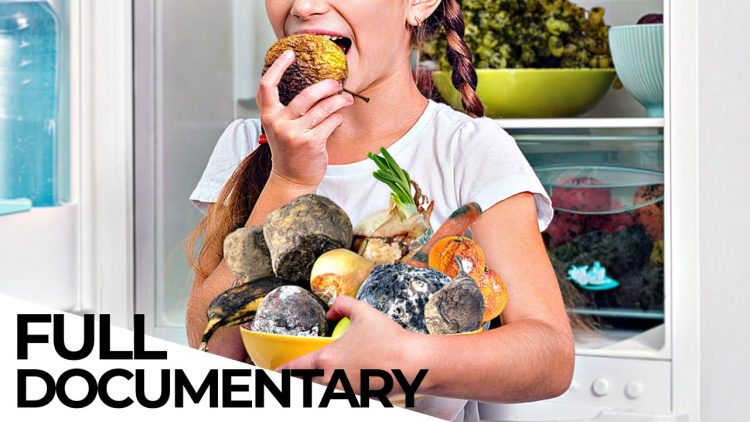
Why Fruits Have Lost Their Vitamins | ENDEVR Documentary
Sixty years of producing standardised fruits and vegetables, and of creating industrial hybrids, have had a dramatic impact on their nutritional content. That is the starting point of this ENDEVR documentary, and the numbers it gives are stark. In the past fifty years, vegetables have lost 27 per cent of their vitamin C and nearly half of their iron. The tomato, the world’s most widely eaten fruit, has lost a quarter of its calcium and more than half of its vitamins through repeated hybridisation.
The film’s argument is that this was not an accident. It was the result of breeding for the things the market pays for: size, colour, firmness and shelf life. A tomato that is red, round and unblemished sells, and a tomato that survives a long journey to the supermarket sells, and the breeding programmes that produced those qualities did not select for nutrition. The science behind that trade-off is well established. A landmark study by Donald Davis and colleagues at the University of Texas, published in 2004 in the Journal of the American College of Nutrition, compared USDA nutrient data for 43 garden crops from 1950 and 1999 and found median declines of 6 per cent for protein, 16 per cent for calcium, 15 per cent for iron, 15 per cent for vitamin C and 38 per cent for riboflavin.
The film then follows the seeds themselves, and the story gets darker. The seeds that produce the fruits and vegetables we eat are now the property of a handful of multinationals, including Bayer and Dow-Dupont, and those companies have their seeds produced predominantly in India, where workers are paid just a handful of rupees while the company turns over more than two billion euros. It is a globalised business in which, as the film puts it, the seed sells for more than gold.
The loss is not only nutritional. According to the Food and Agriculture Organization of the United Nations, 75 per cent of the cultivated varieties in the world have disappeared in the past hundred years. That is a loss of genetic diversity, and it matters because diversity is the raw material of resilience. When a new pest arrives or the climate shifts, the varieties that might have resisted it are already gone. The film’s title points to the vitamins, but its real subject is the monopoly: a handful of companies controlling the seeds, and with them the food, of the whole planet.
The film does not argue that modern agriculture has failed. The question it leaves is whether a system built to maximise yield can be turned towards a different goal, and what that would take.
What the film explores
The first part of the film is the science of the decline. It takes the tomato as its case study, because the tomato has been hybridised more intensively than almost any other fruit, and it shows how each round of breeding made the fruit redder, smoother and firmer while stripping out calcium and vitamins. It sets those figures against the Davis study, which gives the pattern a solid, peer-reviewed footing: the declines are real, they are measured across dozens of crops, and they are largest for the nutrients that matter most.
The second part follows the seed business. The film traces how seed, once something farmers owned and saved, became intellectual property, and how a handful of multinationals came to control it. It visits the seed production fields in India, where the work is done by hand for a few rupees a day, and it contrasts that with the billions in turnover the same seeds generate. The point is not only economic. When a company owns the seed, it decides what gets grown, and what gets grown is what sells, not what nourishes.
The third part is about the varieties that have vanished. The FAO’s figure, three quarters of the world’s cultivated varieties gone in a century, is the film’s most alarming number, because it is about the future as much as the past. Every variety that disappears takes with it a set of genes that might have been the answer to a drought, a disease or a changing climate. The film argues that the loss of nutrients and the loss of varieties are two sides of the same coin, both driven by a system that rewards uniformity.
Key Themes
- Vegetables have lost 27 per cent of their vitamin C in fifty years.
- The tomato: redder and firmer, but a quarter of its calcium gone.
- The Davis study of 2004 and the dilution effect.
- Seeds owned by a handful of multinationals, including Bayer and Dow-Dupont.
- Seed production in India: a few rupees a day against billions in turnover.
- 75 per cent of the world’s cultivated varieties gone in a century.
Production and Background
The film is an ENDEVR documentary, published on the ENDEVR channel in September 2023, and it belongs to the channel’s “Secrets of our Food” strand, which also includes the film about the tomato and ketchup industry.
The film’s figures come from two main sources: the Davis study of 2004, which used USDA nutrient data to measure the decline across 43 garden crops, and the Food and Agriculture Organization’s work on crop diversity, which put the loss of varieties at 75 per cent over a century.
Recommended Companion Viewing
Explore authoritative investigative documentaries on related historical events and investigative subjects.

Fast Food Babies | Full Documentary | OMG Stories
Mediterranean cuisine - The recipe for a long and healthy life?
Fat Fiction — The Low Fat Diet Is Genocide | Full Documentary
Eternal Life? The secrets of the centenarians
Frequently Asked Questions
Have fruits and vegetables really lost nutrients? Yes, according to the best available evidence. The Davis study of 2004 compared USDA data for 43 garden crops from 1950 and 1999 and found median declines of 6 per cent for protein, 16 per cent for calcium, 15 per cent for iron, 15 per cent for vitamin C and 38 per cent for riboflavin.
Why did this happen? The main explanation is the dilution effect. Breeding plants to grow bigger and faster, and to produce more yield, means the plant takes up nutrients from the soil and synthesises vitamins more slowly than it adds water and carbohydrate, so each gram of the crop contains less nutrition.
Who owns the seeds? A handful of multinational companies, including Bayer and Dow-Dupont, control most of the commercial seed market.
What does the FAO say about crop varieties? The Food and Agriculture Organization estimates that 75 per cent of the world’s cultivated varieties have disappeared in the past hundred years, a loss of genetic diversity that makes the food system more vulnerable to pests, disease and climate change.
Can the trend be reversed? The film does not offer a simple answer, but it points to the same remedies other researchers suggest: breeding for nutrition as well as yield, supporting diverse and traditional varieties, and changing the incentives that pay farmers by weight rather than by nutritional value.
More to watch
- Inside a high-tech lab designing food for a hotter world
- China’s plan to never run out of food
- Fake Steak – Future-Proof Food And Lab-Grown Meat
- Drones, Robots, and Super Sperm – The Future of Farming
- When the rains cease to fall – Indian farmers left alone
For the other side of the food story, Inside a high-tech lab designing food for a hotter world looks at the scientists trying to breed crops that can survive what is coming.







