Inside a high-tech lab designing food for a hotter world
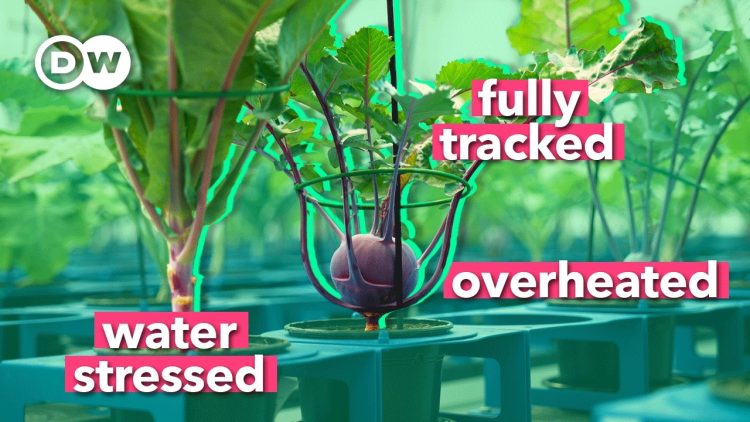
In a futuristic Dutch greenhouse, plants ride conveyor belts instead of growing in fields, constantly scanned and turned into data. By exposing them to heat, drought, soil salinity and more, researchers track how they respond in real time. The goal is to fast-forward evolution and select crops fit for a warming planet, determining the food that ends up on our plates. This film is a visit to the laboratory where that work happens.
The laboratory’s method is called phenotyping, and the film explains it from the ground up. Plants move along conveyor belts through scanners that measure them in three dimensions, recording how they grow, how they use water, how their roots spread and how their leaves respond to stress. The measurements become data, and the data becomes a picture of each plant: which ones cope with heat, which ones survive drought, which ones keep growing in salty soil. It is plant breeding, but at a speed and a scale that traditional field trials could never match.
The film puts that work in its historical context. Humans have been selecting plants for about 10,000 years, choosing the seeds of the plants that grew best and planting them again. The laboratory is doing the same thing, but faster: instead of waiting a season to see which plants survive, the researchers can test thousands of plants at once, under precisely controlled stress, and know within weeks which ones are worth breeding further. The film calls it survival of the greenest, and the phrase captures the method exactly.
The film follows the plants through the laboratory’s stations. There is the root scanner, which looks underground to see how roots respond to dry soil. There is the tomato surveillance, where cameras watch individual plants day by day as they are stressed and measured. And there is the question the film keeps returning to: what happens when the plants leave the laboratory. From lab to reality is one of the film’s chapters, and it is the hardest part of the work, because a plant that thrives in a greenhouse still has to survive in a real field, in a real climate, on a real farm.
By the end, the film has become a story about more than better crops. The researchers’ work sits inside a larger picture: a warming planet, a growing population, and a food system under strain. The film points to the Global Agricultural Productivity Report 2025, to FAO land statistics, and to the World Food Programme’s facts about food waste and hunger, and its closing argument is that the laboratory is not a curiosity. It is part of the answer to one of the most important questions of the century: what will we eat, and will there be enough of it.
What the Film Explores
The film explores the phenotyping laboratory first, and it is the documentary’s most striking material. Plants on conveyor belts, scanners turning living things into data, roots measured underground: the film wants the viewer to see how different this is from a field. The greenhouse is a factory for information, and the film’s camera moves through it the way a visitor would, from the belts to the scanners to the screens where the data appears.
A second thread follows the history of plant selection, and the film gives it a full chapter. Ten thousand years of choosing seeds is a long story, and the film tells it briefly but well, showing how the laboratory’s work is the same old practice accelerated beyond recognition. The point is not that the researchers have invented something new, but that they have made something old very fast, and that speed matters when the climate is changing faster than crops can adapt on their own.
A third thread follows the plants themselves, and the film is at its most detailed here. The root scanner, the tomato surveillance, the exposure to heat, drought and salinity: each station in the laboratory tests a different part of a plant’s ability to survive. The film shows how the measurements are made and what they mean, and it is careful to explain that a plant’s performance in the laboratory is only the beginning of the story.
Running through the film is the question of what happens next. From lab to reality is the film’s hardest chapter, because the gap between a greenhouse and a farm is wide. The documentary closes on that gap, and on the dinner break that gives the film its human scale: the researchers eat, the plants keep growing, and the work goes on. The film’s final argument is that the laboratory matters because the food on our plates depends on crops that can survive the world we are making.
Key Themes & Topics Examined
- Phenotyping: turning plants into data on conveyor belts
- Heat, drought and soil salinity: testing crops for a warming planet
- 10,000 years of plant selection, fast-forwarded
- Survival of the greenest: how the laboratory chooses its winners
- The root scanner, and what happens underground
- Tomato surveillance: watching plants respond in real time
- From lab to reality: the gap between greenhouse and farm
- More than better crops: food security in a warming world
Production & Background
The film is a DW Planet A production, reported by Katharina Schantz, with camera work by Manuel Vering and editing by Andreas Hyronimus, supervised by Adam Baheej Adada and Kiyo Dorrer, with fact checking by Aitziber Romero Bengoetxea. Planet A is DW’s series on the shift toward an environmentally friendly world. The film’s further reading includes the Global Agricultural Productivity Report 2025, FAO land statistics for 2001 to 2023, research on three-dimensional representations for plant phenotyping, and the World Food Programme’s facts about food waste and hunger.
The documentary’s subject is a Dutch phenotyping laboratory that breeds crops for a warming planet, and its framing is the one the description gives: plants riding conveyor belts instead of growing in fields, constantly scanned and turned into data, exposed to heat, drought and salinity so that researchers can select the crops fit for the future. Its chapters run from the introduction through turning plants into data, 10,000 years of plant selection, survival of the greenest, the root scanner, tomato surveillance, from lab to reality, and a dinner break.
Recommended Companion Viewing
Explore authoritative investigative documentaries on related historical events and investigative subjects.

Rivers at risk - Water crisis on four continents
Lithium – New Gold Rush in the Andes
Frequently Asked Questions
What is the film about?
A Dutch laboratory where plants ride conveyor belts and are scanned into data, so researchers can breed crops fit for a warming planet.
What is phenotyping?
Measuring plants in detail, in three dimensions, as they grow under stress, so that the ones that cope best with heat, drought and salinity can be selected for breeding.
How long have humans been selecting plants?
About 10,000 years: the laboratory is doing the same thing farmers have always done, but far faster and at far greater scale.
What does the laboratory test?
How plants respond to heat, drought and soil salinity, including how their roots grow underground and how individual plants, such as tomatoes, cope day by day.
Who made the film?
DW Planet A, reported by Katharina Schantz, with camera work by Manuel Vering and editing by Andreas Hyronimus.