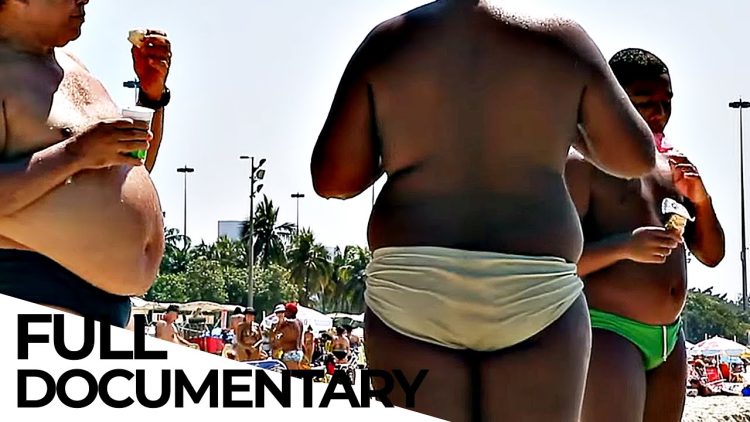
Global Junk Food: How the West is Poisoning the Developed World | ENDEVR Documentary
In Europe, food manufacturers have signed up to responsibility pledges, promising no added sugar, no preservatives, no artificial colours or flavours, and no marketing aimed at children. So why are they using tactics banned in the West in the developing world? That is the question this investigative documentary from 2016 sets out to answer, and the answer it finds is uncomfortable.
The film is called, on YouTube, “Global Junk Food: How the West is Poisoning the Developed World”, a title that is itself misleading: the film is about the developing world, about Brazil and India, and about the tactics that food companies use there that they would not be allowed to use at home.
The mechanism is simple. In Europe, a company that wants to sell a snack has to meet standards on salt, sugar and fat, and it has to be careful about how it markets to children. In Brazil and India, the same company can sell a cheaper version of the same product, made with more salt, more sugar and more saturated fat, because the ingredients are cheap and the rules are looser. The products are sold in tiny, ultra-low-cost portions, a few rupees or a few reais, so that even the poorest customers can afford them, and they are marketed aggressively, with the same bright colours and the same promises of happiness and modernity that the companies use at home.
The film’s argument is that this is not an accident of the market. It is a deliberate strategy, and it has a history. The companies learned, in the West, that selling processed food to children and to the poor was profitable, and they learned, also in the West, that regulators would eventually push back. So they took the same playbook to countries where the regulators had not yet caught up, and where the public health systems were least able to deal with the consequences. The film shows the consequences in Brazil and India: rising rates of obesity and diabetes in countries that still struggle with undernutrition, a double burden in which the same population suffers from too little food and too much of the wrong food at the same time.
The film does not argue that the companies are breaking the law. In most cases they are not. The law in Brazil and India simply allows them to do things that the law in Europe does not. That is the film’s real point. The double standard is legal, and it is the law that needs to change. The film ends with the question it opened with, and it is a question for the companies, for the regulators and for the shoppers: if a product is too unhealthy to sell in Europe, why is it acceptable to sell it in Brazil or India?
What the film explores
The first part of the film is the pledge. It shows the responsibility pledges that European food manufacturers have signed, and it explains what they promise: no added sugar, no preservatives, no artificial colours or flavours, and no targeting of children. The film takes those pledges seriously, and it asks what they are worth if the same companies do the opposite in another country.
The second part is Brazil and India. The film follows the products into the shops and the streets, showing the ultra-low-cost portions, the aggressive marketing and the way the brands present themselves as modern, aspirational and fun. It talks to the people who buy them, and to the doctors and public health researchers who are seeing the results: obesity and diabetes rising in populations that, a generation ago, were dealing mainly with hunger.
The third part is the strategy. The film argues that the companies are not simply responding to demand. They are creating it, with products designed to be cheap, salty, sweet and addictive, and with marketing that targets the young and the poor. It ends by asking who is responsible, and what would have to change for the double standard to end.
Key Themes
- Responsibility pledges in Europe: no added sugar, no targeting children.
- The same companies selling saltier, sweeter, fattier products abroad.
- Ultra-low-cost portions, priced for the poorest customers.
- Coca-Cola, McDonald’s and Domino’s Pizza in Brazil and India.
- Obesity and diabetes rising in the developing world.
- The double burden: undernutrition and overnutrition at once.
- A deliberate strategy, not an accident of the market.
- A double standard that is legal, and the law that would have to change.
Production and Background
The film is an ENDEVR investigative documentary from 2016, published on the ENDEVR channel.
The film’s title on YouTube, “How the West is Poisoning the Developed World”, is the uploader’s wording, and it is confusing: the film is about the developing world, and its original description gives the clearer title, “Global Junk Food: How the Fast Food Industry is Making Poor Countries Fat”.
Recommended Companion Viewing
Explore authoritative investigative documentaries on related historical events and investigative subjects.

How Germany's elite research institution fails young scientists
Deceptively Real and Life-Threatening - On the Trail of Product Counterfeiters
Output 1-2
Food Globalization: The Truth Behind Cheap Food | ENDEVR Documentary
Frequently Asked Questions
What is the film about? It is a 2016 investigation into how global food companies sell different products in the developing world than they sell in Europe. In Europe they have signed pledges promising no added sugar and no marketing to children. In Brazil and India they sell ultra-low-cost products with higher levels of salt, sugar and saturated fats.
Which companies does it name? The film names Coca-Cola, McDonald’s and Domino’s Pizza, among others, and it follows their products and their marketing in Brazil, India and France.
Is what they are doing illegal? In most cases, no. The products meet the laws of the countries where they are sold. The film’s point is that the laws are different, and that a product that would not be allowed in Europe is allowed in Brazil or India, which is a double standard that the film argues should end.
Why does it matter? Because obesity and diabetes are rising fast in Brazil, India and other developing countries, in populations that still struggle with undernutrition. The film argues that the cheap, salty, sweet products the companies sell are a major contributor, and that the health systems of those countries are least able to cope with the consequences.
What is the film’s title really? The YouTube title is “Global Junk Food: How the West is Poisoning the Developed World”, but the film is about the developing world, and its original description gives the title as “Global Junk Food: How the Fast Food Industry is Making Poor Countries Fat”. The post uses the YouTube title so viewers can find it, and notes the confusion here.
More to watch
- Fake Steak – Future-Proof Food And Lab-Grown Meat
- Inside a high-tech lab designing food for a hotter world
- The billion-dollar waste business
- How a Mexican Migrant Farmer’s Journey to the U.S. Turned Fatal
- China’s plan to never run out of food
For a different vision of what food could be, Fake Steak – Future-Proof Food And Lab-Grown Meat looks at the lab-grown alternatives.