
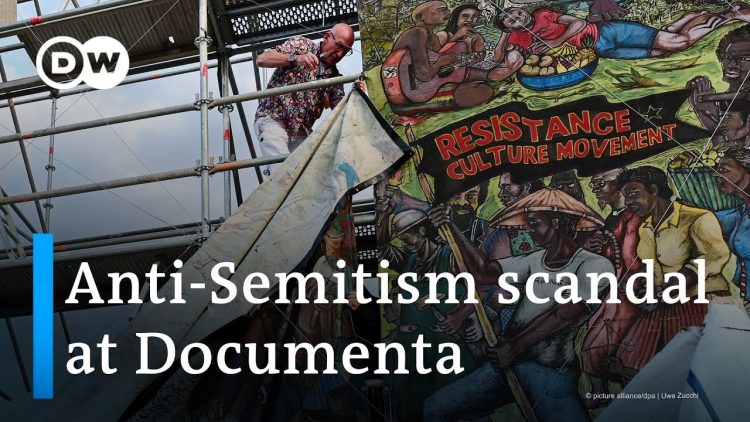
How the Documenta Fifteen went wrong
Documenta is one of the most important exhibitions in the art world, held every five years in Kassel, Germany, and each edition is a statement about where art is heading. Documenta Fifteen was meant to be a bold one. Its curators, the Indonesian collective Ruangrupa, wanted to champion community and tolerance, building an exhibition around collectives and shared practice rather than individual stars and the art market. It could have become a festival of cultures that redrew the map of the art world. Instead, it ended in irreconcilable differences.
The trouble began with a single work. Ruangrupa’s exhibition included a large banner by the Indonesian collective Taring Padi called People’s Justice, and the banner featured anti-Semitic stereotypes. The outcry was immediate. After two days, the work was taken down. But that was not the end of it. Further examples of anti-Semitism were found in the featured artworks at the Documenta, including Palestinian propaganda films, and the scandal grew until it overshadowed everything else the exhibition had tried to do.
The damage went far beyond the works themselves. Documenta’s reputation suffered immensely, and all 1,500 participating artists felt implicated, saddened that the scandal overshadowed the exhibition’s original vision of a mutually supportive art scene, independent of the market. Artists who had come to Kassel to show their work found themselves answering questions about a banner they had nothing to do with, and the collective spirit Ruangrupa had tried to build was strained by the controversy.
This film talks to artists and organisers and asks where Documenta Fifteen went wrong. It is not a simple story of villains and victims: the curators had a genuine vision, the artists had genuine work, and the scandal was real. The film traces how an exhibition built on trust and community ended up in a crisis of trust, and what that says about the responsibilities of curating at the largest scale.
By the end, the film has become a study of how good intentions can fail. Documenta Fifteen wanted to open the art world up, to bring in voices from the Global South, to replace competition with collaboration. In the end, the exhibition is remembered less for what it showed than for what went wrong, and the film asks whether the art world learned anything from it, or whether the next Documenta will face the same questions again.
What the Film Explores
The film explores the idea behind Documenta Fifteen first, and it wants the viewer to understand what Ruangrupa was trying to do. The Indonesian collective was chosen to curate the exhibition with a brief to do things differently: to centre collectives, to work from the Global South, to build a mutually supportive art scene that stood apart from the market. The film shows how radical that ambition was, and how much hope was invested in it, before the scandal arrived.
A second thread follows the anti-Semitism scandal itself, and the film gives it the fullest treatment. The People’s Justice banner, with its anti-Semitic stereotypes, was up for two days before it was taken down, but the damage was done. Further examples were found in other works, including propaganda films, and the film traces how the controversy spread from the exhibition halls to the press and the public, and how the organisers responded, or failed to respond, as it grew.
A third thread follows the artists and the collectives, and this is where the film finds its most human material. Some 1,500 artists took part in Documenta Fifteen, and the film shows how they experienced the scandal: implicated by association, saddened that their work was overshadowed, and caught between loyalty to the curators’ vision and anger at what had happened. The collectives at the heart of the exhibition, the very model Ruangrupa had championed, were left to deal with the fallout together.
Running through the film is the question of success or failure, and the film refuses a simple answer. Documenta Fifteen did bring new voices and new models into one of the art world’s biggest stages, and that achievement is real. But the scandal defined how the exhibition is remembered, and the film’s closing argument is that the failure was not in the ambition but in the oversight: a curatorial model built on trust needs the structures to catch what trust misses.
Key Themes & Topics Examined
- Ruangrupa, the Indonesian collective that curated Documenta Fifteen
- A vision of community, tolerance and an art scene beyond the market
- The People’s Justice banner, and the anti-Semitic stereotypes it carried
- Two days on display, then taken down, but the damage was done
- Further examples found, including propaganda films
- 1,500 participating artists, implicated and saddened
- The collectives at the heart of the exhibition, and the fallout
- Success or failure: what Documenta Fifteen is remembered for
Production & Background
The film is a DW History and Culture production, part of the Arts Unveiled series, which looks at the stories behind art, culture and history. DW’s reporting on the scandal continued after the exhibition, including a report on a finding that Documenta Fifteen had trivialised anti-Semitism, linked in the film’s description.
The documentary’s subject is the Documenta Fifteen scandal, and its framing is the one the description gives: as curators, Ruangrupa wanted to champion community and tolerance, but the People’s Justice banner caused an outcry, was taken down after two days, and further examples of anti-Semitism were found, leaving all 1,500 participating artists implicated and the exhibition’s reputation badly damaged. Its chapters run from the introduction through the idea behind Documenta Fifteen, the anti-Semitism scandal, the artists and the collectives, and the question of success or failure.
Recommended Companion Viewing
Explore authoritative investigative documentaries on related historical events and investigative subjects.

The missing Van Gogh
How Indian Fashion Inspires the World
Frequently Asked Questions
What is the film about?
How Documenta Fifteen, curated by the Indonesian collective Ruangrupa, was derailed by an anti-Semitism scandal that overshadowed its vision of a community-based, market-independent art scene.
What was the People’s Justice banner?
A large banner by the Indonesian collective Taring Padi, featured at Documenta Fifteen, which carried anti-Semitic stereotypes. It was taken down after two days on display.
How many artists took part in Documenta Fifteen?
Around 1,500 artists, who the film says felt implicated and saddened that the scandal overshadowed the exhibition.
Where is Documenta held?
In Kassel, Germany, every five years. It is one of the most important exhibitions in the art world.
Who made the film?
DW History and Culture, as part of its Arts Unveiled series.







