
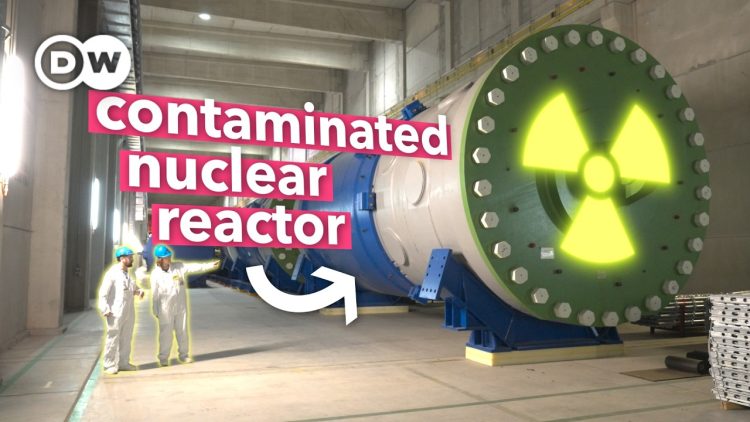
Why it can take half a century to close down nuclear plants
Nuclear power is having a big comeback after decades of decline, with governments looking again at reactors as a source of low-carbon electricity. But the comeback comes with a hidden cost, one that rarely appears in the debate about building new plants: the enormous amount of time and money needed to take an old one apart. This film visits what it describes as probably the most expensive civil decommissioning project in Europe, to see why nuclear power can leave behind such a difficult legacy.
The plant in question is Greifswald, on the Baltic coast of Germany, known as NPP Nord. Built to a Soviet design, its first unit entered operation in 1974, and when it was running it supplied roughly a third of East Germany’s electricity. After German reunification in 1990, the new government decided the Soviet-designed reactors could not be brought up to Western safety standards at a reasonable cost, and all five operating units were shut down. Dismantling began in 1995, and it is still going on.
The scale of the job is hard to grasp. Decommissioning a nuclear power plant is not demolition: it is a slow, careful process of defuelling, dismantling, decontaminating and packaging, carried out under strict radiation controls. Every pipe, every pump, every piece of concrete has to be measured, sorted and dealt with according to how radioactive it is. The film follows the work step by step, from the removal of the fuel to the cutting apart of the reactor itself, and shows why each stage takes years rather than months.
The numbers are sobering. The decommissioning company, EWN, has been responsible for the site since 1995, and the work is expected to continue into the second half of the 2030s. Around a thousand people still work on the site, more than three decades after the last reactor stopped generating power. Estimates put the cost of dismantling the five units at several billion euros, not including the final disposal of the spent fuel, for which no permanent repository has yet been decided.
By the end, the film has become a warning about the full lifetime of nuclear power. A reactor that generates electricity for twenty years can take fifty years to take apart, and the waste it leaves behind needs to be stored safely for far longer still. The film does not argue against nuclear power, but it insists that the debate about building new plants should include the cost of closing them, because that cost is real, it is enormous, and it is paid by generations who never used the electricity.
What the Film Explores
The film explores the history of Greifswald first, and it wants the viewer to understand what the plant was. Built on the Baltic coast near the town of Lubmin, it was East Germany’s largest nuclear power station, with five Soviet-designed VVER-440 reactors. The first unit came into operation in 1974, and the plant provided about a third of the country’s electricity. The film shows how central the plant was to the region, employing around 10,000 people at its peak, and how abruptly that ended when reunification brought Western safety standards to a Soviet design.
A second thread follows the dismantling itself, and the film is at its most detailed here. The work starts with defuelling, removing the nuclear fuel from the reactors, and moves on to dismantling the contaminated equipment and decontaminating the buildings. The film shows the remote-controlled tools, the protective suits and the storage facilities, and explains why the work cannot be rushed: every step has to be planned, licensed and checked.
A third thread follows the roadblocks, and the film is honest about how many there are. Regulations change, licences take years, and the sheer volume of material is overwhelming: thousands of tonnes of steel and concrete, some of it radioactive, all of it needing a destination. The film also looks at the global context, showing that Greifswald is not unique, and that every country with nuclear power faces the same problem, with decommissioning costs rising and the number of plants reaching the end of their lives growing every year.
Running through the film is the storage problem, and it is the question with no good answer. Even after a plant is dismantled, the radioactive waste remains, and it has to be kept safe for far longer than any human institution has lasted. The film looks at the interim storage facility at Lubmin, where the waste is kept for now, and at the search for a permanent solution, which in Germany, as in most countries, is still unresolved. The film’s closing argument is that the hardest part of nuclear power is not building the plant, or even taking it apart, but dealing with what is left behind.
Key Themes & Topics Examined
- Nuclear power’s comeback, and the hidden cost of closing plants down
- Greifswald, the plant that supplied a third of East Germany’s electricity
- Shut down in 1990, dismantling since 1995, still going decades later
- Defuelling, dismantling and decontamination, step by step
- The roadblocks: licences, regulations and thousands of tonnes of material
- The global context: every nuclear country faces the same problem
- The storage problem: waste that outlives the plant by generations
- The full lifetime of nuclear power, and who pays for it
Production & Background
The film is a DW Planet A production, reported by Kiyo Dörrer, with video editing by David Jacobi, camera work by Henning Goll, supervising editors Adam Baheej Adada and Michael Trobridge, and fact-checking by Holly Young. Planet A is DW’s series on the shift towards an environmentally friendly world. The film’s further reading includes the IAEA’s information page on decommissioning and studies on decommissioning costs.
The documentary’s subject is the decommissioning of the Greifswald nuclear power plant, and its framing is the one the description gives: nuclear power is having a comeback, but it comes with a hidden cost, the enormous time and money needed to decommission a plant, and the film visits probably the most expensive civil decommissioning project in Europe to see why. Its chapters run from the introduction and arrival through the plant’s history, defuelling and dismantling, decontamination, potential roadblocks, the global context, the storage problem, and possible solutions. The plant’s history, from its first unit in 1974 to its shutdown in 1990 and the ongoing work by EWN, is drawn from the public record.
Recommended Companion Viewing
Explore authoritative investigative documentaries on related historical events and investigative subjects.

Frequently Asked Questions
What is the film about?
Why decommissioning a nuclear power plant can take half a century, told through the Greifswald plant in Germany, probably the most expensive civil decommissioning project in Europe.
Where is the Greifswald plant?
On the Baltic coast near Lubmin in Germany. Its first Soviet-designed reactor entered operation in 1974, and all five units were shut down in 1990 after German reunification.
How long has the dismantling taken?
Dismantling began in 1995 and is expected to continue into the second half of the 2030s, with around a thousand people still working on the site decades after the shutdown.
What does decommissioning involve?
Defuelling, dismantling contaminated equipment, decontaminating buildings, and sorting and storing thousands of tonnes of material under strict radiation controls.
Who made the film?
DW Planet A, reported by Kiyo Dörrer.







