
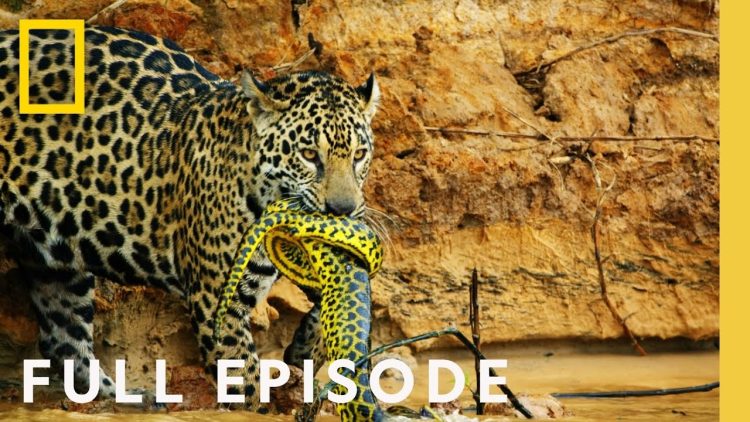
Jungles: Survival of the Fittest (Full Episode) | Hostile Planet
Plenty of water, warmth and light should provide perfect conditions for life to survive, but make no mistake: the rainforest is no Eden. This is the jungle episode of Hostile Planet, National Geographic’s six-part natural history series hosted and narrated by survivalist and adventurer Bear Grylls, and it is built around a single idea: in the most crowded and competitive habitat on Earth, survival of the fittest has never been more apparent.
The jungle is the most diverse habitat on the planet, and that diversity is the problem. Every branch, every clearing and every fruiting tree is contested, and the film follows the fiercest jungle species, both obvious and unassuming, as they fight for a share of it. Gibbons swing through the canopy in family groups, defending their territories with song. Orangutans, the great solitary apes of the Southeast Asian rainforest, move slowly and deliberately through the trees, spending their energy carefully because food is scattered and hard to find. Spectral tarsiers, tiny nocturnal primates with enormous eyes, hunt in the dark. Hummingbirds, the smallest birds on Earth, defend patches of flowers with a ferocity out of all proportion to their size.
The centrepiece is a hunt. A jaguar that has not eaten in days takes on a giant caiman in the water, in what National Geographic called the most intense jaguar-versus-caiman encounter ever filmed. Jaguars are the only big cats that regularly hunt in water, and they kill caimans with a bite through the skull, but a caiman is armoured, powerful and dangerous, and a hungry jaguar that misjudges the fight can end up as the prey.
What makes the episode different from older nature documentaries is the climate. Hostile Planet was made to show animals living on a fast and continuously changing planet, and the jungle episode keeps returning to the rain: the rains that the forest depends on are becoming less predictable, and the species that have evolved to a precise seasonal rhythm are the ones most at risk. The film’s argument is that resilience is not just about strength or speed but about flexibility, and that the jungle’s winners are the animals that can adapt when the pattern they depend on breaks.
What the Film Explores
The film explores competition as the engine of the jungle. In a desert or on a polar ice cap, the enemy is the environment; in the jungle, the enemy is everyone else. The film shows that competition takes every form: song and display, stealth and ambush, endurance and theft, and parasitism.
It also explores the paradox of plenty. The jungle looks abundant, and it is, but abundance creates crowding, and crowding creates the fiercest competition on Earth. The film’s gibbons, orangutans, tarsiers and hummingbirds each solve the same problem in a different way: by specialising, by defending a patch, by hunting at night, or by living off others.
Finally, the film explores what happens when the pattern changes. The rains that the jungle runs on are becoming unpredictable, and the episode’s closing argument is that the species that survive will be the ones that can change their behaviour when the seasons no longer keep their promises. Hostile Planet’s whole premise is that the world is changing faster than evolution can keep up with, and the jungle, for all its richness, is no exception.
Key Themes
- The crowded forest: jungles are the most diverse habitats on Earth, and every branch and clearing is contested.
- Gibbons and orangutans: canopy apes that defend territories with song or move slowly and carefully to conserve energy.
- The small hunters: spectral tarsiers hunt in the dark, hummingbirds fight over flowers, and parasites win by living off others.
- Jaguar versus caiman: a hungry jaguar takes on a giant caiman in the water, in the most intense encounter of its kind ever filmed.
- Unpredictable rain: the rains the forest depends on are becoming less reliable, and the species tied to a seasonal rhythm are most at risk.
- Resilience as flexibility: the jungle’s winners are not just the strongest but the animals that can adapt when the pattern breaks.
Production and Background
The film is an episode of Hostile Planet, the six-part National Geographic series that premiered on April 1, 2019, and aired the Jungles episode on April 22, Earth Day. It was hosted and narrated by Bear Grylls, who appears on camera at the beginning and end of each episode, and executive produced by Academy Award-winning cinematographer Guillermo Navarro, with Emmy and BAFTA-winning natural history filmmakers Martha Holmes, Tom Hugh-Jones and Delbert Shoopman.
Hostile Planet was conceived as a different kind of nature series: not a celebration of a stable natural world but a record of animals surviving on a planet that is changing under their feet.
Recommended Companion Viewing
Explore authoritative investigative documentaries on related historical events and investigative subjects.

Destination Wild: The Sahara
Rumble in the Jungle
Growing Up Wild
Wild Attraction
Frequently Asked Questions
What is Hostile Planet? Hostile Planet is a six-part National Geographic natural history series from 2019, hosted and narrated by Bear Grylls. Each episode focuses on one extreme environment — mountains, oceans, grasslands, jungles, deserts and polar regions — and the animals that have adapted to survive there.
What animals appear in the Jungles episode? The episode follows gibbons, orangutans, spectral tarsiers, hummingbirds and parasites, and its centrepiece is a jaguar hunting a giant caiman in the water, described by National Geographic as the most intense jaguar-versus-caiman encounter ever filmed.
Why is the rainforest not an Eden? Because its abundance creates the fiercest competition on Earth. Every resource is contested, and the film shows that survival in the jungle depends on specialisation, defence, stealth or parasitism, not on plenty alone.
How was Hostile Planet filmed? The series took about 1,300 days of filming across 82 shoots on all seven continents, logging roughly 1,800 hours of footage with 245 crew members on location, using new technology to capture behaviours that had never been filmed before.
More to watch
- Rumble in the Jungle
- Nature’s Smartest Animals
- Nature’s Social Network
- Medicine From The Jungle – Rainforest Pharmacy
- Madagascar’s Legendary Lemurs
The jungle is also a pharmacy, and Medicine From The Jungle – Rainforest Pharmacy shows what the forest’s plants can heal — and what is lost when the forest disappears.







