
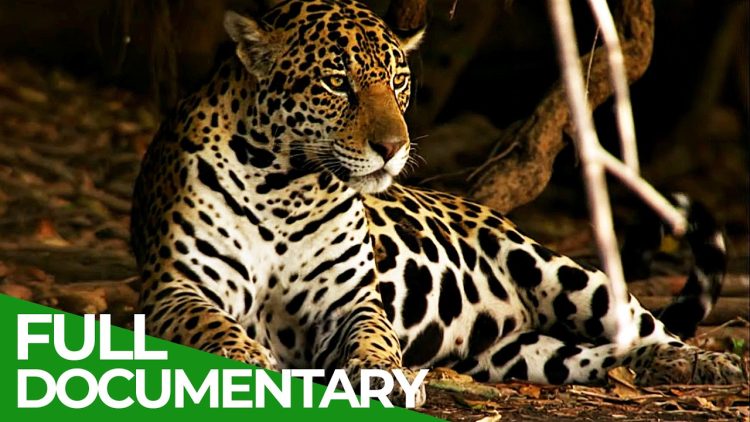
Wild Colombia: A Wildlife Paradise Between Rainforest and Ocean | Free Documentary Nature
Explore Colombia’s wild Chocó and the hidden world of Serranía de la Macarena in this breathtaking nature documentary. Journey through the planet’s wettest rainforests, ancient mountains, vibrant jungles and remote rivers where new species are still being discovered. Meet leatherback turtles, jaguars, poison dart frogs, giant otters, hummingbirds, orchids and countless creatures that thrive in one of Earth’s last untouched frontiers.
Colombia is the second most biologically diverse country on Earth, home to about 14 percent of the world’s species, and it has more species of bird than anywhere else on Earth — more than 1,500 of them. That diversity comes from geography: the country is the only one in South America bathed by both the Pacific and the Atlantic, and its landscapes run from mangrove coasts to Amazon rainforest, from Andean cloud forest to high páramo.
The first part follows the Chocó, the Pacific coastal region, which is one of the wettest and most biodiverse areas on the planet. The rainforests of the Chocó-Darién region receive some of the highest rainfall on Earth, with some zones getting up to 16 metres a year, and the forests, isolated by the Andes, host a habitat of unique, endemic and yet-to-be-discovered species. It is here that the film finds its leatherback turtles, coming ashore to lay their eggs on the wild coast, and its poison dart frogs, tiny and brilliantly coloured, carrying toxins that make them dangerous to touch.
The second part moves inland to the Serranía de la Macarena, a unique and little-explored outcrop of sandstone in the middle of Colombia that forms part of the country’s first ever national park. It is here that the film finds its jaguars — the largest feline in the Americas and the third largest cat in the world, a solitary, mostly nocturnal hunter whose presence indicates a healthy, functioning ecosystem — and its giant otters, working the remote rivers in family groups. The third part goes deeper still, into the heart of the Amazon, where the film’s cameras follow the rivers and the forest canopy, and where the sheer number of species becomes the story: hummingbirds by the dozen, orchids in every colour, and new species still being discovered on scientific expeditions. The film’s argument is simple: Colombia’s wildlife is not a collection of curiosities. It is a measure of what the planet can still hold, if the forests are left standing.
What the Film Explores
The film explores why Colombia holds so much life. The answer is geography, and the film shows it rather than explaining it: a country where the Andes, the Amazon, the Pacific and the Caribbean all meet, creating a mosaic of distinct natural regions, each with its own specialised species. The Chocó’s rainforests are isolated by the Andes from the rest of the continent, so their species evolved separately, and many are found nowhere else on Earth. The Macarena is an ancient sandstone outcrop, older than the Andes themselves, and its isolation has made it a refuge for species that exist nowhere else.
It also explores the animals themselves, one encounter at a time. The leatherback turtle, the largest turtle in the world, hauling itself onto a beach at night to lay its eggs. The jaguar, moving through the forest at dusk, a predator that needs a whole ecosystem to support it. The giant otter, a social hunter that works its river in a family group. The poison dart frog, small enough to sit on a fingertip and bright enough to warn every predator in the forest. The hummingbird, beating its wings so fast the eye cannot follow, feeding from orchids that depend on it for pollination.
Finally, the film explores what is at stake. Colombia’s forests cover more than half of the country, and they are under pressure from logging, mining and cattle ranching, which spread into areas previously controlled by rebels after the historic peace deal. The film does not lecture about this. It shows the animals, the rivers and the forests, and lets the viewer understand what would be lost. A country that holds 14 percent of the world’s species in a modest land area is not just a place to visit. It is a place the planet cannot afford to lose.
Key Themes
- A megadiverse country: Colombia is the second most biodiverse country on Earth, home to about 14 percent of the world’s species and more bird species than any other country.
- The Chocó coast: one of the wettest places on Earth, with up to 16 metres of rain a year, and a refuge for species found nowhere else.
- The Macarena: an ancient sandstone outcrop in the middle of Colombia, part of the country’s first national park, and home to jaguars and giant otters.
- The Amazon heart: the film’s final part follows the rivers and the canopy, where new species are still being discovered.
- Animals as indicators: the jaguar, the largest feline in the Americas, can only survive where the whole ecosystem is healthy.
- Small wonders: poison dart frogs, hummingbirds and orchids show that Colombia’s diversity is not only in its large animals.
- What is at stake: forests covering more than half the country face logging, mining and ranching, and the film shows what would be lost.
Production and Background
The film is a Free Documentary Nature production, a compilation-style edit that brings together material from the broadcaster’s nature series into a single feature-length journey of 143 minutes.
Colombia’s reputation as a wildlife destination has grown as the country has become more accessible, and the film is part of that change. For decades, the country’s natural wealth was overshadowed by its reputation for danger.
Recommended Companion Viewing
Explore authoritative investigative documentaries on related historical events and investigative subjects.

Wild Attraction
Destination Wild: The Sahara
The sushi hype - Ravenous appetites and species extinction | DW Documentary
Wonder Shore: Africa's Wild Paradise
Frequently Asked Questions
How biodiverse is Colombia? Colombia is the second most biologically diverse country on Earth, home to about 14 percent of the world’s species. It has more bird species than any other country — over 1,500 — and ranks exceptionally high for amphibians, butterflies, orchids and freshwater fish.
What is the Chocó? The Chocó is the Pacific coastal region of Colombia, part of the Chocó-Darién biogeographic region. It is one of the wettest places on Earth, with some zones receiving up to 16 metres of rain a year, and its rainforests host many species found nowhere else.
What is the Serranía de la Macarena? It is a unique, little-explored sandstone outcrop in the middle of Colombia that forms part of the country’s first ever national park, and a refuge for jaguars, giant otters and other wildlife.
What animals does the film show? Leatherback turtles, jaguars, poison dart frogs, giant otters, hummingbirds and orchids, among many others, across the Chocó coast, the Macarena and the Amazon.
More to watch
- Our Nature: Call of the Wild
- Nature’s Smartest Animals
- Nature’s Social Network
- The Amazon in danger – Indigenous peoples and their struggle for the rainforest
- Masai Mara: African Wildlife Stories
The Amazon part of the journey continues in The Amazon in danger – Indigenous peoples and their struggle for the rainforest, which shows the human side of the same forest.







