
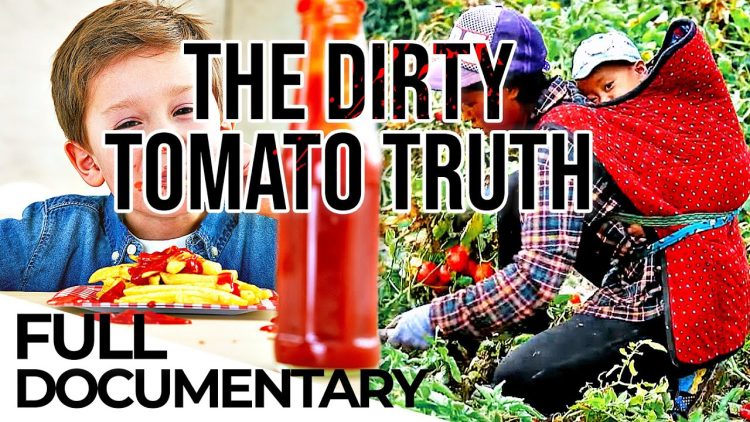
Secrets of our Food: The Hidden Ketchup Chronicles | ENDEVR Documentary
The world’s most consumed fruit has an untold story. The tomato, and the ketchup made from it, is now as much of a commodity as wheat, rice or petrol, and this ENDEVR documentary traces its journey from the fields of Africa, Italy, China and America to show the consequences of a global business that most of us never think about.
The story starts with Heinz. As early as 1897, ten years before Ford started to mass-produce cars, Heinz was already converting tomatoes into standardised cans of puree, and the company was one of the first to understand the power of branding. Henry J. Heinz had founded his company in 1869 and first sold ketchup in 1876, and by the 1890s his factories were turning out a product that tasted the same wherever it was bought. The film explains how Heinz did it: by banning unions, imposing uniform standards of production, and establishing genetic laboratories that ensured identical tomato plantations all around the world.
That standardisation is the film’s central idea. Wherever you are in the world today, you can eat the same tomatoes, and the same ketchup, because the industry made them identical. The film follows the tomato paste trade across four continents, showing how paste produced cheaply in one country is shipped to another, reprocessed, branded and sold, sometimes several times over. China is now the world’s largest producer of tomatoes, and much of its paste is exported to Italy, where it is turned into sauces and sold on as an Italian product.
The film also looks at the people caught up in the trade. Tomato picking and processing is hard, seasonal work, and the film visits the farms and factories where it happens, from the fields of southern Italy to the processing plants of China and the industrial farms of California. It shows how a product that costs almost nothing on the shelf depends on labour that is paid almost nothing, and how the pressure to keep prices low has driven the industry towards ever larger scale and ever tighter control of the supply chain.
What makes the film work is that it takes a product everyone knows and shows the system behind it. Ketchup is not a story about a sauce. It is a story about how food became an industry, how branding replaced taste as the thing being sold, and how a fruit that originated in the Americas ended up as a paste traded between continents and sold back to the people who grew it. The tomato’s ability to create strongly identifiable products, ketchup, pizza sauce, soups, sauces, drinks and frozen dishes, is unbeatable, and the film shows what that unbeatable quality has cost.
What the film explores
The first part of the film is a history of the tomato itself. Tomatoes originated in the Americas, in the Andes and Mexico, and were brought to Europe in the sixteenth century, where they were first grown as ornamentals and only slowly accepted as food. The film traces how the tomato became a staple, and how the invention of canning and then of industrial processing turned it from a fresh fruit into a paste that could be stored, shipped and sold anywhere.
The second part is the Heinz story, and it is told as a case study in how modern food companies were built. The film explains how Heinz standardised not only the product but the raw material, breeding tomatoes to be identical, and how it used branding to make a mass-produced sauce feel personal and trustworthy. The famous “57 Varieties” slogan, introduced in 1896, was part of that strategy: a number chosen because it sounded good, attached to a product that was the same in every bottle.
The third part follows the paste trade today. The film visits the countries that grow the tomatoes, the factories that turn them into paste, and the markets that sell the finished sauces, and it shows how the trade is shaped by subsidies, tariffs and the search for the cheapest labour. It also looks at the consequences for the farmers, who grow a crop bred for the factory and sold at prices set by buyers on the other side of the world.
Key Themes
- The tomato as the world’s most consumed fruit, and as a global commodity.
- Heinz and the invention of branded, standardised ketchup in the 1890s.
- How tomatoes were bred to fit the factory, not the table.
- The global tomato paste trade between China, Italy, America and Africa.
- Branding, and how a mass-produced sauce is sold as personal and trustworthy.
- The labour behind the bottle: seasonal picking and processing work.
- How food became an industry before the rest of the economy globalised.
Production and Background
The film is an ENDEVR documentary, published on the ENDEVR channel in August 2023 under the series title Secrets of our Food. ENDEVR is a documentary channel that covers business, economics, geopolitics and social issues, and this film is one of a series that takes a single everyday product and traces the system behind it.
At fifty-four minutes, the film has time to travel, and it uses that time to visit four continents.
Recommended Companion Viewing
Explore authoritative investigative documentaries on related historical events and investigative subjects.

The $400 Billion Company That Watches Everyone
How Germany's elite research institution fails young scientists
Epstein Goes Africa With Chris Tucker & Clinton
Bill Gates' Daughter is in Trouble
Frequently Asked Questions
Who invented ketchup? Ketchup has a long history, with early versions made from fish sauce in Asia and then from mushrooms and walnuts in Britain. The tomato ketchup we know today was popularised by Henry J. Heinz, who first sold it in 1876, and his company turned it into a mass-produced, branded product.
Why does ketchup taste the same everywhere? Because the industry standardised it. Heinz and its competitors bred tomatoes to be uniform, imposed strict production standards, and built factories that turned out an identical product in every country. The film argues that this standardisation was the point, not an accident.
Where does tomato paste come from? China is the world’s largest tomato producer, and much of its tomato paste is exported to Italy and other countries, where it is reprocessed into sauces and sold on. The film traces paste from Africa, Italy, China and America to show how the trade works.
What does “57 Varieties” mean? It was a slogan introduced by Heinz in 1896. Henry Heinz chose the number 57 because he liked the sound of it, not because the company made exactly 57 products. It became one of the most famous brand slogans in food history.
Is the film about Heinz alone? No. Heinz is the starting point, but the film is about the whole tomato industry: the breeding, the farming, the processing, the trade and the branding that turned a fruit into a commodity traded between continents.
More to watch
- Fake Steak – Future-Proof Food And Lab-Grown Meat
- Drones, Robots, and Super Sperm – The Future of Farming
- China’s plan to never run out of food
- Inside a high-tech lab designing food for a hotter world
- The billion-dollar waste business
For another look at how food is made now, Fake Steak – Future-Proof Food And Lab-Grown Meat visits the labs growing meat without animals.







