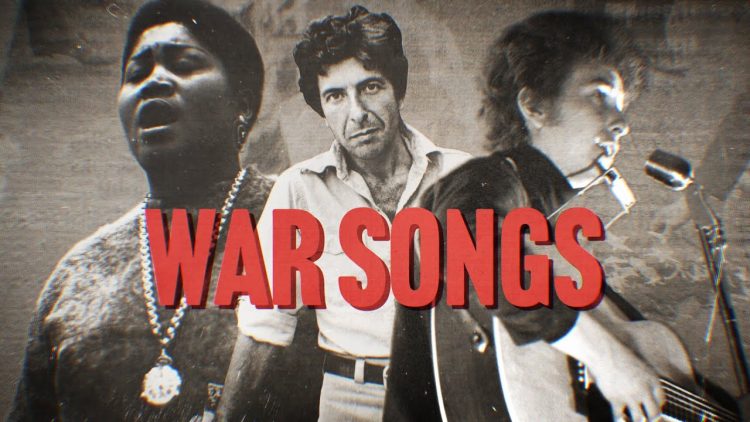
The War Songs of Greenwich Village
There is a moment in the history of American music when a song stopped being entertainment and became an argument. It happened in the early 1960s, in a handful of small coffee houses in Greenwich Village, New York, where a generation of young folk singers discovered that a guitar and a clear lyric could say what a newspaper editorial could not.
The Village in the early 1960s was the centre of the American folk revival. Pete Seeger had been singing songs of labour and peace since the 1940s, and his example drew younger singers to the neighbourhood’s clubs and coffee houses. Bob Dylan arrived in New York in 1961 and became the scene’s most famous voice. Joan Baez brought a soprano of extraordinary purity to songs of protest and conscience. Dave Van Ronk, the scene’s elder statesman, held court in the clubs and taught the younger singers the older traditions they were drawing on.
Ochs is the film’s central figure, and for good reason. Born in 1940 in El Paso, Texas, he wrote hundreds of songs in the 1960s and released eight albums in his lifetime, and his work defined what a war song could be: specific, journalistic, funny and furious in the same verse. Where other protest songs spoke in general terms about peace, Ochs named names, dates and places. His songs were moral statements against the war in Southeast Asia, against racism and against poverty, written to galvanise his generation into action.
The video also reaches back to the older songs the Village singers inherited. The description points to “The Foggy Dew”, the Irish rebel ballad about the Easter Rising of 1916, and that choice is telling: the Greenwich Village singers understood themselves as part of a long tradition in which a song could carry a political memory that official history preferred to forget. Folk music had always been a way for ordinary people to record what happened to them, and the Village singers took that tradition and aimed it at the wars and injustices of their own time.
What the Film Explores
The film explores how a song becomes a war song. It is not only a matter of subject: plenty of songs mention war without saying anything about it. The Village singers, the essay argues, made war songs by being specific. They wrote about particular battles, particular policies and particular victims, and they wrote quickly, while the news was still fresh.
It also explores the community that made the songs possible. Greenwich Village in the early 1960s was small enough that the singers knew each other, shared stages, argued about politics late into the night and learned each other’s songs. Dylan, Baez, Seeger, Van Ronk and Ochs were not a band, but they were a scene, and the scene gave them an audience that understood what they were doing. The coffee houses were listening rooms, not bars, and the audiences came to hear the words.
A third strand is the cost. Ochs’s story ends badly: his mental health declined in the late 1960s and 1970s as he struggled with bipolar disorder and alcoholism, and he took his own life in 1976, at the age of 35. The film does not treat that as a footnote. It asks what it cost to write songs that insisted on telling the truth about a war that most of the country wanted to ignore, and whether the singers who did that work were carrying a weight that the music alone could not hold.
Music has that power in every era, as Music in Nazi Germany – The maestro and the cellist of Auschwitz shows in a far darker time and place.
Key Themes
- The topical song: Phil Ochs called himself a topical singer, writing songs about the news of the week — war, civil rights, labour — with names, dates and places intact.
- A scene, not a solo act: Dylan, Baez, Seeger, Van Ronk and Ochs formed a community of singers who shared stages, songs and arguments in the Village’s coffee houses.
- An older tradition: the singers drew on folk ballads like “The Foggy Dew”, songs that carried political memory across generations.
- Music as journalism: the war songs were written fast, while the news was fresh, and audiences heard them as the truth of the moment.
- The folk scare of 1961: when the city revoked the Washington Square singing permit and police broke up the gathering on April 9, 1961, the singers learned their music was taken seriously.
- Protest as witness: the songs were meant to record what was happening and to move listeners to act, not merely to entertain.
Production and Background
The video is a Polyphonic essay, from the channel run by music writer Noah Lefevre, whose long-form videos trace the history of popular music song by song and scene by scene. Polyphonic’s essays are known for close listening: they play the music, break down what it is doing, and place it in its historical moment.
The history it tells is well documented. Ochs arrived in New York in 1962, performed in the Village’s small folk clubs, and became an integral part of the scene; Dylan arrived in 1961; the Washington Square confrontation happened on April 9, 1961.
Recommended Companion Viewing
Explore authoritative investigative documentaries on related historical events and investigative subjects.

Frequently Asked Questions
Who was Phil Ochs? Phil Ochs (1940–1976) was an American singer-songwriter who became a central figure in the Greenwich Village folk scene after arriving in New York in 1962. He wrote hundreds of songs about war, civil rights and labour, released eight albums in his lifetime, and called himself a topical singer rather than a protest singer.
What happened at Washington Square Park in 1961? In the spring of 1961, New York City rescinded the permit for the Sunday folk singing gatherings in the park. On April 9, 1961, singers gathered anyway and the police broke up the gathering with force, an event remembered as the folk scare.
Who else was part of the Greenwich Village scene? Bob Dylan, Joan Baez, Pete Seeger and Dave Van Ronk were among the central figures, along with Ochs, performing in the neighbourhood’s coffee houses and clubs in the early 1960s.
What is “The Foggy Dew”? “The Foggy Dew” is an Irish rebel ballad about the Easter Rising of 1916, part of the older folk tradition the Village singers drew on, in which songs carry political memory.
More to watch
- Music in Nazi Germany – The maestro and the cellist of Auschwitz
- The healing power of music – How does music impact us?
- The Untold History of Disco
- A World Without Beethoven?
- The global rise of afro house music