The sushi hype – Ravenous appetites and species extinction | DW Documentary
Sushi was once an expensive gourmet food. Today it is a global fast-food phenomenon, sold in Asian snack bars and supermarket to-go boxes alike. It is trendy, low in calories, healthy and affordable, and it is everywhere.
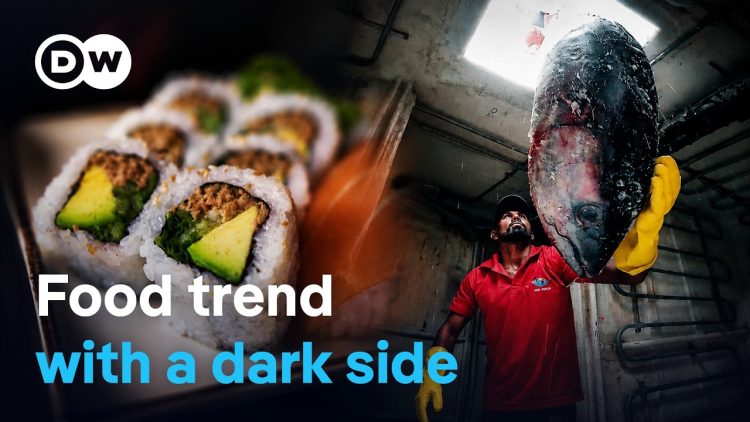
The film’s journey starts on the water. Yellowfin tuna, the fish most sushi lovers ask for, is caught on contested fishing grounds in the Indian Ocean, where industrial fleets chase a species that is now threatened with extinction. Salmon comes from huge farms in Northern Europe, where fish are raised in vast numbers in pens in the sea. From there, the film moves to the gigantic factories of the fishing industry, where the catch is processed on an industrial scale. Near Gdansk in Poland, for example, some 115,000 sushi boxes are produced every day, adding up to around 23 tons of ready-made sushi, some of it destined for German supermarkets.
That scale is what makes the problems so hard to escape. Fisheries expert Philipp Kanstinger, from the conservation organisation WWF, advises critical consumption, because, as he puts it, truly sustainable yellowfin tuna is virtually non-existent. The tuna is being caught faster than it can reproduce, and the fishing methods used to catch it are aggressive, sweeping up other species along with the target catch. Salmon farming brings its own troubles: crowded pens, disease, and the feed and waste that come with raising carnivorous fish in huge numbers. The film does not present these as accidents.
Then there is the human cost. The documentary reports that modern slave labour is part of the dark side of the sushi craze, with workers in parts of the fishing industry exploited in conditions that would be illegal on land. It is the part of the story that is hardest to see from a supermarket shelf, and the film insists on showing it: the cheap box of sushi is cheap because someone, somewhere, paid the difference. The film’s argument is not that people should stop eating sushi.
What the Film Explores
The film explores the journey of a single box of sushi backwards through its supply chain. It begins with the finished product — a neat row of salmon and tuna pieces in a supermarket chiller — and then works back through the factory in Gdansk, the salmon farms of Northern Europe and the tuna grounds of the Indian Ocean.
It also explores the two fish at the heart of the sushi boom. Yellowfin tuna is a wild, migratory species, and the film shows how industrial fishing has pushed it towards extinction, with fleets competing on contested grounds and catching far more than the stock can replace. Salmon is the opposite: a farmed fish, raised in pens, whose problems are the problems of factory farming — crowding, disease, pollution and the enormous quantities of smaller fish needed to feed it.
A third strand is the labour behind the catch. The film reports on the exploitation of workers in parts of the fishing industry, where modern slave labour persists far from shore and far from inspection.
Looking, the film suggests, is the first step, as Backbreaking Work: Deep-Sea Fishing in the Arctic Ocean also shows from the fishermen’s side of the same industry.
Key Themes
- From gourmet to fast food: sushi’s rise from an expensive delicacy to a mass-market product changed everything about how its fish are caught and farmed.
- The tuna crisis: yellowfin tuna, the most popular sushi fish, is threatened with extinction, and truly sustainable yellowfin is, in the WWF’s words, virtually non-existent.
- Salmon farming at scale: huge farms in Northern Europe raise salmon in crowded pens, bringing disease, waste and heavy feed demands.
- The factory behind the box: near Gdansk alone, 115,000 sushi boxes — around 23 tons — are produced every day for supermarkets.
- Aggressive fishing methods: industrial fleets catch far more than their target species, and the bycatch and the pressure on stocks are part of the cost.
- Modern slave labour: exploitation of workers is part of the fishing industry’s dark side, hidden far from shore and far from the consumer.
Production and Background
The film is a DW Documentary production, made in the broadcaster’s journalistic style: reporters on the ground, in the factories and on the fishing grounds, building the story from what they see and from the people they meet.
The timing matters. Sushi’s global boom is a recent phenomenon, driven by the spread of Japanese food culture, the growth of supermarket ready-meals and the reputation of fish as a healthy choice. The film was made as that boom was reaching its peak, and its question — whether the appetite can be sustained — is still open. Yellowfin tuna stocks have not recovered, salmon farming has grown rather than shrunk, and the factories near Gdansk are still producing their 115,000 boxes a day.
Recommended Companion Viewing
Explore authoritative investigative documentaries on related historical events and investigative subjects.

Forgotten Islands: The Last Coral Paradise
Eat Or Be Eaten: Ocean Predators
Raja Ampat: Life in the Coral Kingdom
Frequently Asked Questions
Why is sushi a problem if fish is healthy? The fish itself is healthy, but the scale of demand is the problem: tuna is being caught faster than it can reproduce, and salmon farming at industrial scale brings disease, waste and heavy feed use.
Is yellowfin tuna really threatened? Yes. Yellowfin tuna is threatened with extinction, and WWF fisheries expert Philipp Kanstinger says that truly sustainable yellowfin tuna is virtually non-existent.
How much sushi does one factory make? Near Gdansk in Poland, about 115,000 sushi boxes are produced every day, adding up to around 23 tons of ready-made sushi, some of it bound for German supermarkets.
What is wrong with salmon farming? Salmon are raised in huge crowded sea pens in Northern Europe, which brings disease, pollution from feed and waste, and the need for large quantities of smaller wild fish to feed them.
More to watch
- Backbreaking Work: Deep-Sea Fishing in the Arctic Ocean
- The organized crime hiding in your fridge
- Inside a high-tech lab designing food for a hotter world
- World’s Most Feared Ocean Cartels | Mexico: War Over the Cocaine of the Sea