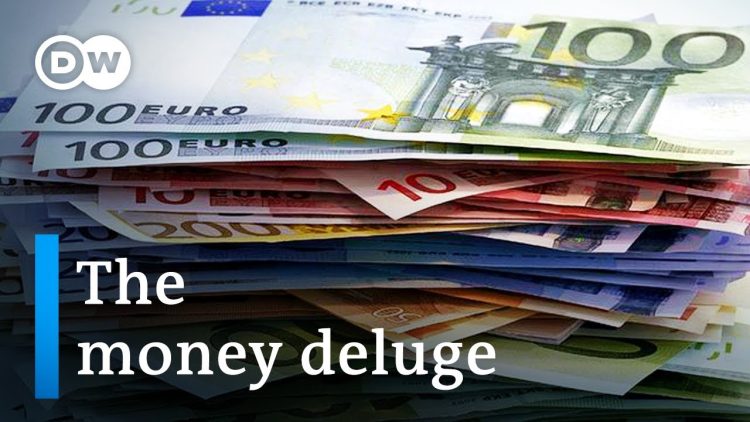
How the rich get richer – Money in the world economy | DW Documentary
Exploding real estate prices, zero interest rates and a rising stock market: the rich are getting richer. What danger lies in wait for average citizens? This DW Documentary, known in its original form as The Money Deluge, asks how the world’s central banks created a flood of cheap money, and who it really benefits.
For years, the world’s central banks have been pursuing a policy of cheap money, and the first and foremost among them is the ECB, the European Central Bank. The ECB buys bad stocks and bonds to save banks, tries to fuel economic growth, and props up states that are in debt. What relieves state budgets annoys savers: interest rates are close to zero, and money in a savings account simply melts away. This is not an accident but a policy.
The fiscal policies of the central banks are causing an uncontrolled global deluge of money, and experts are warning of new bubbles. In real estate, for example, it is not just in German cities that prices are shooting up: in London, a one-bed apartment can easily cost more than a million euro. More and more money is moving away from the real economy and into the speculative field, where highly complex financial bets take place in what the film calls a global casino, gambling without checks and balances. The winners are set from the start: the rich just get richer.
Professor Max Otte puts the mechanism in a single sentence: this flood of money has caused a dangerous redistribution. Those who have, get more. People who own assets — houses, shares, companies — watch their wealth grow as cheap money pushes prices up. People who do not own assets, and who keep their money in savings, watch it shrink. Those with debts can be happy, because their debts get cheaper. Big companies that want to swallow up others are also happy, because they can borrow cheap money for their acquisitions. And the banks, the film argues, need a constant source of new, cheap money today, not only to stay afloat but to keep the whole system turning.
Money deals have become detached from the real economy. The film shows how the world of finance has grown into a system of its own, where money makes money without ever touching a factory, a shop or a wage packet. But it is not just the banks that need cheap money. So do states, which need it to keep a grip on their mountains of debt. It is a snowball system: new debt pays for old debt, and the structure depends on rates staying low. What happens to our money? Is a new crisis looming? The film casts a new and surprising light on our money in these times of zero interest rates, and it does not offer easy reassurance.
What the Film Explores
The film explores how cheap money redistributes wealth upwards. The mechanism is simple, and the film takes care to explain it: when central banks push interest rates to zero, the price of assets rises, and the people who own assets get richer while the people who do not fall behind. It is a redistribution that happens without a vote, without a tax and without most people noticing, and the film argues that it is the most important economic fact of the last two decades.
It also explores the housing bubble, and what it means for ordinary people. When a one-bedroom flat in London costs more than a million euro, and prices in German cities shoot up year after year, housing stops being a place to live and becomes a financial asset. The film shows who that helps — owners and investors — and who it hurts: young people, renters and first-time buyers. The global trade that moves wealth from the poorest places to the richest is the same story at a larger scale, and the film is part of a wider picture of how money flows uphill.
The film looks closely at the role of the central banks. The ECB and its counterparts are presented not as neutral technicians but as political actors, whose decisions about interest rates and bond purchases decide who gains and who loses. The film does not argue that central banks should have done nothing, but it asks whether the cure has become a disease of its own, and whether the cheap-money era can ever be unwound without a crisis.
Finally, the film explores the snowball system of state debt. Governments have become dependent on cheap money to service their debts, and that dependence means interest rates cannot rise without threatening the states themselves. The film leaves the viewer with an uncomfortable question: if the whole system depends on money staying cheap forever, what happens when it cannot?
Key Themes
- The ECB and the policy of cheap money.
- Zero interest rates, and what they do to savers.
- Exploding real estate prices, from German cities to London.
- Professor Max Otte on the dangerous redistribution of wealth.
- The global casino, and money detached from the real economy.
- Big companies borrowing cheap money to swallow up rivals.
- States dependent on cheap money to manage their mountains of debt.
- The snowball system, and whether a new crisis is looming.
Production and Background
The film is a DW Documentary production from 2017, running just under 43 minutes, and known in its original form as The Money Deluge. It was made in the years when the European Central Bank’s bond-buying and zero-interest policies were at their height, and its account of the cheap-money era has only grown more relevant since, as the world has moved from zero rates to inflation and back again. DW Documentary’s films are known for taking an economic question and following it to the people living with the answer, and this one applies that method to the most abstract subject of all: money itself.
Recommended Companion Viewing
Explore authoritative investigative documentaries on related historical events and investigative subjects.

Neel Kashkari, President of the Minneapolis Fed, on Tariffs and More
How much influence do the super rich have?
Former Adviser on Trump’s Economic Worldview
Gambled away in the financial crisis - The Deutsche Bank story | DW Documentary
Frequently Asked Questions
What is cheap money? Money that can be borrowed at very low interest rates, because central banks have pushed rates close to zero and are buying bonds to keep them there.
Why do zero interest rates make the rich richer? Because cheap money pushes up the price of assets such as houses and shares, and the rich own far more of those assets than everyone else. Savers, meanwhile, earn almost nothing on their money.
Who is Professor Max Otte? A German economist quoted in the film, who describes the flood of cheap money as a dangerous redistribution: those who have, get more.
What is the snowball system? The film’s term for the way states depend on cheap money to manage their debts: new borrowing pays for old borrowing, and the whole structure depends on rates staying low.
Is a new crisis looming? The film does not predict one, but it asks the question directly, and shows how much of the financial system now depends on interest rates never rising very far.
More to watch
- Congo's blood minerals – The high price of high-tech
- The Ayoreo People | Paraguay: Fighting to Remain Uncontacted
- Earth Untold: Java | Hidden Tales from the World's Most Crowded Island
- World's Most Feared Ocean Cartels | Mexico: War Over the Cocaine of the Sea